
The benefits of adding bike lanes to USD’s roads
JACKIE MARQUEZ /OPINION EDITOR
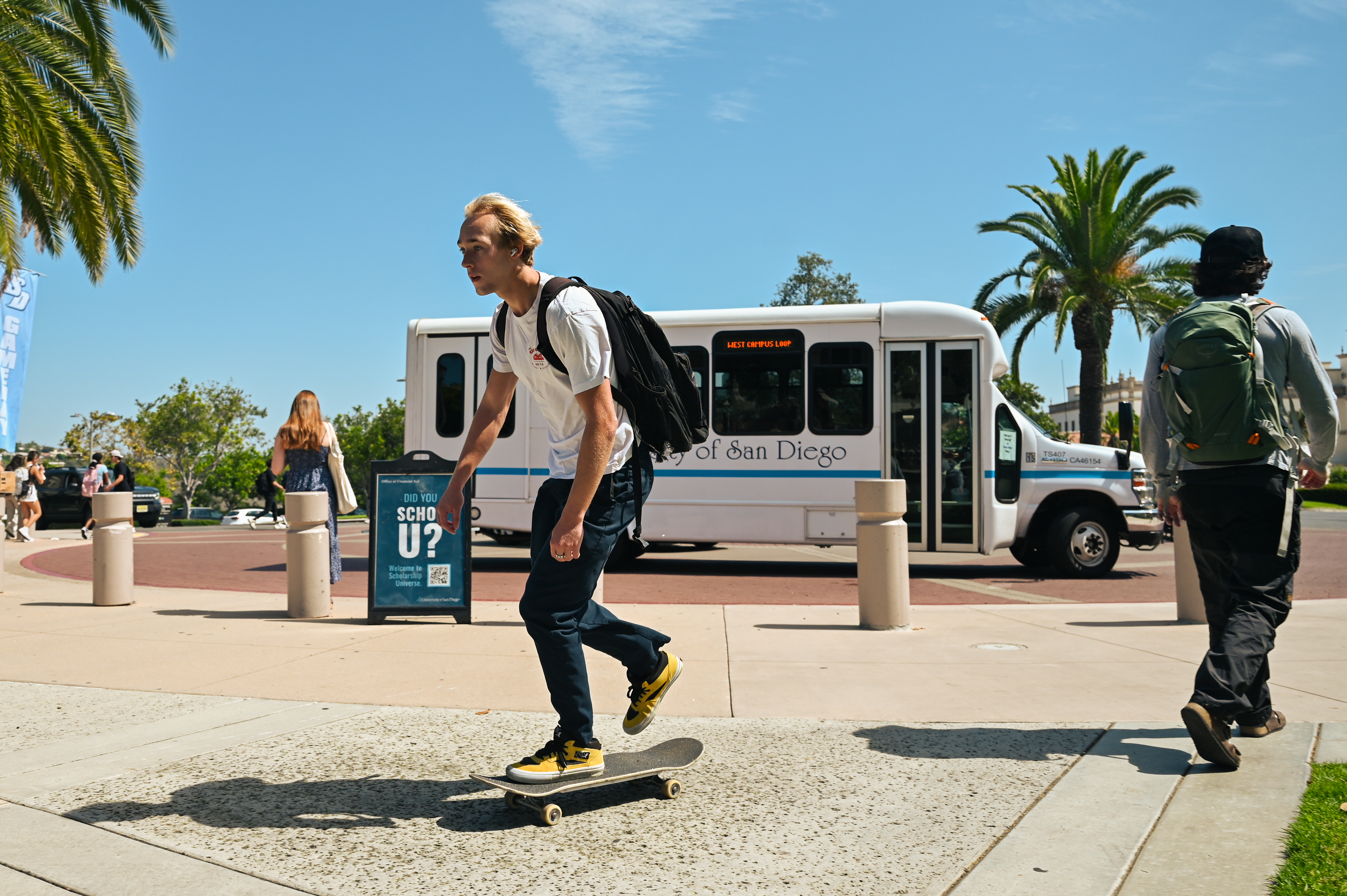
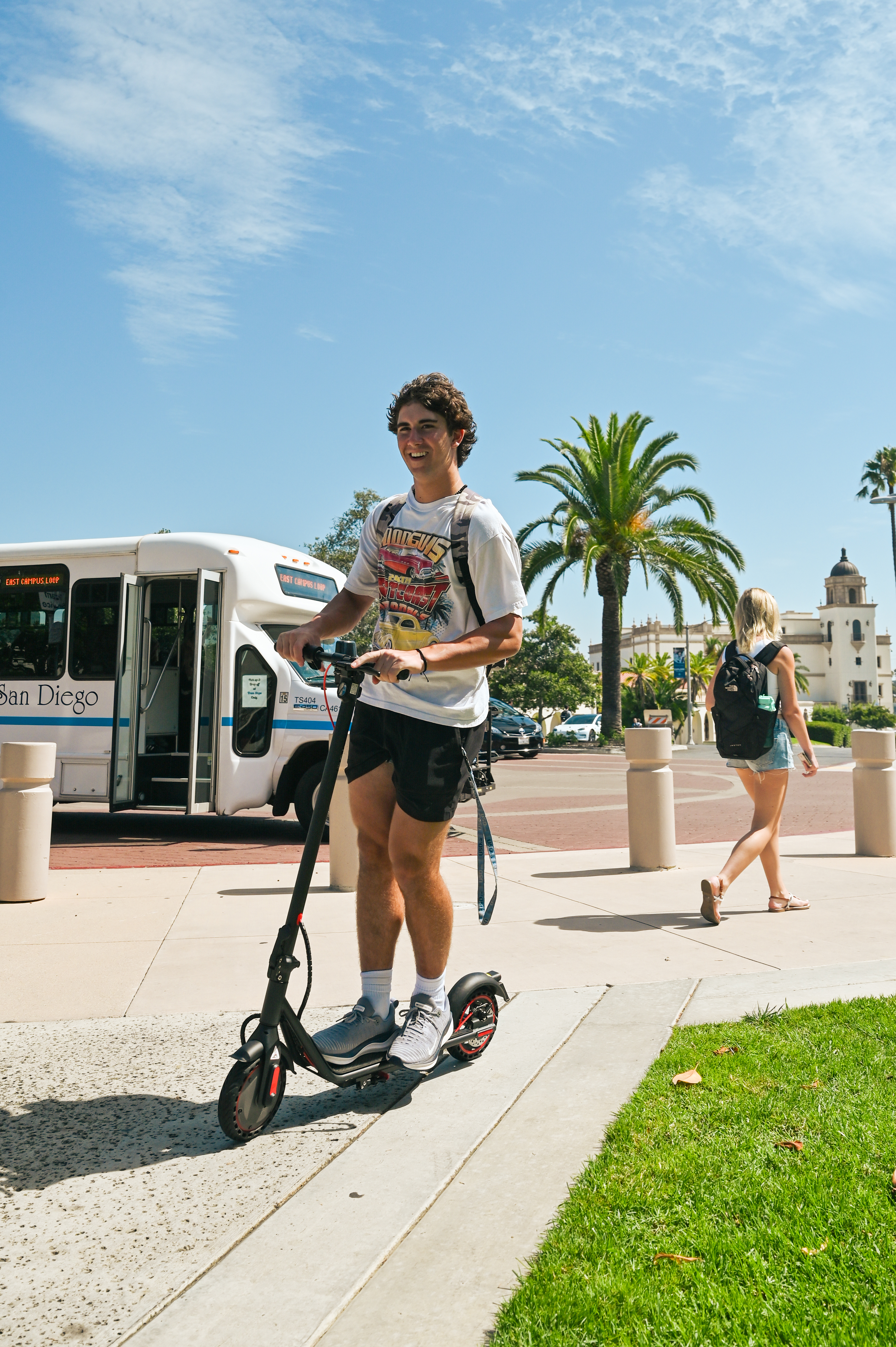
There’s nothing more frustrating than hearing the whir of an electric scooter or the rumbling of a skateboard right behind you on your way to class. Dodging a scooter, skateboard or bike has become an everyday occurrence for USD students, and frankly I’m sick of it. The problem, however, isn’t with the riders of these contraptions. The problem is that students don’t have a designated place to ride.
According to university policy, “skateboards, scooters and rollerblades may not be ridden on campus roadways or parking lots on campus.” This policy is based on the City of San Diego’s Municipal Code, requiring skateboarders, scooter-riders and rollerbladers to travel on the sidewalks. It forces pedestrians to share the walkway with riders who are often going much faster than them, which can become dangerous. University policy also states that “bicycles/e-bikes may be ridden only on roadways and riders must obey all traffic signs.” However, USD doesn’t have bike lanes on any of the campus roadways, so bikers must share the road with cars.
Emma-Kate Squires /The USD Vista
Given these current policies dictating on-campus transportation, USD needs bike lanes. Adding bike lanes to USD roads would not only get scooter-riders and bikers out of the way, but it would also make the roads safer for drivers and promote sustainable practices.
By creating bike lanes, the school can give riders a designated space to use their preferred methods of transportation. This would ultimately result in less sidewalk riding by e-scooter users. According to NPR, the Washington D.C. Department of Transportation found that the number of sidewalk bikers decreased by 56% when protected bike lanes were installed. It’s evident that bikers get off the sidewalks when there are bike lanes to use, and this isn’t a trend exclusive to bicycles. In California, bike lanes are used by more than just cyclists. In fact, California law states that motorized scooters or skateboards should use bike lanes when they’re available. Ultimately, creating bike lanes ensures that pedestrians, e-scooter users and cyclists all have paths they feel comfortable traveling on.
Emma-Kate Squires /The USD Vista
Bike lanes don’t just improve walking conditions for pedestrians, they also make roads safer for drivers. The United States Department of Transportation’s Federal Highway Administration explains that bike lanes make roadways safer by mitigating or preventing car crashes between motor vehicles and cyclists. Without bike lanes, cyclists and drivers must share the road. However, cars can easily take up the whole lane, leaving little space for bike-riders. This can lead to accidents when drivers don’t see cyclists. Bike lanes ensure equitable sharing of the road by clearly marking where cars can drive and where bikes can be ridden. This makes travelling on campus roads safer for cars and cyclists.
Another way bike lanes help prevent car crashes is by forcing motor vehicles to slow down. According to Science Daily, bike lanes have a “calming effect” on traffic. Based on research conducted by the University of Colorado Denver, cars drive slower and more cautiously when bike lanes are present. More controlled and attentive driving ultimately increases road safety.
Creating bike lanes on campus would improve the traveling conditions for cyclists, scooter-riders and pedestrians, and this would encourage students to use more sustainable forms of transportation on campus. Deciding to walk, bike or ride an e-scooter rather than drive drastically reduces one’s carbon footprint. The United States Environmental Agency reports that “the average passenger vehicle emits about 400 grams of CO2 per mile.” This is much higher than the amount of CO2 emitted by non-automotive transportation. Alternative forms of transportation, like the ones mentioned above, don’t run on fossil fuels like gasoline, and because of this, their carbon emissions are significantly lower. By promoting these sustainable modes of transportation, USD would move closer to its goal of fostering a more sustainable world. As our mission statement says, we are dedicated to creating “a more inclusive, sustainable and hopeful world.” Ultimately, by adding bike lanes to campus roads or sidewalks we could move one step closer to achieving the university’s mission.
With more students relying on scooters, skateboards and bikes to get around campus, it’s important that the university accommodates these alternative modes of transportation. With our current lack of bike lanes, bikers must share the road with cars and scooter-riders and skaters must share the sidewalk with pedestrians. But, by adding designated lanes the university can get riders out of pedestrians’ way, improve road safety and promote sustainable practices.


 The USD Vista
Leave a comment