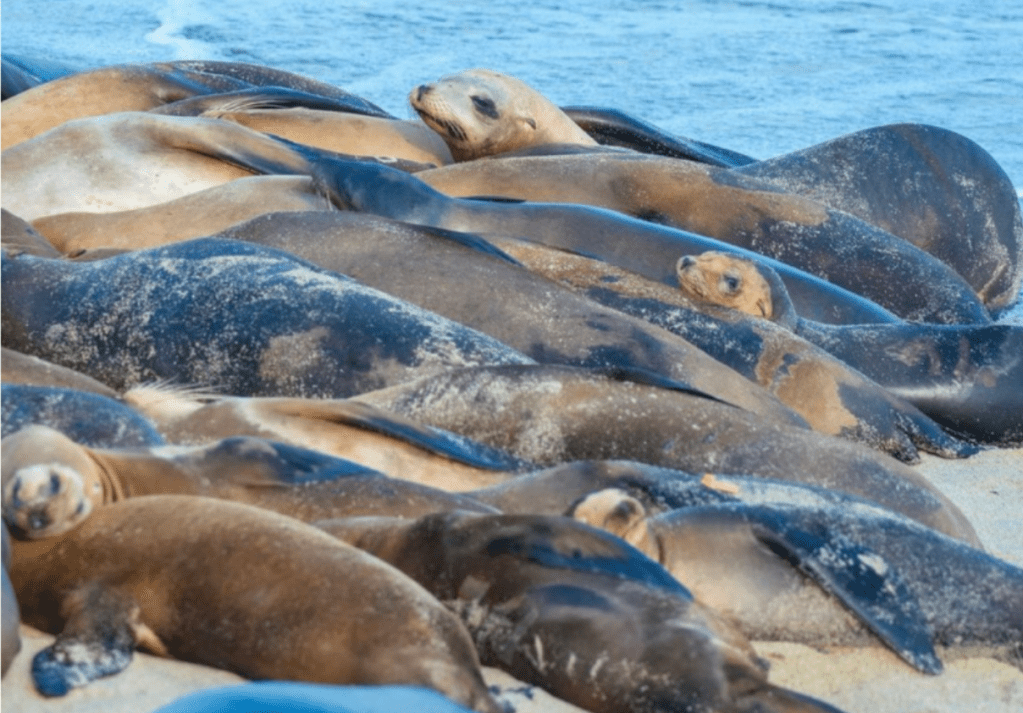
USD students and professors discuss how tourism affects sea lions
Lili Kim / Asst. News editor
As the eighth largest city in the U.S., San Diego welcomes nearly 30 million visitors a year. While tourists are vital for economic growth, they can also harm the health and well-being of local ocean life.
The San Diego City Council recently voted unanimously to close Point La Jolla and Boomer Beach until 2030, in response to tourists disturbing the local sea lion populations. This seven-year closure is an extension of a seasonal closure originally planned to end in October. The closure affects only the beach west of Ellen Browning Scripps Park in La Jolla, while the Cove and La Jolla Shores will remain open to the public.
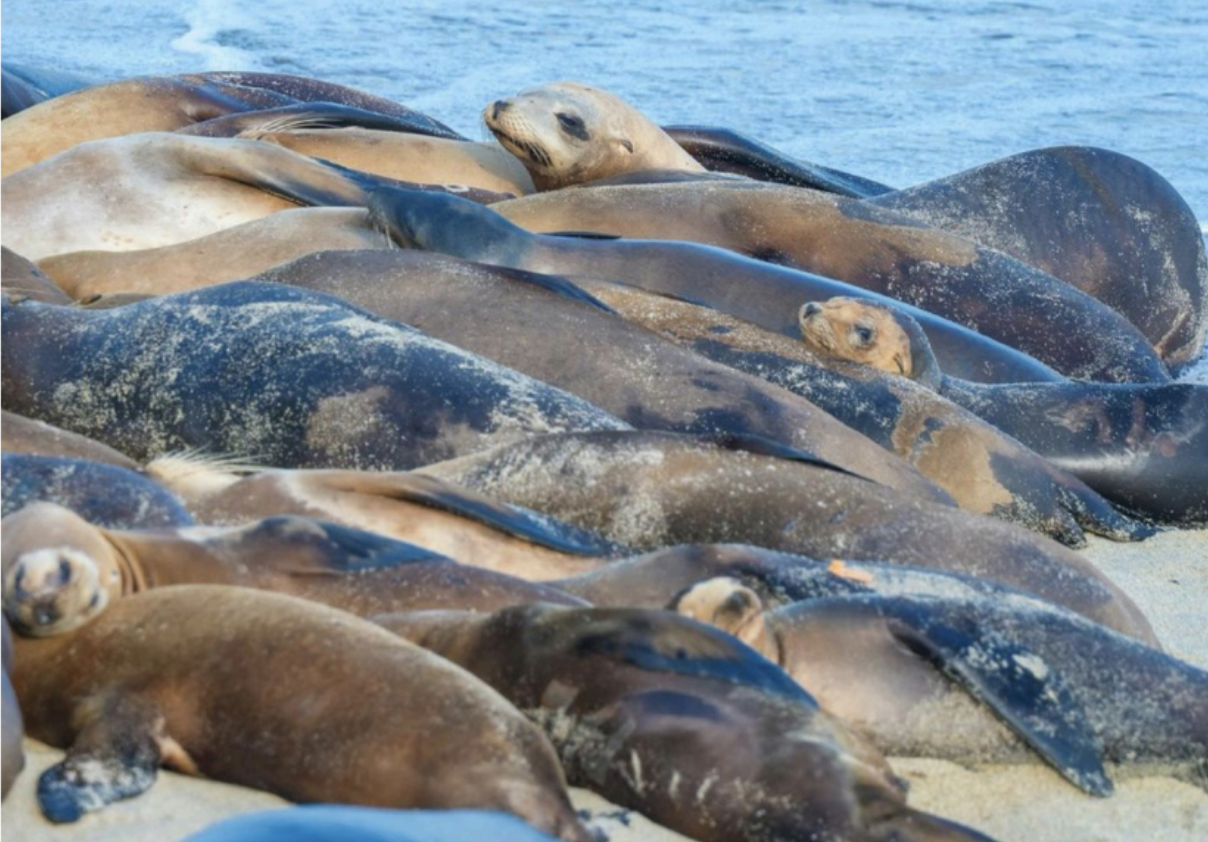
Point La Jolla and Boomer Beach have long been popular spots in San Diego for tourists to walk, tan, swim, kayak and spot wildlife, but they aren’t there alone. Female sea lions often take advantage of the sheltered, rocky coves of La Jolla to mate and give birth to pups between May and October. While seemingly harmless and a good photo opportunity, intruding on wildlife habitats can be extremely distressing for the sea lions and vulnerable pups, which some newcomers to the area have not respected.
According to the San Diego Union-Tribune, a sea lion pup was killed in 2021 after being backed into a cliff by visitors and injured by a strong set of waves. Since then, reports of tourists taking close selfies with the sea lions, touching them, and even throwing rocks is what finally prompted the city to take action.
USD senior and Surfrider Foundation Club Co-president Katie Power shared her support of the City Council’s decision, as she had multiple first-hand experiences of tourism in La Jolla.
“I’m definitely in support of the decision,” Power said. “I can vividly remember one of the first times I went to see the sea lions with my family, and we were all in awe of how close people were getting to get photos.”
Many environmentalists and wildlife advocates argue that the city council’s decision to extend the closure will prevent the tourists’ invasive actions. According to an official statement released by the Sierra Club Seal Society, “since the seasonal closure was put in place, closure of this area of less than 150 yards of coastline has been proven to be effective and provides a safe wildlife viewing area.
More marine birds have also been seen using the area, flora and fauna is recovering and there is less trampling and associated erosion undermining the boardwalk wall.”
However, some San Diegans, fear the closure of the beach will impact tourism and local business. USD adjunct professor Jason Kelly, who teaches a Faith and Environmental Justice course on campus, provided his perspective on the matter.
“The potential drawbacks are less tourists and thus income for the community. But I think that cost pales in comparison to the ongoing harm of unregulated engagement with the sea lions. There are countless beaches for people to enjoy without having to disturb the sea lions.”
Besides physical removal of tourists from the beach, USD senior and Environmental and Ocean Science major Cate Wolfe explained other possible additions that would benefit both the wildlife and the public. “I think proper signage and informational placards around these areas would be super helpful,” Wolfe said. Unfortunately, wildlife harassment is not the only environmental issue occurring in San Diego. Along with the Surfrider Foundation Club, Power has been involved in multiple beach cleanups around the city and shared her thoughts on the status of San Diego beaches.
“It’s pretty incredible, the amount of trash we find,” she said. Power also noted a time she saw a sea lion with plastic wrapped around its head at La Jolla beach. “Just because we sometimes can’t see the issues doesn’t mean they aren’t happening.”
The ideas of awareness and education for the public are crucial in order to keep the ecosystem healthy. In a national culture that celebrates progress and land development, the wellness of the environment and animals that cannot advocate for themselves is easy to ignore.
“The ideological underpinnings of our culture tends to privilege a dualistic and antagonistic understanding of the relationship between nature and humanity that ultimately privileges culture, or humanity over nature,” Kelly explained. “It is this type of thinking that helps justify the belief that human beings have a right to instrumentalize and thus exploit nature.”
This can also be explained as human tendency to prioritize materialistic desires over the wellbeing and sacredness of the environment and animals.
The new physical barrier set in La Jolla is only the first step in a long path of building a collective understanding of ocean life and environmentalism at large.
“The key is education,” Kelly stated. “Education breeds activism. Everyone has a stake in the larger issue of ecological flourishing. There are organizations and clubs on campus that are always looking for more help. Talk to your teachers, family and friends about these issues. Inspiration is only a moment away.”
A blend of understanding humans’ negative impacts on the environment and taking tangible action such as the La Jolla beach closure could allow San Diego wildlife to flourish and exist for generations to come.



 The USD Vista
Leave a comment