Paranormal investigators’ lack of scientific method is frightening
RONNIE SAENZ / ASST. OPINION EDITOR
Since the dawn of humanity, we’ve had the existential fear of death and what follows, and innumerable attempts have ensued to solve this grand mystery of life. Some find their answers in prophets handing down their systems of belief or even whole religions. Others as of late have resorted to trusting something even spookier: paranormal investigators.
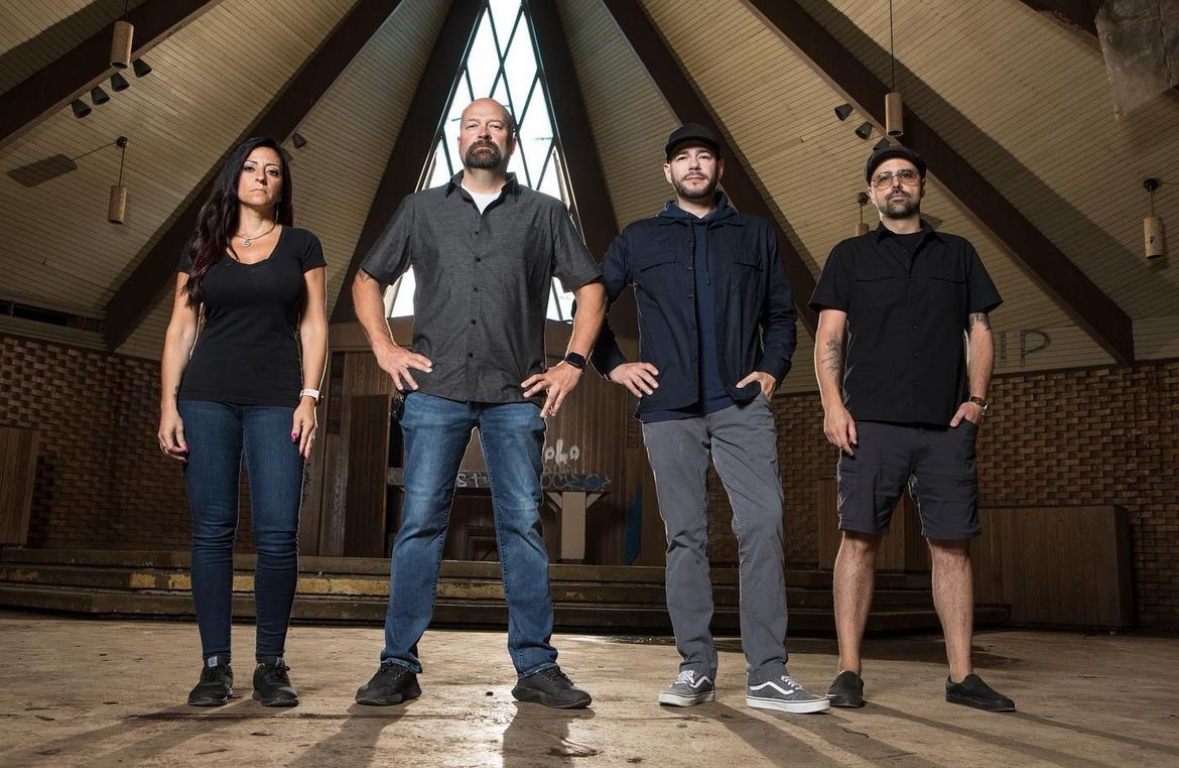
Photo courtesy of @ghosthunters/Instagram
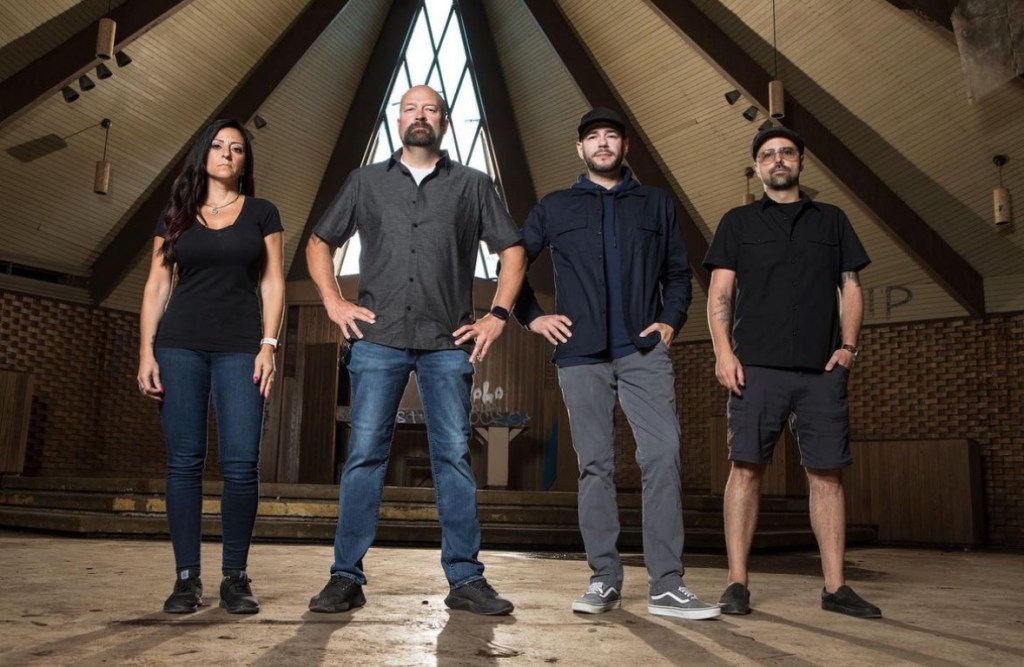
Ghost hunting or paranormal investigation was popularized by the 2004 reality show “Ghost Hunters.” Ever since, it has become a multi-million dollar genre of reality TV, spawning countless shows over the decades investigating paranormal phenomena around the U.S. mostly. The problem with all of these shows is that none of them have any scientific basis and might as well be pseudo-science. Not only that, but the “devices” they use are unreliable on purpose, as to give false results that will draw in more viewers. Despite these apparent flaws, millions of people still tune in to these paranormal phonies because many people find the idea of life after death fascinating. Especially with less people believing in traditional religion, there are more people than ever searching for other supernatural outlets.
The scientific method is the widely accepted method of investigating phenomena, through rigorous testing, observation and experimentation. To date, none of the paranormal investigation shows have used the scientific method to prove that what they’ve detected are ghosts. They haven’t even proved that their methods can detect paranormal activity. What these investigators typically do is interview the locals on a haunted location, gathering as much information on whatever “paranormal entity” they’re investigating. Then they do an in-person investigation where they bring in infrared cameras, electromagnetic field (EMF) readers and microphones to the location.
They investigate for a few days only at night, and then pack up and leave for the next place. If they were really serious about making a proper scientific investigation they would have stayed at that location for months, maybe even years to gather evidence of paranormal activity. Scientists typically gather observational data over the course of years and even decades to prove their hypothesis. But no, all it takes is three days to figure out if there are ghosts in a given location. Not only do they spend too little time at suspicious locations, there is also no data to support that any of the equipment they use could detect paranormal activity —whatever paranormal activity would look like—in the first place.
Another issue with these investigations is that even if their equipment was detecting paranormal activity, all the devices are horribly inaccurate and often give false positives.
One of the most popular devices used by paranormal investigators is the EMF reader. In normal applications, the EMF readers are used to detect power lines, but paranormal investigators have decided it also detects ghosts. The issue with these devices is that they are extremely sensitive to any electromagnetic field so much that a watch battery can trigger it. Even if we pretend it can detect ghosts, it very often gives false positives, so it’s completely unreliable for any research purposes.
To the credit of the paranormal investigators, they very often pick up faint human-like sounds at the locations they explore. It is arguably the most convincing part of their collective research, and evidence with some kind of logical substance behind it. How could a noise only humans produce come out of thin air?
As convincing as it is, these sounds are often made out to sound like speech, due to a phenomenon known as “temporal induction.” Temporal induction occurs when humans fill in the gaps of an ambiguous noise with human speech. None of the sounds presented by paranormal investigators are clear enough to be properly identified, so our brains fill in the gaps to hear language or other human sounds. Chances are, they are just random sounds coming from inside the area they investigate.
It’s been nearly 20 years since the popularization of paranormal investigation, and there’s been almost no change to the methods of observation. If these investigators really wanted their “research” to be taken seriously, it would be presented as a documentary and not like a reality TV show.
Paranormal investigators are frauds, because they follow the money more than the scientific method. You may think it’s relatively harmless entertainment ,which to some it is. However, it still spreads misinformation, and these investigators are profiting off of it. So, as viewers we need to realize that ghost hunters and paranormal investigators are purely for entertainment purposes, and that they do not belong in any conversation about proving the existence of ghosts.



 The USD Vista
Leave a comment