JACKIE MARQUEZ / OPINION EDITOR
The U.S. Court of Appeals for the District of Columbia Circuit ruled on Tuesday, Feb. 6, that former president Donald J. Trump does not have immunity from prosecution relating to his alleged undermining of the 2020 election. Before this ruling, Trump’s legal team had argued that the former President could not be tried in court, because he was acting on a “constitutional duty” to uphold election laws. They also argued that a prior impeachment was necessary before a former president could be prosecuted, overlooking the fact that the former president had been impeached, but then later acquitted. On top of this, Trump’s legal team also argued that he could not be tried because of “double-jeopardy,” a part of the fifth amendment that says you can’t be tried twice for the same crime. Their reasoning was that the former president’s impeachment case had already put him on trial.
Despite these contradictory claims, the three-judge panel ruled unanimously that Trump doesn’t possess absolute immunity. In other words, he must go to trial for his indictment regarding the alleged plot to subvert the installment of Joseph Biden as president.
The rationale behind this ruling is solid. It upholds the structure of our government and weighs the potential consequences for future presidents. Because of this, it has positive implications for Americans across the political spectrum. However, the ruling has one issue: it doesn’t set a precedent.
To start, the court upheld our government’s system of checks and balances by denying Trump absolute immunity. The legislative, executive and judicial branches each have their own powers that can keep the other branches in check. By denying Trump absolute immunity, the court affirms the current limits of presidential duties, and it prevents the executive branch from overpowering its counterparts.
In his initial claims, Trump’s counsel argued that the former president was acting on “official duties,” when he allegedly interfered with the election. The appeal court denied this, stating that Trump’s actions went against the constitution’s design for presidential elections. According to the court “counting and certifying the Electoral College votes” is not the president’s job. Because of this, Trump doesn’t qualify for traditional “executive immunity”: a protection that public officials have preventing them from being put on trial for the things they’ve done as part of their job.
If the appeals court was to grant Trump immunity, despite the fact that his alleged actions were not official, they would extend the civil immunity possessed by presidents to include immunity from trial for federal crimes. As a refresher, federal crimes include conspiracy, abusive sexual conduct, arson, burglary, child pornography, fraud and more. This means that future presidents would be immune from trial for their official actions, as well as any actions taken outside of their role as president. This idea of “absolute immunity” is problematic, as it places the president above the legislative and judicial branches. In the words of the court:
“We cannot accept former President Trump’s claim that a President has unbounded authority to commit crimes that would neutralize the most fundamental check on executive power — the recognition and implementation of election results… At bottom, former president Trump’s stance would collapse our system of separated Powers.”
In other words, by denying Trump immunity, the court effectively prevents former Presidents from committing crimes that would override the other branches of government. That’s what this case is all about. The ruling doesn’t deny presidents “executive immunity,” it simply denies them immunity for federal crimes outside of their role, i.e. “absolute immunity.”
Now, it’s possible that this type of check may have unintended negative consequences, but the ruling takes those potential outcomes into account.
Originally, Trump claimed that denying him absolute immunity risks “meritless and harassing prosecution.” In other words, he suggests that a lack of immunity will lead to the political opponents of former presidents weaponizing the justice system against them. Trump also asserted that this may have a “chilling effect,” an effect that discourages a serving president from taking swift and decisive actions while in office. The court combatted this by citing Clark v. United States, a Supreme Court case that dismissed the threat of a “chilling effect.” The court also brought up the fact that presidents can still be impeached while in office. If anything could “chill” a President, it’s the threat of impeachment. So, there’s already a “chilling effect” against serving presidents, and it has yet to dissuade them from “doing their jobs” to date.
The court then goes further, arguing that this kind of liability might actually have positive effects. They write in their brief, “Instead of inhibiting the president’s lawful discretionary action, the prospect of Federal Criminal liability might serve as a structural benefit to deter possible abuses of power in criminal behavior.” So, rather than preventing presidents from effectively doing their job, the denial of absolute immunity may better hold them accountable moving forward.
Regardless of your political affiliations, this ruling has positive implications. First, by upholding the separation of powers through checks and balances, this ruling prevents abuses of power. Even if you’re a Republican hoping for a second term for Trump, this ruling is beneficial to you in the long run. If the court had ruled that past and present presidents were immune from federal criminal prosecution, that means that any president, regardless of political party, could use their position to get away with federal crimes. In ruling the way they did, the court ultimately protects voters’ rights on both sides of the political spectrum by allowing prosecution of former presidents for alleged tampering with elections. Second, this ruling promotes presidential accountability, without limiting official actions. Whether future presidents are liberal or conservative, both parties benefit from a leader who is held responsible for their actions. Accountability only prevents further abuse of power.
While these potential implications are overwhelmingly positive, they can’t benefit us unless they set a precedent. But, as I previously mentioned, this brief does not set a precedent for other cases. This is made explicitly clear, as the brief reads: “We note at the outset that our analysis is specific to the case before us in which a former president has been indicted on federal criminal charges arising from his alleged conspiracy to overturn federal election results and unlawfully overstay his presidential term.” Basically, the analysis of past cases, laws and documents in this ruling is only applicable to Trump’s case.
This cannot stand. Beyond its potential benefits, this case upholds democracy as we know it. At the end of the day, the president is an elected official. As a representative of the public, they should not be allowed to bend the law to serve their own personal gain. This momentous ruling has the potential to prevent the hijacking of democracy by future presidents, but without a precedent it doesn’t go far enough.
It is likely that Trump will take this case to the Supreme Court. Considering that democracy may still be on trial, this case must set the standard for future immunity cases.
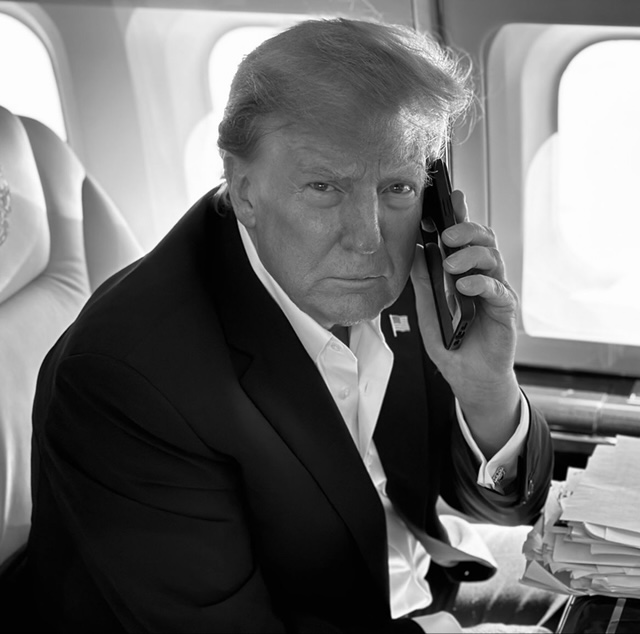
Former President Donald J. Trump’s claim of ‘absolute immunity’ threatens democracy as we know it. Photo courtesy of @realdonaldtrump/Instagram




 The USD Vista
Leave a comment