EMMA PIRHALA / ASST. NEWS EDITOR
There was once a time when nearly every girl’s dream was to become a “Brandy Girl.” Former “It” girls and YouTubers such as Summer Mckeen, Hannah Meloche and model Scarlett Leithold captivated teenage girls to do one thing: shop Brandy Melville. From popular items like the iconic Rosa sweatpants and Zelly top, Brandy continues to hold young girls in a chokehold. The caveat to the Italian brand’s popularity was found not-so-hidden in the label on the tag — “One size fits all.” However, the one size was targeted to thin girls, ostracizing those who didn’t fit in a reference range from 00-2. Since changed to just “one size,” Brandy Melville created an empire preying on perhaps the most abundant phenomenon — the insecurities of teenage girls.
The Max documentary, directed by Eva Orner, explores the clothing line’s scandal-ridden past, including racism, fat shaming and the exploitation of young girls — primarily by the company’s senior leadership. The business model of Brandy Melville is based upon the exclusivity of their clothing and the “Brandy Girls.”
The store is known for stereotypical tall, skinny and blonde white girls working the register and greeting customers. Meanwhile, the documentary says employees of color are located in the back rooms, sorting through incoming shipments. Kali, a former employee featured in the documentary, explained, “If you’re white, you have to be in sight.” As a person of color, Kali worked in the fitting rooms, then in the store’s back rooms.
A former store owner, who remained anonymous, in the documentary stated that CEO and co-founder of Brandy Melville Stephan Marsan implemented racist hiring practices to prevent the brand from losing exclusivity. The store owner confessed, “[Marsan] didn’t want a lot of Black people [working in the stores].”
Texts also resurfaced from a group chat titled “Brandy Melville Gags,” which included Marsan and other male executives at Brandy. The messages contained sexually explicit photos of women, racist memes and an array of anti-Semitic photographs — including one which imposed Marsan’s face on the body of Adolf Hitler.
Marsan was intricately involved in the day-to-day operations of the company’s stores across the world. Each day, managers submitted photographs of employees capturing their outfits. Although the pictures started as full body, they progressed into close-up shots of the girls’ chests and feet. All photos were forwarded to Marsan without the employees’ knowledge. From such photos, girls were selected to become models or they were fired for not meeting the brand’s physical standards. Workers were expected to remain thin, despite most employees being young women experiencing hormonal changes, not to mention societal beauty expectations. The outfits worn by the employees were then replicated and sold in stores, even if the clothes were not originally designed by Brandy Melville.
USD senior Olivia Valdez worked at Brandy Melville from the ages of 16 to 18.
“Every day when we came into work we had to get three pictures taken, full body, chest and feet, which was always so weird and all the girls were really uncomfortable by it. The pictures were all emailed to male employees in the upper rankings of the company — we never sent any pictures to women. At one point, we were told as employees we needed to be taking at least five pictures a day of girls shopping for ‘store style’ and ‘style inspiration’ but we were also told to only photograph girls in minimal makeup (young ages) and in plain clothing (leggings and workout clothes) which was horrible and obviously so uncomfortable.”
Valdez quit due to the company’s resistance to give her a raise, despite being made manager at 16 and working early morning shifts alone.
The young women who worked at the stores were responsible for leading the creative process of the company — without even knowing it. In most other businesses, senior executives would be charged with designing the brand’s clothing and persona. At Brandy Melville, the employees working for nearly minimum wage forged the creative direction of the label.
Despite the allegedly explicit intention to ostracize those who don’t conform to unrealistic beauty standards and the discovery of racial discrimination within the company, Brandy Melville remains to be one of the hottest brands for young women despite the documentary.
USD first-year Yukine Barber explained why she shops at Brandy Melville.
“I usually shop [at Brandy Melville] because it is cheap and the quality is fairly good. They have good basics and their sweats are nice. But I do wish they had different sizes. I feel like it can be a cause of insecurity. I know when I go in and I feel like I might not fit into something and it can definitely be a mood killer. It sets an expectation of what you’re supposed to look like and that is definitely unrealistic and discouraging,” Barber commented.
Brandy-holics stay addicted to the aura of perfection that Brandy Melville exudes. Whether people are uninformed about the documentary’s scandals or they simply don’t care, shoppers still line up outside of stores hoping to be the next Brandy Girl.
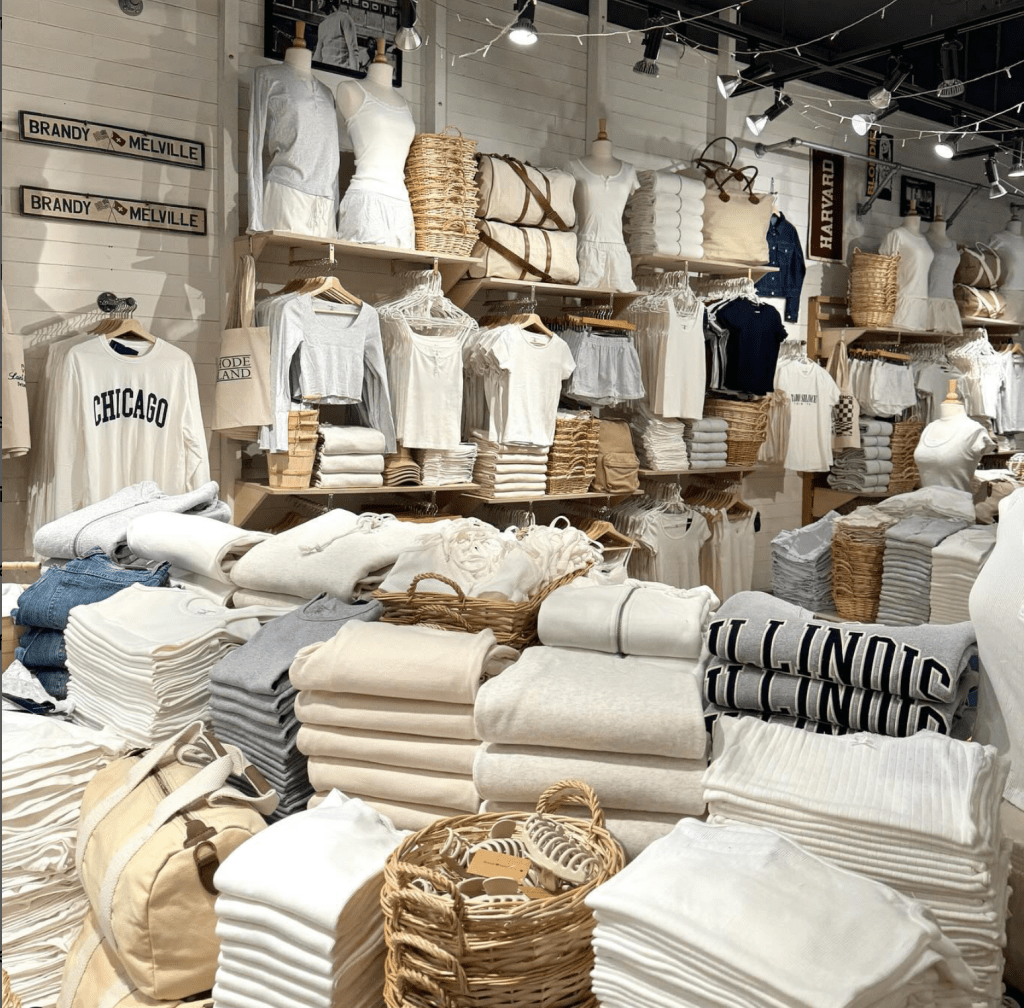
A Brandy Melville store in Chicago featuring their clothes, accessories, jewellery and bags customized to the state the store is in. Photo courtesy of @brandymelvilleusa/Instagram


 The USD Vista
Leave a comment