
JULIE FROMM / ASST. OPINION EDITOR
The views expressed in the editorial and op-ed sections are not necessarily those of The USD Vista staff, the University of San Diego, or its student body.
Last weekend, my friends and I were discussing our Instagram accounts and how we had thought about deleting the app entirely. It was something I’d been considering for a while but just hadn’t committed to doing. While we were talking, my friend chimed in proposing a question: if you delete your Instagram profile, how will people know you exist?
At first, I thought this was completely ridiculous,
“Of course I exist,” I told her, “here I am, sitting on the couch across from you.”
But then I began to think about my Instagram page and what it says about me. There are no references to my passions or hobbies; there are mostly posed photos of my friends and I in front of scenic backdrops. Nothing about my profile would tell anyone anything about who I really am. Social media has evolved from a platform to connect with people to a platform to curate a false, or even idealized, identity.
Instagram was released in 2010, and when I downloaded it at the age of 10, I posted silly selfies of myself and my siblings and did not consider what anyone would think. These early days of social media are nostalgically referred to as the years when Instagram was ‘casual.’
People posted anything they wanted, and celebrities posted life updates the same way everyone else did. Because the app was so new and social media was just beginning to gain popularity, people posted without thinking about how they would be perceived.
Now, Instagram has transformed into a place where you can advertise any version of yourself that you choose. A study conducted by Case24, a phone case company, found that only 29% of social media users post a photo without editing themselves first.

Instagram can be damaging to your perception of self. Photo courtesy of @Luke van Zyl/ Unsplash
Apps like Facetune allow you to edit your appearance in countless different ways. If you wish that your acne could disappear, the smoothing feature gives you clear skin in seconds. If you want a smaller waist, all it takes is dragging your finger across the screen to give an hourglass illusion.
Worst of all, editing has become so seamless through years of trial and error that it can be almost impossible to tell what is real and what is not.
The rise of photoshopping and editing is, of course, an issue that paints a deceiving picture of your appearance. But what is more problematic is the ability to choose what aspects of your life are seen and what remains hidden.
The photo of you from your vacation to Cancún last summer, piña colada in hand, is obviously not the same you that now sits in the classroom.
Not only can you edit your appearance to be what you think is superior, but you can also choose which angles of you are seen and which ones are deleted. But when you choose to only post the high points of your life and the best photos of yourself, who is seeing the real you?
Being vulnerable on social media platforms like Instagram can be extremely intimidating. It can be easier to pretend like your life is perfect than to allow people in.
Oftentimes, when influencers or celebrities choose to share more personal details about their lives, they are met with comments about how ‘brave’ they are. Removing the mask that we all have on social media should not have to be a courageous act — it should be the norm.
Social media’s conception was inspired by a desire to connect with people, and in some ways it still is. You can see posts from all over the world at the touch of a button. But now, I wonder if we are only connecting with the personas we have all created instead of the real person behind the profile page.
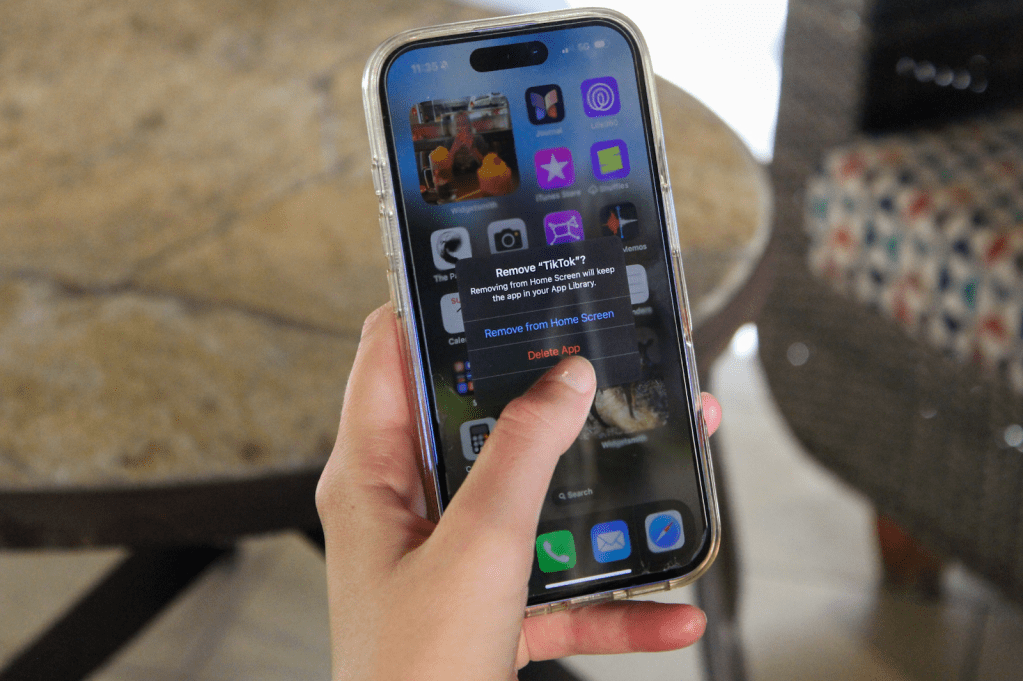
After conversing with my friends, I finally decided to deactivate my Instagram account and delete the app. I realized that watching a continuous loop of people’s best moments was doing me more harm than good- especially at times when I was feeling upset about my own life.
Without the app, I feel more connected to the people around me and to myself. Best of all, I do not feel the pressure of being perceived by people who do not truly know me.
It is important to remember that the photos people choose to post are almost never a true reflection of who they really are. It took me a long time to realize that comparing myself to an edited photo taken at just the right angle was not serving me. Now that Instagram is more focused on curating the perfect image and constant comparison, I feel much better being removed from the game.
This behind the scenes of an Instagram brand photoshoot demonstrates how photos can be staged. Shannen Swars/The USD Vista
 The USD Vista
Leave a comment