LARA DOMINIQUE SOLANTE / COPY EDITOR
Almost 40 years after his most popular song, “Songbird,” was released, Kenneth Gorelick — best known as “Kenny G” — played the same saxophone that he did back then, onstage at USD. In collaboration with Warwick’s bookstore, the USD College of Arts and Sciences and Humanities Center brought the popular saxophonist to discuss his newest memoir, “Life in the Key of G,” alongside Professor and Music Department Chair, Jeff Malecki, who moderated the event.
Gorelick began his journey in the music industry by playing solos for R&B songs with vocal artists such as George Benson, Patti LaBelle and Aretha Franklin. On his own, Gorelick would experiment with synthesizers and other instruments to try and find his own sound. This led him to the creation of his most popular single, “Songbird.”
That song kick-started the most commercially successful part of his career after he played it without permission on “The Tonight Show Starring Johnny Carson.” He was expected to perform a vocal song, but ,in a last-minute decision, chose to play his original piece, “Songbird,” instead.
Gorelick explained that he wasn’t necessarily fond of what he was doing with his record label at the time. He viewed this as his one opportunity to truly put himself out there. After playing his own piece live on national television, Gorelick was scolded by his manager, who had pulled some strings to get him on the show.
“What the guy that yelled at me didn’t realize was, the world saw what I did,” Gorelick said. “It wasn’t about [Johnny Carson] or his show or the people he had to either convince or not convince that I was worthy of being on the show. The world saw that.”
After his spontaneous performance on the show, “Songbird” went on to be one of the most successful instrumental tracks in the past 50 years, with almost 50 million streams. Today, Gorelick has 1.8 million monthly listeners on Spotify. Since then, he has added many studio and compilation albums to his discography.
Gorelick is known for the way that he connects with his audience. During his concerts, he interacts with them by entering the audience and performing around them. Before the invention of wireless microphones, instrumental artists would stay in one spot on the stage and perform, but with the invention of wireless technology, they were able to clip microphones to their instruments and walk around. One night at a jazz club in San Diego, a bandmate suggested to Gorelick that he should walk around the audience.
“I step off the stage for the first time, and I’m right there playing next to everybody,” Gorelick shared. “It was unbelievable. I could hear the sound coming out of the speakers and around the house. It was the coolest feeling. I loved it and I said, ‘I’m doing this every single night.’”
Gorelick explained that he does this in order to connect with the audience in the same way that vocal artists can.
“The thing about instrumental music is that, to connect is not as easy as with vocal music,” Gorelick said. “Vocals are going to tell you what the song is about, and you can connect with it if you’ve got the same feelings. When I’m next to everyone playing, the notes don’t matter anymore because now, we’re connecting.”
When he’s not connecting with the audience, Gorelick spends time working on new songs. Every day, he practices playing his saxophone from 7-10 a.m. and uses the rest of the day to exercise and pursue his hobbies, which include golfing and flying planes. For Gorelick, joy is what drives his creativity.
“It’s about whatever makes your quality of life better,” Gorelick shared. “You’ve got to think about what you love, what makes your heart sing, whatever that thing is, and try to do that. Within one’s life, whatever that joy is that you can feel… Try to figure out how you can make that a big part of your life.”
This insight into joy is something that stuck with Professor Jeff Malecki, who shared the stage with Gorelick that night to moderate the event. He explained how students can take this advice to heart.
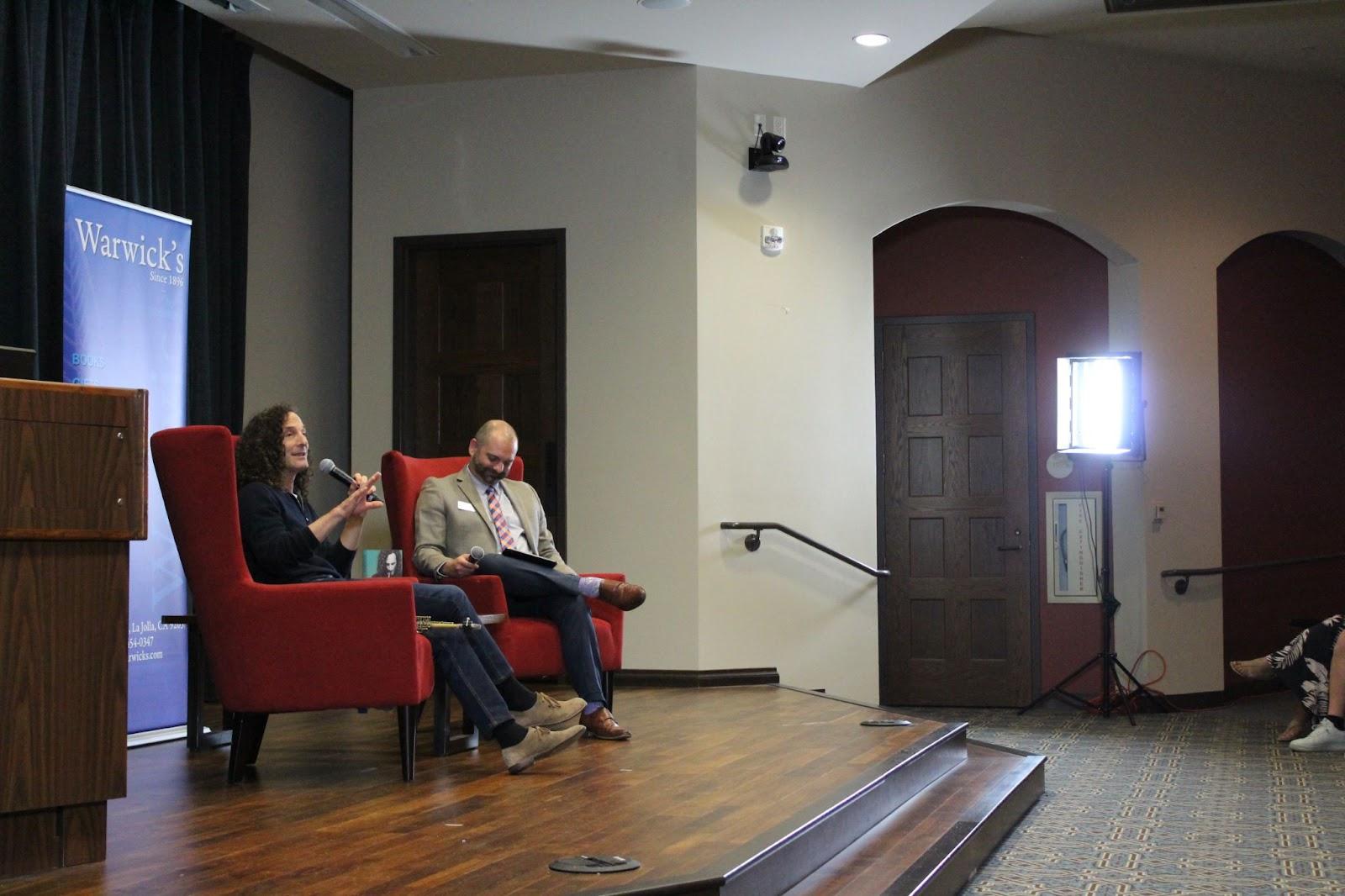
Kenny G and Professor Jeff Malecki onstage at Warren Auditorium on Oct. 1. Photo Courtesy of Magdalene Mcrae
“He kept coming back to joy,” Malecki said. “When we’re talking about practice — he was talking about practicing saxophone, but maybe it’s studying for an exam or working on a senior project — can you find joy in that? That’s what life’s all about, and it’s so important and refreshing.”
Many students attended the event to catch a glimpse of the saxophone star. For USD students studying music, seeing Gorelick in the flesh was inspiring.
“I’ve been a classical saxophonist since elementary school, and Kenny G was the only famous saxophonist that I ever knew growing up,” USD first-year James Strobeck said. “He wasn’t really ‘high and mighty’ about his art. He was very down to earth and very much himself, even though he is so successful. It really highlights how music is art and not something that you can just corporatize.”
USD fifth-year Lauren O’Donnell, a member of the wind ensemble, shared her biggest takeaway from the event.
“He has a really strong work ethic, but he loves what he does,” O’Donnell said. “I learned to take all the opportunities that you can. He’s very passionate about the world, passionate about what he does, and that’s really inspiring.”
15 studio albums, 18 compilation albums and 41 singles later, Gorelick plans to re-record his songs in order to own the copyright to the original sound recordings of his music. Until then, Gorelick will continue to share his smooth jazz with the world and find joy in his art.
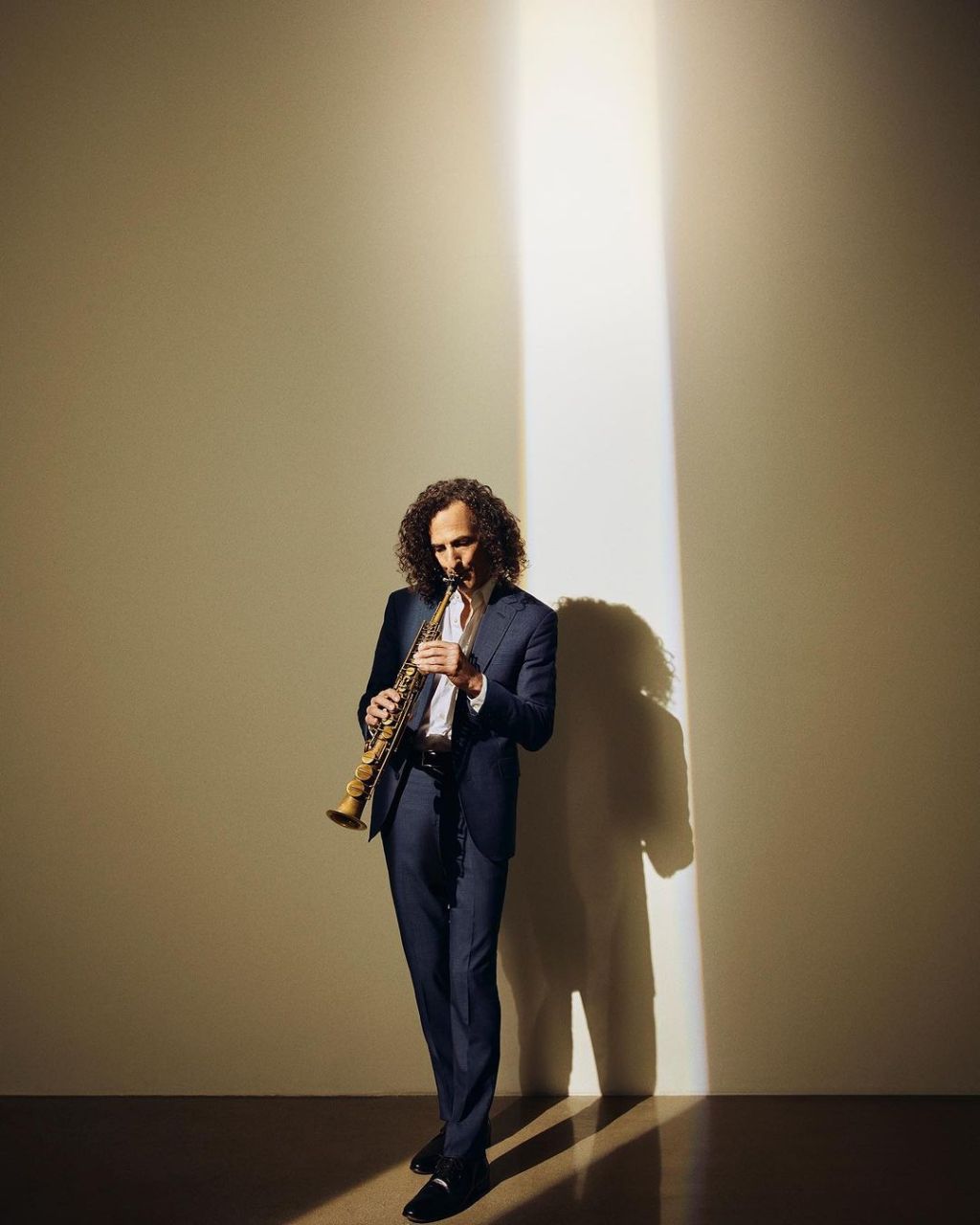
Kenneth Gorelick, known as “Kenny G,” playing his instrument, the soprano saxophone. Photo Courtesy of @kennyg/Instagram




 The USD Vista
Leave a comment