
EMMA PIRHALA / NEWS EDITOR
The state of California recently banned the use of legacy and donor status as a factor in admissions. The bill, known legally as AB 1780, was signed into law on Sept. 30 and prohibits preferential treatment toward applicants due to legacy status and donations at private, nonprofit universities. To ensure the law is enforced, private universities will be obligated to submit an annual admissions report detailing their compliance. However, there is some uncertainty by legal scholars as to how strongly the law will be enforced.
USD first-year Estefania Valencia shared her view on the new law.
“I think when you stop benefiting applicants whose parents went to the same school then it will make college admissions more equitable,” Valencia stated.
In a press release, creator of the bill, Assemblymember Phil Ting of San Francisco explained the significance of the law.
“If we value diversity in higher education, we must level the playing field,” Ting explained. “That means making the college application process more fair and equitable. Hard work, good grades and a well-rounded background should earn you a spot in the incoming class – not the size of the check your family can write.
Legacy students, or “legacies,” are students or applicants whose family members have attended the same institution. The practice of preferential legacy admissions has been criticized heavily for years, with many universities abandoning their use.
The ban follows the 2023 Supreme Court case, Students for Fair Admissions, Inc. (SFFA) v. President & Fellows of Harvard College (Harvard) and SFFA v. University of North Carolina (UNC), which ended the use of affirmative action in college admissions. The ruling sought to promote holistic admissions for applicants of all backgrounds.
At USD, the new law will have little to no impact on admissions operations. USD Associate Vice President of Enrollment Stephen Pultz provided insight into the University’s admissions process in the wake of legislative change.
“For USD, this won’t really have an impact at all,” Pultz said. “We have not considered the legacy status of a student for several years. In fact, we have been building a more equitable admissions process for a while. Not only don’t we consider legacy status, but we moved to having only one application deadline (no early action or early decision), no longer using standardized tests, and having a very holistic review process.”
The University ended the use of legacy admissions in 2020 alongside the Association of Independent California Colleges and Universities (AICCU), which USD is a member of . However, the AICCU opposed the new bill due to its legislative intervention in college admissions. AICCU Vice President of Government Relations Alex Graves expressed the organization’s opposition to the bill prior to its passing at a California Senate hearing on education on June 19.
“We have historically maintained strong reservations as a sector about the state dictating admissions or academic practice at private colleges admittedly,” Graves stated.
Despite some backlash, the introduction of the law makes California the fifth state in the nation to ban legacy admissions. Although it will not make a major difference at USD, admissions will change at the six California universities that still utilize legacy preferences: Santa Clara University, Stanford University, University of Southern California, Northeastern University Oakland, Harvey Mudd College and Claremont McKenna University.
However, on the national scale, admissions counselors have mixed opinions regarding whether or not the ban will provide greater transparency and equitability. Some question if those legacy spots will be filled by other privileged applicants. Pultz explained the uncertainty of legacy admissions throughout the country.
“As for the broader landscape of college admissions, it is still unclear whether this will have the desired impact, which is to level the playing field,” Pultz said. “It will take some time to realize the full impact, but it is an important first step in trying to provide a more transparent and equitable process.”
Students have differing opinions on whether legacy status should be a factor in admissions decisions. USD junior Diego Castillo identifies himself as a legacy student, since his mother attended the University. Castillo shared that he believes legacy status should be factored into the admit process.
“Personally, I believe that universities should factor in legacy status in the admissions process because at the end of the day, it builds some pride around the school and within families that can celebrate the fact that there’s a bit of a tradition starting,” Castillo explained. “Legacy, as I see it, is a good thing. It’s something to celebrate and builds this culture of striving to continue the tradition. I know this is true, for me personally, because when I decided I was going to attend USD, my mom and I were really happy to have started a legacy. But I knew that in order to keep the legacy, I needed to get here to USD and put in the work.”
However, other students oppose the use of legacy status as an admissions factor. USD first-year Minette Amador explained why she opposes the use of preferential legacy admissions.
“I feel like it is not really fair,” Amador said. “[Being a legacy] is an advantage but it doesn’t make [admissions] a fair process, since [universities are] admitting people because their parents attended and I feel like every single person is different.”
California’s ban will take effect next year impacting the class of 2025 applying to colleges other than USD. The landscape of college admissions continues to change as new legislation is introduced.
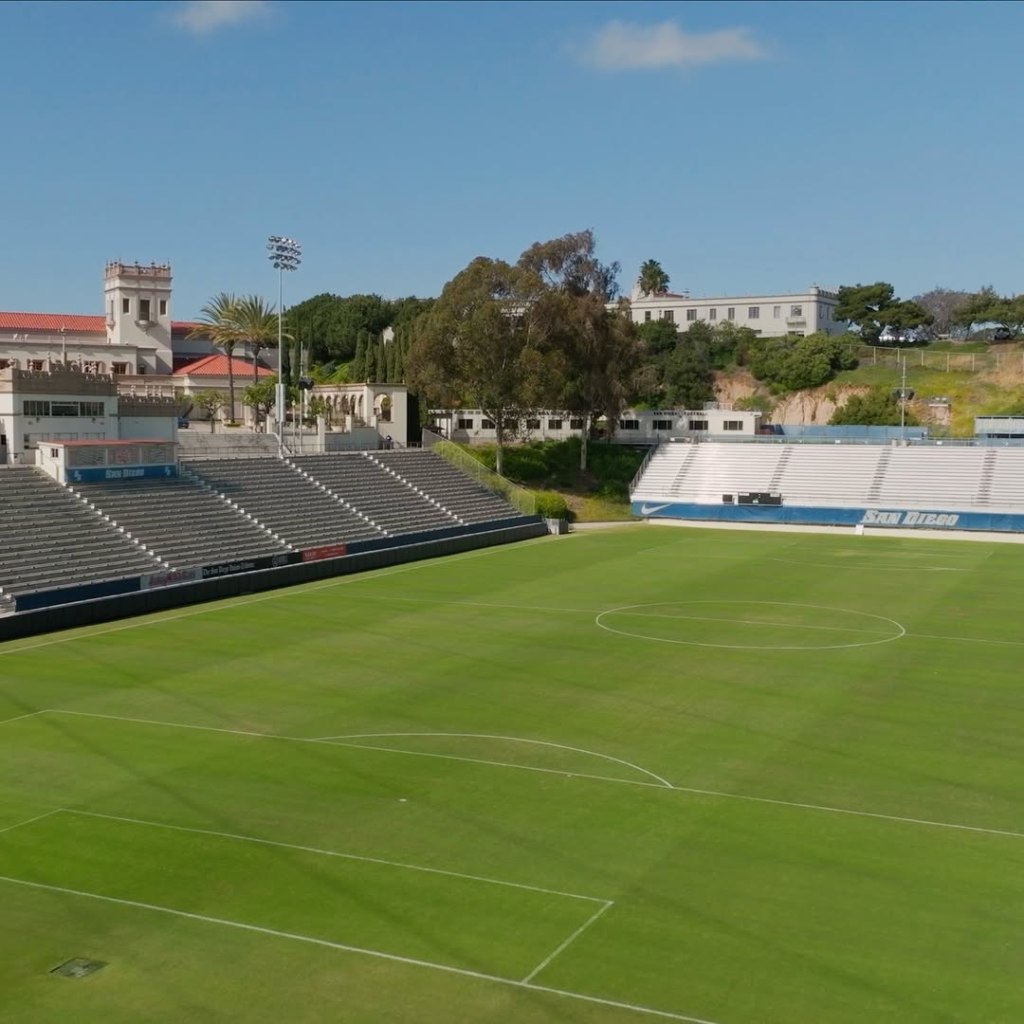
The new ban will have little to no impact on the University, since USD hasn’t utilized the practice since 2020. Alissa Abramovich/The USD Vista



 The USD Vista
Leave a comment