
EMMA PIRHALA / NEWS EDITOR
The final planned debate of this election season occurred on Oct. 1, between vice presidential nominees, Minnesota Governor Tim Walz and Ohio Senator J.D. Vance. The event marked the first time the two candidates had met. Some USD students remained glued to their TVs as they viewed the debate, whereas other students didn’t watch at all.
USD first-year Bethany Tate didn’t watch the debate for a few reasons.
“I knew it was happening and my mom was urging me to watch it because she’s very political in that sense,” Tate explained. “But I just didn’t have time in the day to watch. I don’t know, I am just not interested in politics like that.”
The debate was broadcasted by CBS News with anchors Norah O’Donnell and Margaret Brennan as the moderators. Leading up to the broadcast, both campaigns determined rules to maintain civility and decorum. Moderators directed questions to each candidate and provided two minutes to respond, and the other nominee received two minutes for a rebuttal. After the initial banter, candidates were allowed another minute each to make final remarks. If Walz or Vance continued speaking past their time limit, their microphones would be muted so that the audience wouldn’t be able to hear them.
Additionally, live fact-checking by the moderators was not included in this debate, different from last month’s presidential debate where the practice was reintroduced following eight years of ceased use. Fact-checking was available to viewers via a QR code on CBS’s broadcast. However, audiences streaming from other channels did not have access to the QR code. This forced some viewers to rely on other fact-checking sources or to disregard the practice entirely.
USD sophomore Sidony Douei shared her opinion on the disregard of live fact-checking.
“I think [not fact-checking live] impacts decision-making in the crowd because people are believing what they want to believe,” Douei explained. “I don’t think it’s a good thing to stop the fact-checking.”
Despite the absence of live fact-checking, Brennan clarified a statement made by Vance regarding Haitian immigrants in Springfield, Ohio.
“Look, in Springfield, Ohio and in communities all across this country, you’ve got schools that are overwhelmed, you’ve got hospitals that are overwhelmed, you have got housing that is totally unaffordable because we brought in millions of illegal immigrants to compete with Americans for scarce homes. The people that I’m most worried about in Springfield, Ohio, are the American citizens who have had their lives destroyed by Kamala Harris’s open border.”
In response, Brennan fact-checked the senator.
“And just to clarify for our viewers, Springfield, Ohio does have a large number of Haitian migrants who have legal status. Temporary protected status,” Brennan said.
The debate touched on many hot topics concerning voters such as abortion, immigration and the border, conflicts in the Middle East and climate change. Walz and Vance attempted to find common ground while directing many of their attacks not to each other, but rather, toward the presidential candidates.
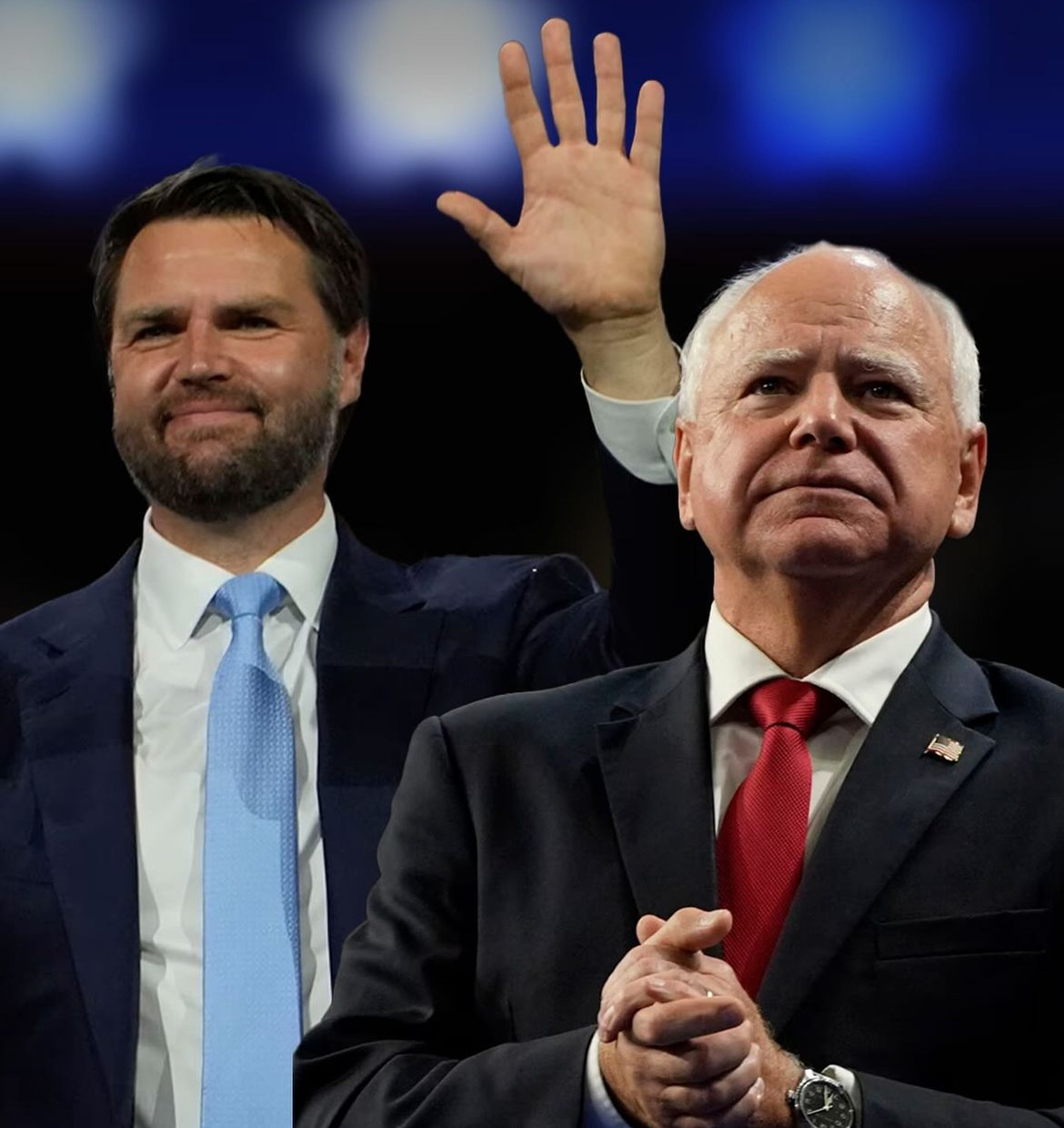
Vance and Walz face off at the debate. Photo courtesy of @ridethewave/Instagram
One instance of this was on the topic of gun violence, where Vance agreed that the country’s school shootings are tragic, and later related the issue to open border policies under the Biden-Harris administration.
“I think that Governor Walz and I actually probably agree that we need to do better on [the issue of school shootings]. The question is just how do we actually do it,” Vance stated. “We know that thanks to Kamala Harris’s open border, we’ve seen a massive influx in the number of illegal guns run by the Mexican drug cartel,” Vance continued.
Similarly, Walz found middle ground with Vance regarding poverty in rural areas. However, not without first placing blame on Trump’s economic policies in office.
“I think the thing that most concerns me on this is, is Donald Trump was the guy who created the largest trade deficit in American history with China,” Walz said. “Much of what the senator said right there, I’m in agreement with him on [needing to improve the economy].”
Despite differences, the debate rendered a sympathetic moment between candidates, where Vance offered his condolences to Walz after hearing that Walz’s son witnessed a shooting.
“Tim, first of all, I didn’t know that your 17 year old witnessed the shooting,” Vance stated. “And I’m sorry about that. And I hope, Christ, have mercy. It is awful.”
As the debate concluded, both candidates admitted missteps and cleared up questions about their pasts. Walz initially tiptoed around a question regarding his presence in Hong Kong during the Tiananmen Square protest in spring of 1989. But the Minnesota governor eventually stated that he actually arrived in China in the summer of 1989, months after the protest.
“I got there that summer and misspoke on this … So I was in Hong Kong and China during the democracy protest, went in, and from that, I learned a lot of what needed to be in governance,” Walz said.
Likewise, Vance touched on his previous comments about running-mate former President Donald Trump’s competency, including likening him to Hitler which was mentioned by the moderators.
“I’ve always been open and sometimes, of course, I’ve disagreed with the President, but I’ve also been extremely open about the fact that I was wrong about Donald Trump,” Vance explained. “I was wrong, first of all, because I believed some of the media stories that turned out to be dishonest fabrications of his record.”
Last Tuesday’s debate marked the final event for voters to watch the VP candidates interact in person. With just weeks left before Election Day sweeps the nation, the time for voters to decide who will receive their vote is ticking.
The candidates spoke back and forth discussing current issues. Photo courtesy of @TRTWorldNow/X


 The USD Vista
Leave a comment