EMMA PIRHALA / NEWS EDITOR
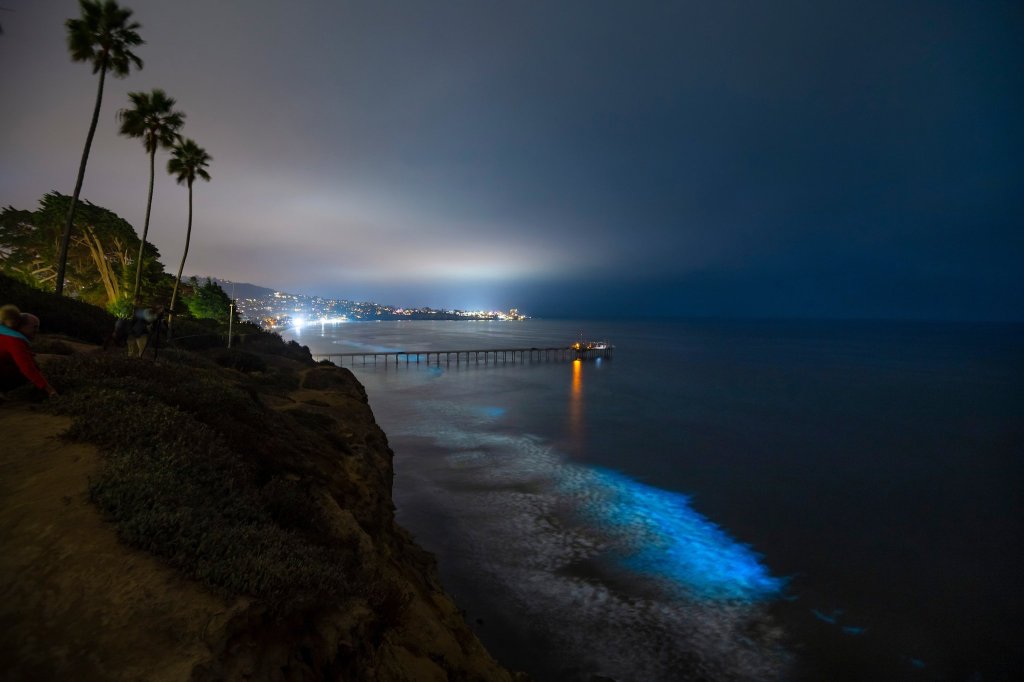
San Diego’s electric blue waves recently returned, attracting tourists and USD students alike to the coastlines. The natural phenomenon, known as bioluminescence, can be seen at night at popular beaches such as Scripps, Pacific and Black’s beaches. The rare sight mainly occurs in the spring and early fall, however, this year the marine marvel happened once again in November. People from across the country flocked to the Southern California coast to watch the bioluminescence in action. USD students had a front row seat to the sea sensation, with many Toreros trekking to the shores to view the bioluminescence.
Last week, USD first-year Devina Shrestha went to go watch the bioluminescent waves at Scripps Beach.
“The bioluminescence was super cool to see,” Shrestha said. “It’s always been a bucket list thing for me, so I was really excited to see it. It took a while to see it super bright because you have to wait for a big wave, but that almost made it more fun. It was almost like looking for shooting stars in the night sky.”

The electric blue hue is caused by a light reaction from plankton and algae. Photo courtesy of @Xquesohueso/X
USD first-year Sofia Peck also trekked to the beach to see the bright blue waves.
“Watching the bioluminescence was one of my favorite things I’ve done so far in San Diego,” Peck shared. “It was super fun going to see it with my friends and we all sat on the beach to watch it. It was so exciting because not all of the waves would be blue so we would try to spot them before they came.”
The natural wonder is caused by the emission of light from algae in the ocean. In the daylight, these microscopic organisms produce a red hue, giving name to the “red tides” which precurse the bioluminescent waves. USD senior and biology student Sophie Meckstroth explained how bioluminescence occurs. Meckstroth conducted research on marine ecology and on plankton concentration in Southern California.
“Bioluminescence is a natural phenomenon where organisms like algae and plankton produce light through a reaction involving the enzyme luciferin,” Meckstroth explained. “In Southern California, this glow is often caused by dinoflagellate plankton, which emit neon blue light when disturbed, such as by crashing waves. These events are typically linked to ‘red tides,’ where dense plankton blooms turn the water red or brown during the day and luminous at night.”
Bioluminescence can last anywhere from a day to a few weeks depending on the amount of algae found in the water. However, due to its unpredictable nature, some USD students urge others to catch the rarity while it is still present.
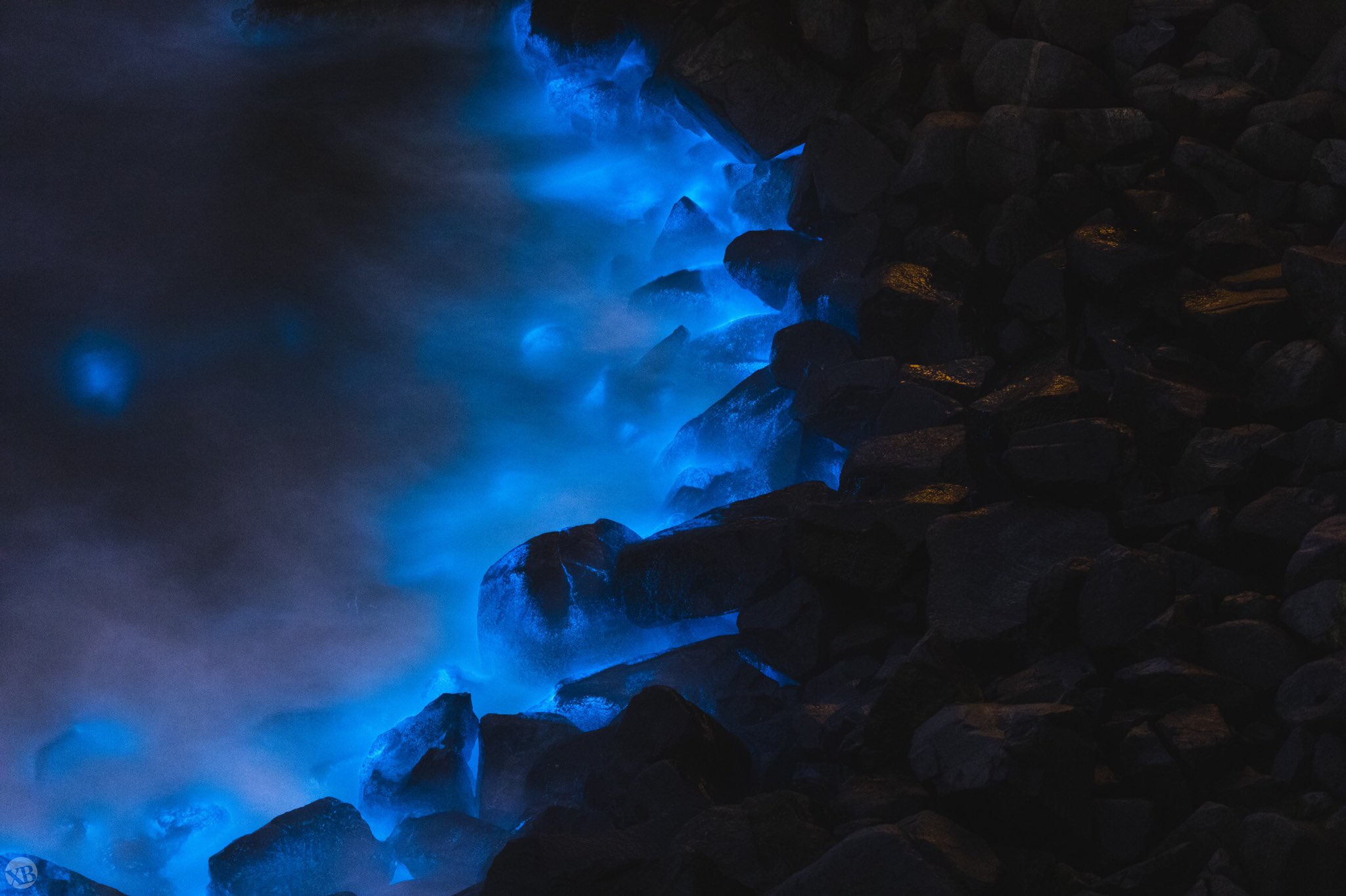
Tourists from around the country come to watch the bioluminescence in action. Photo courtesy of @Xquesohueso/X
USD first-year Leila Usami encouraged those in the USD community to visit the waves before they subside.
“I would overall recommend this to others because you can be able to say you saw the bioluminescence, which is really cool,” Usami said. “Also, experiencing it in real time is so different than seeing it online. Although it looks much brighter online, the ambiance of it all makes it so much better.”
Peck also had the chance to see bioluminescence in action.
“Although it was definitely more evident in the photos than it was in real life, I would still recommend going,” Peck shared. “The vibes were still really fun and it can be a unique activity to do, it’s also super accessible for a lot of people. The only thing I would say is to plan on spending a bit of time at the beach as the waves are not that easy to spot. We set up blankets and brought snacks with a speaker and stargazed for a bit as well.”
Students agreed that the bioluminescence isn’t quite as vivid in person as it is in pictures, with Shrestha echoing similar sentiments.
“It definitely wasn’t as bright as the photos, but I would definitely still recommend [viewing the bioluminescence],” Shrestha explained. “You just had to wait and watch for a big wave to hit to see the blue!”
As of The USD Vista’s production date of Nov. 19, bioluminescence continued to light up the coastline. Yet, San Diegans have plenty of other opportunities to view the bioluminescence in the spring when the glowing waves quickly return to the sandy beaches of Southern California.
The bioluminescent waves can be seen at Scripps Beach. Photo courtesy of @Scripps_Ocean/X



 The USD Vista
Leave a comment