
LUKAS BLANKENSTEIN / CONTRIBUTOR
On Sunday, Feb. 23, the city of San Diego will finally have a professional soccer team in Major League Soccer (MLS), the highest level of American professional soccer. San Diego Football Club (SDFC) is set to face off on the road against reigning champions, the LA Galaxy. The team will then return home to play their first game at Snapdragon Stadium against St. Louis Soccer Club.
The arrival of the team comes with a lot of fanfare, considering how long the wait has been. San Diego has always been a soccer hotbed, being right on the border of the soccer fandom of Mexico. In addition, the large Latino population of San Diego is still as passionate about soccer as the natives.
It’s for this reason that all the way back during the founding of the MLS in 1996, the then MLS commissioner Doug Logan called San Diego a “prime candidate” for expansion, as reported by Mark Ziegler in the San Diego Union-Tribune. However, the sticking point had always been the lack of a suitable stadium to play in. With the completion of the 35,000 capacity in Snapdragon Stadium at San Diego State University, the stadium size was no longer an issue, allowing for the MLS to officially expand to San Diego.
One of the exciting aspects of having a team in San Diego is its proximity to Mexico, leading to a potential cross cultural fanbase appeal. This dual fanbase has already been seen in San Diego’s southern neighbor, Tijuana. The New York Times explored this topic in 2017 when they wrote an article about the prevalence of American fans traveling from San Diego to watch Club Tijuana games.
Club Tijuana, often nicknamed “Xolos”, was also the first team in Mexico’s top soccer league to offer public communication in both English and Spanish. They are also sponsored by Bud Light, rather than a Mexican beer brand like Modelo. SDFC will likely be attempting to capture this multicultural sporting atmosphere to create a unique experience that cannot be found anywhere else in the MLS.
USD junior Allen Coronado, a Guadalajara native who moved to San Diego in 2018, expressed a similar sentiment.
“A lot of people in the states, if they want that true soccer experience, they’ll probably go to Mexico,” Coronado stated. “Being able to bridge that gap between those communities, having that here in San Diego, I think it’s going to be a very popular market, especially because of the Hispanic heritage and how popular soccer is here.”
San Diego FC has also tried to appeal to Latinos, particularly with the addition of winger Hirving “Chucky” Lozano. Lozano has played 70 games for the Mexican national team and scored 18 goals, including the game winning goal for Mexico in their shocking victory over defending champions, Germany, in the 2018 World Cup.
This is his first season back in North America since he left for Europe in 2017. In Europe, he played a total of 213 games and scored 67 goals, while also winning the Italian soccer championship with Napoli and two Dutch Championships with Philips Sport Vereniging (PSV) Eindhoven.
The strategy of getting notable Mexican players is not new to California. Los Angeles FC and LA Galaxy have both done so in the past to appeal to Mexican fans, most notably, the signings of Carlos Vela for LA FC and Javier Hernandez (Chichirito) for LA Galaxy, both of whom were of similar status as Lozano at the time. Coronado also spoke about what bringing in Lozano meant to the team.
“I think the marketing is one of the reasons they brought (Lozano) in,” Coronado said. “You say that name in Mexico and everyone knows him. Bringing in someone like that as the face of the team shows the path that the franchise is trying to take.”
San Diego has also tried to appeal to local San Diego fans by grabbing a number of players who grew up in San Diego. Of particular interest is USD’s forward Samy Kanaan. Kanaan played 42 games for the Torero’s between 2022-2024, scoring 15 goals and leading the team last season with nine goals. Kanaan was drafted in the second round with the 56th overall pick in this year’s MLS draft and has already begun practicing with the team. Kanaan, a San Diego native, shared his experience of being drafted.
“I had a feeling that I would be drafted, but I didn’t know exactly where,” Kanaan stated. “It was scary because you have no clue where you might have to relocate.”
However, when Kanaan finally got the call to join San Diego, he was elated.
“It was an incredible experience being part of the inaugural preseason of my hometown,” Kanaan said. “I couldn’t wipe the smile off my face.”
Despite being drafted, Kanaan and SDFC both decided it was in his best interest to not sign immediately, instead allowing him to spend his senior year still playing for USD. Kanaan spoke highly of the SDFC commitment to San Diego’s values.
“The staff and management is very focused on learning from mistakes, becoming more aware and comfortable with our identity as a Football Club and building an unbreakable culture that goes hand in hand with San Diegan values,” Kanaan said.
Between the long wait, intriguing cross cultural connections and addition of home grown talent, SDFC has given fans a lot to be excited about ahead of their inaugural season. This remains to be seen, however, if they can transfer this excitement into long term success. Regardless, for San Diego’s soccer fans the future is less important than the present, and fans can now bask in the knowledge that they now, officially, have a team to call their own.
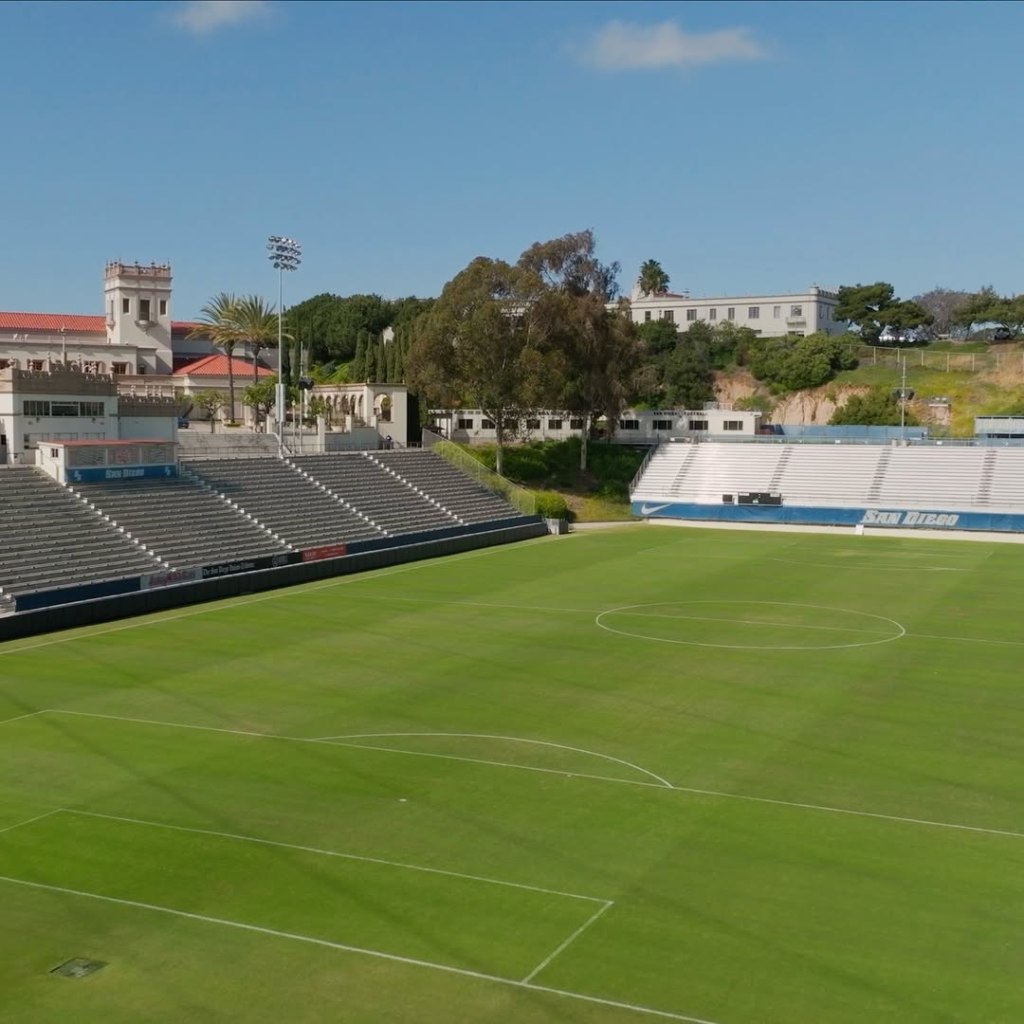
The new Snapdragon Stadium hosting the San Diego Wave FC. Photo courtesy of @snapdragonstadium/Instagram

 The USD Vista
Leave a comment