ALEX KUETER / ASST. OPINION EDITOR
The views expressed in the editorial and op-ed sections are not necessarily those of The USD Vista staff, the University of San Diego or its student body.
One of the many hallmarks of spring is the blooming of flowers. With their sweet smells and vibrant colors, these plants symbolize hope, new beginning and renewal. This is often highly anticipated and celebrated and truly marks the end of winter. However, one tree ruins this otherwise sweet start to spring — the Bradford Pear. While other flowers are valued for their sweet smells, Bradford Pears have a particular unpleasant odor that can be smelled for miles.
As scholars Ryan Neville-Shepard and Casey Ryan Kelly explained in an article for the International Communication Association, the odor these trees omit is anything but pleasant.
“Critics also say the tree smells like semen, or what Morgans (2017) called ‘that chlorine musk that reminds you of either narrowly dodging a pregnancy or being a 15-year-old boy,’” Neville-Shepard and Kelly wrote.
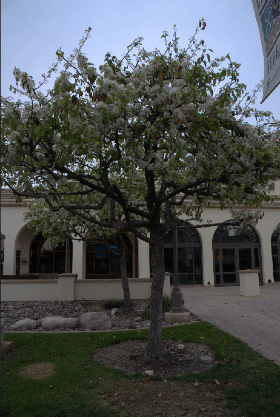
USD’s own campus is littered with these foul florals, so if you ever find yourself walking past the SLP or towards Pacific Ridge and smell something akin to a moldy piece of meat, thank the Bradford Pears littered around campus. But the nasty odor is far from the only issue with these trees; they are highly invasive, require intensive watering and are prone to snapping or breaking unexpectedly.
These plants were introduced in the 1960’s from China and Vietnam due to their fast growing nature and beautiful flowers. There, they are prized for their pest resistance and fast growing nature and are often grafted with fruiting pears to produce hearty growing trees. Brought to just be an aesthetic addition to cities and suburban neighborhoods with their dainty white flowers, the issues with the trees began to arise fast. They have incredibly weak branches and are prone to snapping in moderate wind or winter storms, leaving the trees lopsided and at a higher chance of falling over. With San Diego’s Santa Ana winds, the chances are high that one could snap and cause damage to the campus.
On top of these shortcomings, the trees are highly invasive and hard to get rid of. As limbs fall, seeds spread and rapidly germinate across fertile areas. Thorns grow along branches, creating thickets of trees that are extremely difficult to get rid of. These thick, thorny branches allow the trees to block sun from other native plants, outcompeting them. The issues further continue with water usage.
While somewhat drought tolerant, water must fully soak into the depth of the trees’ root systems when they are watered, or it will not help the tree. In cooler, less sunny climates, spray or drip irrigation can accomplish this. But here in San Diego, the high heat and intense sunlight leads to much of the water evaporating before it can reach the roots. As such, they are more water intensive than a native species would be. It is recommended to soak them until soil moisture is steady 1-2 times a week, or approximately 10-15 gallons of water. Whereas native beautiful velvet ash trees need only be watered once every two weeks.
However, while removing the trees seems like an easy answer, there are ecological consequences to their departure. Their flowers are an important food source for pollinators, like honey bees and flies in early spring. Their fast flowering nature can provide a valuable early food source for important insects. Their small seeds also offer a food source for migrating birds, who are especially dependent on the trees while nothing else blooms.
The years before any new species could bloom would result in pollinators being out of food for up to five years while the plants mature. Furthermore, cutting down a 20 foot tree releases 100 kg of carbon dioxide and prevents the absorption of around 10 kgs of CO2 a year. While planting new trees would eventually result in CO2 being absorbed again, there would still be loss and waste from cutting the old ones down. However, these downsides are still small in comparison to the present issues of the tree.
Removing these smelly saplings from campus and replacing them with a native species, such as the Ash Velvet tree, would help to save water, would look pretty and would save students’ noses across campus. Ash Velvet trees are just as capable of absorbing CO2, and after a few years of steady growth, they will be just as big and helpful.
Ultimately, Bradford Pears are stinky and have a variety of somewhat hidden downsides. They can be smelled for miles and are easily the worst part of spring. If you are ever outside and wondering what that awful smell is, look around you for a big white tree and there’s your answer. They are not water efficient and often require excessive watering in order to keep them alive in especially hot years. Healing this campus starts with removing the Bradford Pear, thus creating a brighter, clearer and better smelling start to spring.
The Bradford Pear trees pose an inconvenience to everyone on campus. Photo Courtesy of Shannen Swars/The USD Vista



 The USD Vista
Leave a comment