ALEXANDRA ALCALA / ASST. A&C EDITOR
Benito Martinez Ocasio, better known as “Bad Bunny,” recently dropped his latest album “DeBÍ TiRAR MáS FOToS.” The album showcases 17 songs which include features with artists such as RaiNao, Los Pleneros de la Cresta and Chuwi — all Puerto Rican musicians. This album stands out from all of his other ones as it pays homage to his roots and incorporates a mix of reggaeton, trap and traditional Puerto Rican sounds that highlight the island’s rich musical heritage.
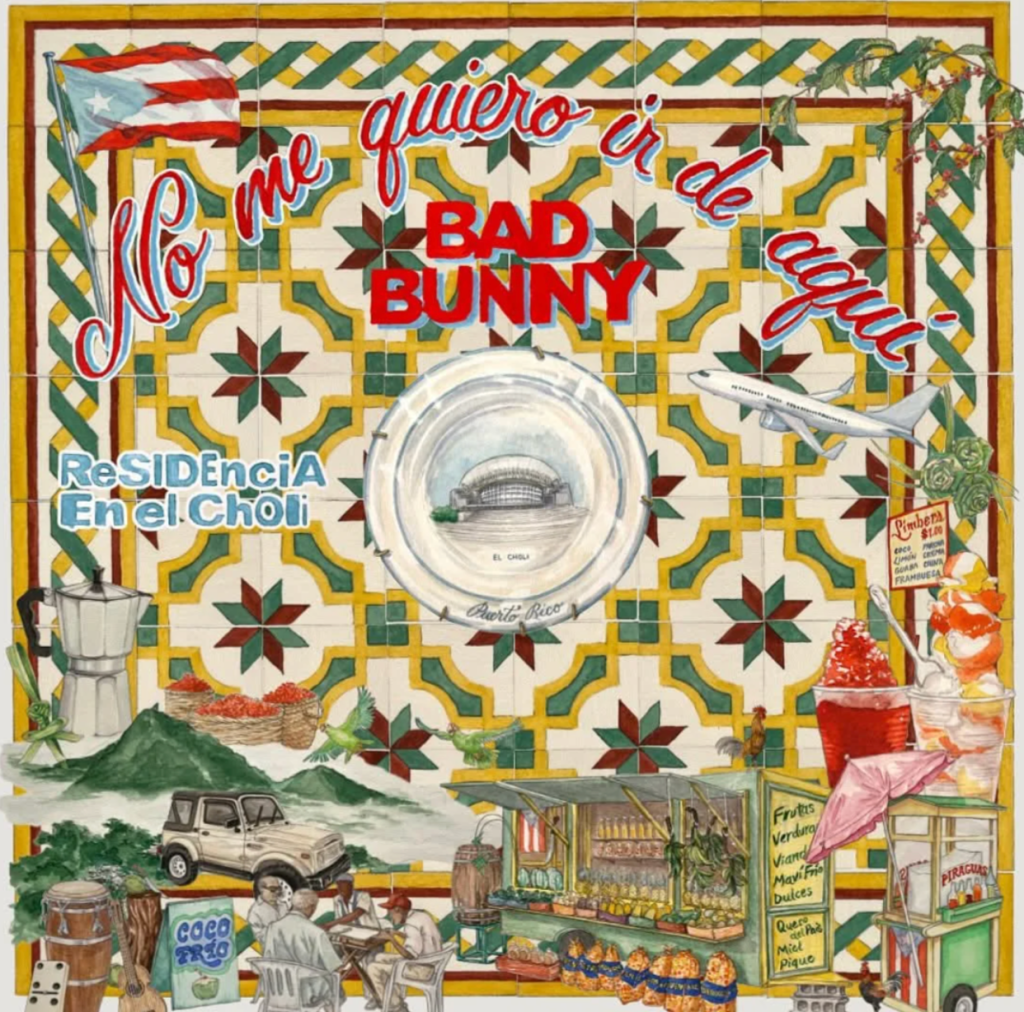
In addition to the album release, Bad Bunny announced an exclusive residency in Puerto Rico with more than half of the dates being available only to local residents. This decision has sparked conversations in the media, reinforcing his commitment to his homeland and prioritizing the people who have supported him from the very beginning. While many artists chase global audiences, Bad Bunny continues to center his culture, making it clear that his success is not just for him but also for the island that raised him.
Dr. Wilnelia Recart González is an assistant professor in USD’s biology department, and she is a Puerto Rican plant ecologist. Recart González is passionate about inclusion and retaining minorities in science and academia. To this end, she has created workshops and panels for different scientific societies to foster change that increases the representation of underrepresented people in science.
“[Bad Bunny has] always been an artist I’ve been curious about,” Recart González said. “In Puerto Rico, his history shines a lot as he used to be a bagger at a local supermarket store and now he’s a global sensation. I am definitely ‘team Bad Bunny.’ I actually made sure I was free for when this new album was released just so that I could really listen to it and dedicate that time to it. I love this new album and have several songs on repeat.”
Bad Bunny’s influence extends beyond his music as his concerts and events create a frenzy among fans with tickets selling out quickly. His residency in Puerto Rico was no different, bringing a large demand and leading to long lines outside the venue as people had hoped for a chance to attend.
“I tried to get tickets for the residency, but I wasn’t able to as they sold out pretty quickly,” Recart González said. “I could not access the Puerto Rico residents only tickets as I currently reside in San Diego, so I tried to get the normal tickets but couldn’t. From what I’ve heard, the lines outside the venue to get tickets got a little crazy and long. Images of people waiting went viral, and I believe it was ridiculous but fun to see everyone putting their lives on hold to try and get tickets.”
The demand for tickets speaks to just how much Bad Bunny means to his fans, especially those from Puerto Rico. His music isn’t just about catchy beats, it’s a reflection of his pride and dedication to his roots. Lola Schettini Ramirez is a senior at USD, majoring in behavioral neuroscience with minors in biology and marketing. She is from San Juan, Puerto Rico, and Bad Bunny is one of her favorite artists.
“I have liked Bad Bunny since I was in middle school and I love his authenticity to Puerto Ricans,” Schettini said. “He’s always for our people, and I feel this album really showed everyone how much he loves Puerto Rico. This resonates with me a lot because loving my culture is a big part of myself so I definitely like that he does that.”
Some of the conversation brought up online was that this album was different than his other ones. Some believed this to be positive while others thought of it as a negative aspect. But beyond the beats and features, “DeBÍ TiRAR MáS FOToS” carries a weight that can’t be fully appreciated without understanding its cultural and political undertones.
“I wasn’t able to listen to the album straight after it was released as I was studying abroad, but I had non-Puerto Rican friends texting me that it wasn’t as good as his other albums,” Schettini said. “Once I was able to listen to the album, I cried because it was just very heartfelt to Puerto Ricans. I believe it was a very political album, and so if you’re not from Puerto Rico the album is obviously still enjoyable but you might not get the actual meaning behind its lyrics.”
As his fans feel proud to watch Bad Bunny rise to international fame, it is also something that they struggle with. A lot of people want to see their favorite artist and even though Bad Bunny has had different tours around the world with many dates in different cities, sometimes this doesn’t leave enough room for his people to enjoy his music live.
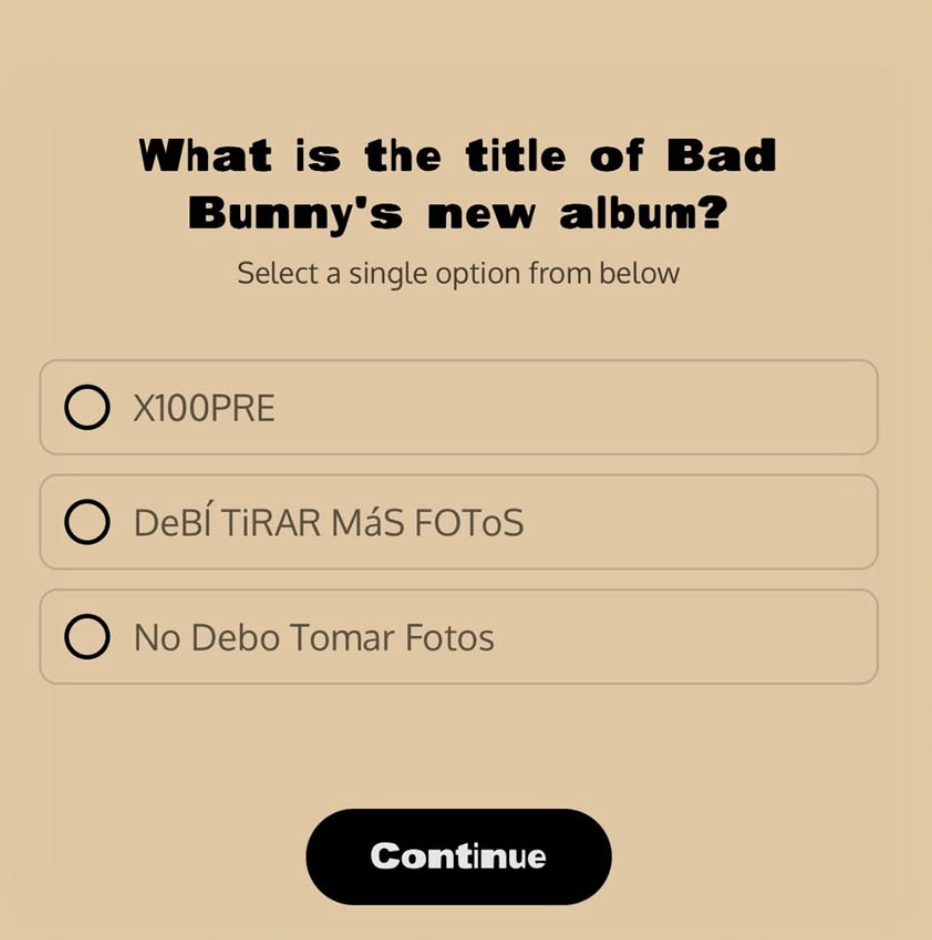
Bad Bunny attached a quiz to his residency’s ticket pre-sale to prioritize ‘real fans.’ Photo courtesy of @popfaction/Instagram
“I think the residency is amazing, especially because for past concerts me and my friends couldn’t get tickets because most of them would be sold to the U.S.,” Schettini said. “I’m not saying this shouldn’t happen as we can all enjoy his music and concerts, but this didn’t really give a chance to local fans to enjoy his music in their own home. This residency is really giving back to the community and his people. I believe this makes sense because if it weren’t for us and the support we gave him he wouldn’t be where he’s right now, and in a way this is his strategy to give back.”
Beyond celebrating Puerto Rican identity, the album also sheds light on pressing social and political issues, particularly the ongoing struggles with gentrification on the island. Through his lyrics, Bad Bunny tells the world about the challenges Puerto Ricans face, using his platform to bring attention to the injustices happening at home.
“This album really brings us to appreciate our culture, and it also brings up the gentrification struggle that has been happening in [Puerto Rico], especially from people from the states coming and buying houses and not paying taxes or supporting local businesses,” Schettini said. “Nevertheless, I just think this album shows the whole world what the problem has really been, and especially with the song ‘Lo que le pasó a Hawaii,’ which talks about the gentrification Hawaii went through and how now this is happening to our home.”
Bad Bunny’s ability to blend music with activism has made him an influential artist, but he’s not the only one using his platform to shed light on important issues. While his voice carries global reach, there are many other Latin American artists working toward similar goals through their music.
“I believe he tries to be very purposeful with his music and the things he does, and I do think he ultimately tries to be unapologetically Puerto Rican, which is something that we need more [of] these days when Latino American people are struggling and being treated unfairly,” Recart González said. “It’s nice to have voices like him, but I will say that there’s also other artists working on topics like these — for example, Naty Peluso, whom I believe people don’t give enough credit to when she is doing similar things as Bad Bunny. Ultimately, it’s great to have him speak up for his people, but there are other urban artists that do the same.”
Bad Bunny’s “DeBÍ TiRAR MáS FOToS” isn’t just another album, but it is a reflection of his identity, his people and the struggles that Puerto Ricans face today. Through his music and his actions, Bad Bunny continues to prioritize the voices and experiences of his community, while also showing the world what it means to be Puerto Rican.
The poster art for the ‘No Me Quiero Ir de Aqui’ residency celebrates Puerto Rican culture. Photo courtesy of @nycreggaeton/Instagram


 The USD Vista
Leave a comment