ALEXANDRA ALCALA / ASST. A&C EDITOR
Forty-nine years ago, February was declared “Black History Month” by President Gerald Ford. Since then, every February has served as a time of reflection, education and celebration of the history and contributions of the Black community in the United States and beyond. At the University of San Diego, community members started celebrations early into the month with events, talks and even athletic get-togethers. The importance of the month shined through USD students as they highlighted their favorite Black artists in all types of media.
“I really enjoy music, so the first people that come to mind are Alicia Keys and Rihanna,” USD junior Emily Arceo said. “I like their new music, but their old stuff, the original and classics, are for sure my favorite. Besides their music, I admire them for being strong and independent women, as I believe they are an inspiration to women all around the world. I admire that they’re really into their own businesses and grow more everyday.”
The music industry has been positively impacted by Black artists for a very long time, with a wide range of musicians. From Marvin Gaye and Aretha Franklin to Tupac and Kendrick Lamar, Black artists continue to shape the industry while breaking barriers and uplifting their communities. Besides Black artists having a large presence in the music industry, they have also evolved and shaped different genres into what they are known for today, such as jazz, blues, rock, hip-hop and R&B.
“My favorite Black artist in the media is Michael Jackson,” USD sophomore Alida Martinez said. “I think he shaped music in a way never done before, and he’s just an iconic figure in my life. He has inspired so many people through his art, especially his dancing.”
Other than revolutionizing lyrics and melodies, dance has also been largely influenced by Black artists. Black performers have continuously changed dance and set trends that have shaped the entertainment industry.

Black artists are a central part of global culture. Photo courtesy of @art_simpson_/Instagram
Hip-hop, breakdancing, tap, jazz and even swing dance all have deep roots in Black culture with artists and dancers using movement as a form of storytelling, self-expression and even activism.
“I have a strong connection with [Michael Jackson’s] song ‘Thriller,’ as when I was little my parents were really big fans and would play all of his songs for me and my sister, but ‘Thriller’ always stuck out,” Martinez said. “I can vividly remember watching the music video for this song as it used to scare me, but when I watch it now I can see how iconic it really is. Another reason I think of this song is because I loved it so much [that] I once chose it to dance at a talent show, and now it just brings good memories back.”
By mixing rhythm and innovation, Black artists have transformed dance into more than just entertainment — it’s powerful art that carries history, emotion and cultural significance. This deep impact is why many see Black History Month as a time to recognize and reflect on these contributions.
USD Professor Eric Pierson is the co-director of the communication department as well as a professor of film studies. His areas of expertise include film and media studies, minority images in film and television, political economy and film production and distribution.
“I think now there is this space where you get Black talent being able to present itself, especially with the advancement of streaming services, which wasn’t there 15 or 20 years ago,” Pierson said. “Now folks can open up whichever streaming service they use and would most probably see Black excellence on their television.”
The evolution of streaming services has created a new space for Black artists to flourish. For instance, having a highlight section for films and series created by or starring Black talent. This amplifies diverse narratives and also ensures that the history and ongoing contributions of Black communities are both preserved and brought to the television for millions of viewers.

Streaming services, such as Netflix and Hulu, often highlight films that showcase Black talent during Black History Month. Photo courtesy of @netflix/Instagram
“I think it’s really exciting when streaming platforms do this section during February highlighting films or series made or starred by Black talent,” Pierson said. “It reminds people of the vastness of Black excellence in film and television. It also gives people the opportunity to sample these and helps the history from not getting lost but being dispersed to millions of people.”
The new era of television and film distribution has allowed what years before couldn’t, giving minorities a space to speak freely and share their ideas. The fact that services like Netflix, HBO Max, Hulu and Disney+, now distribute original pieces gives more room for fresher innovations and new directors.
“I think the importance of Black History Month is that you never stop learning,” Pierson said. “I mean, me, I have been through several Februarys in my life, and every year I feel I learn something new. I learn about people and whose contributions got lost in our history, so I believe this is an amazing opportunity to even educate myself.”
Each year, Black History Month serves as a reminder that learning is an on-going process and that there is always something new to learn. Today’s creative space allows for more experimentation and collaboration.
“I do believe that now is the time for Black talent to get more opportunities,” Pierson said. “Now we have so many directors and streaming platforms who are doing their own thing without being attached to somewhere outside of it. Now there’s an opportunity to go to someone else if your idea gets rejected, and if they do it too, you have more people to talk to. The opportunities that are present now in the film industry are quite new but we must make the most out of them.”
This month highlights opportunities to celebrate Black creators while also allowing for other forms of respect to happen such as honoring ancestors, remembering past times, educating others and more. The opportunities are vast and allow for students, such as Arceo, to grow in many different ways.
“I believe Black History Month is a time for all of us to reflect and think back on the history of Black Americans in this country and their impact on our culture and society as we know it today,” Arceo said.
Beyond celebrating achievements, many also see this month as a necessary acknowledgment of the struggles Black communities have endured and continue to face in their everyday lives. While some things have changed in our communities, racism and discrimination are still a struggle for people of color and underrepresented communities.
“I think it’s crucial to have a month dedicated to the Black community after all the segregation that has been part of their history, and that they still struggle with to this day,” Martinez said. “It’s the least we, as a society, can do, and in order to amend all of the wrongs that they have gone through.”
As Black History Month continues to be recognized across the country, it serves as more than just a time to celebrate. It’s a reminder of the resilience, contributions and ongoing struggles of Black communities. From shaping music, dance and culture to influencing social movements and history, the Black community has undoubtedly left a mark on society.
For students at USD, this month is an opportunity to not only appreciate Black talent, but also a reminder to educate themselves and support Black voices all year-round. Whichever way students choose to do so, honoring Black history should be a continuous effort to recognize and uplift a community whose impact is deeply rooted in history.
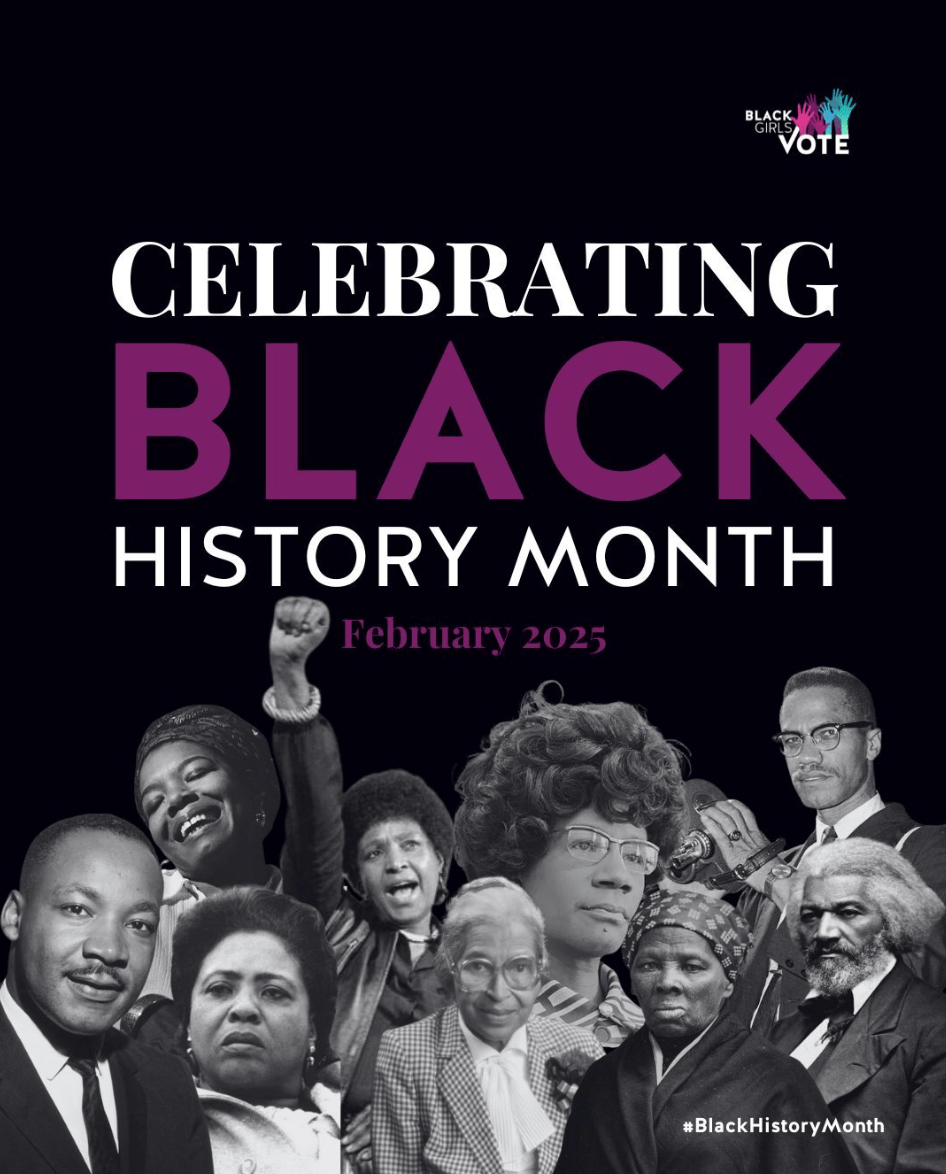
Black History Month gives students an opportunity to learn more about the Black community. Photo courtesy of @blackgirlsvote/Instagram


 The USD Vista
Leave a comment