ANTHONY SHARKEY / ASST. SPORTS EDITOR
LUKAS BLANKENSTEIN / CONTRIBUTOR
Many people who watch or play a sport know that injuries are inevitable. A study by the National Institute of Health found that 91% of college athletes will experience at least one injury over their college career, ranging from sprains to serious tears. In addition, a study was co-published by the Center for Disease Control (CDC) and National Collegiate Athletics Association (NCAA), stating that over the five-season period of the 2009-10 season and 2013-14 season, there were over 1 million injuries in the NCAA’s 25 sports.
Because of this, athletic trainers and sports medicine professionals are becoming increasingly more important for universities. Typically, sports medicine teams work with the players to ensure that athletes are in the best condition possible and help them prevent or recover from the various injuries they are likely to experience during the season. According to John Leih, an assistant athletic trainer at USD who primarily works with the women’s basketball team, men’s tennis team and both cross country and track teams, it is a demanding job.
“My busy season starts in October [one month before the women’s basketball season] and ends in March [after the basketball season is over],” Leih said. “During the busy season, it’s typically a seven-days-a-week job, with the exception of Christmas. There’s always something going on for these girls every single day of the week.”
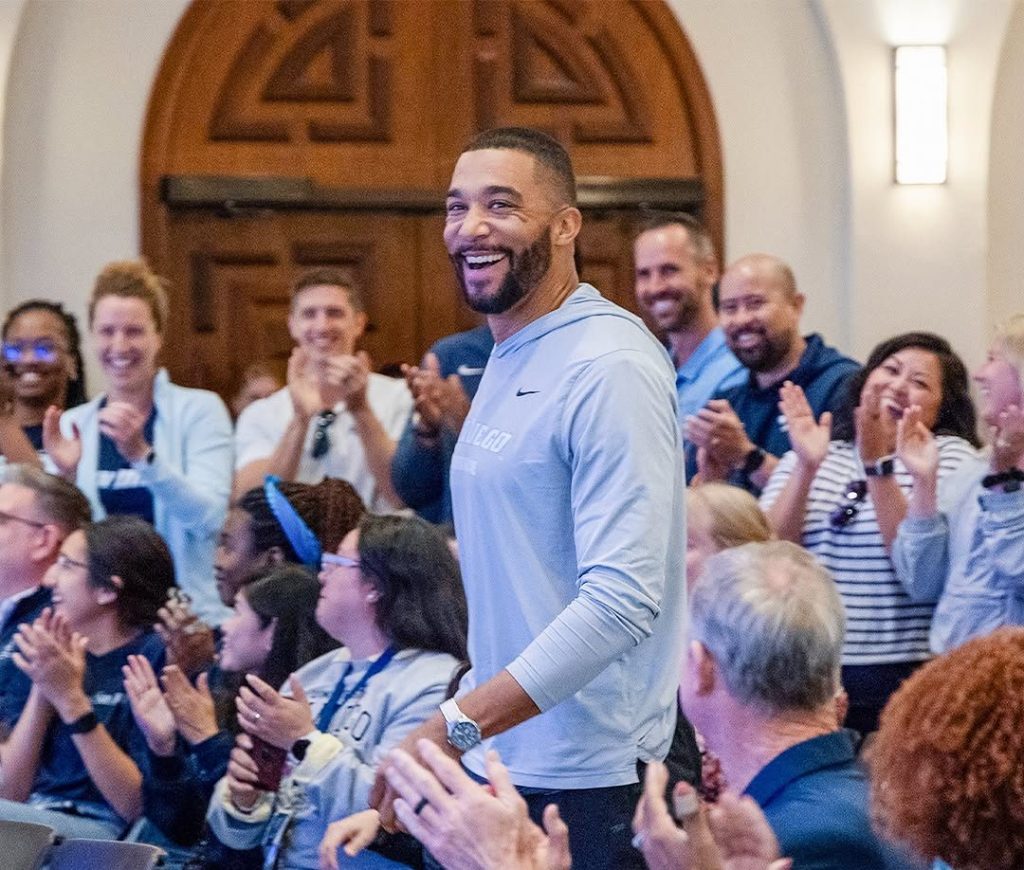
Eli Bisnett-Cobb, USD’s head athletic trainer and director of sports medicine, knows as well as anyone the trials that athletes go through when they are injured. According to Bisnett-Cobb’s, his own journey in sports medicine started after an injury he sustained as a former track athlete in high school.
“When I was a junior in high school, I ended up injuring my knee,” Bisnett-Cobb stated. “At the time, I didn’t know what the ACL or the other structures that I had damaged were. I ended up doing a deep dive and learning about the aspects of sports medicine and recovery, and [that] gave me some information on what sports medicine professionals do. That unfortunate injury changed my perspective and thinking about what I wanted to do.”
Bisnett-Cobb took the job in 2018 after the retirement of former Director of Sports Medicine Carolyn Greer, who held the position for 40 years. Bisnett-Cobb had previously worked for USD from 2008-2010, but has also worked with two NFL teams — the Minnesota Vikings from 2006-2008 and the Washington Commanders from 2010-2014. He then worked at UCSD from 2014-2018 as an assistant athletic director before permanently moving to USD.
Leih, Bisnett-Cobb and many other members of the medical staff travel with their teams to all of their road games, and they attend team practices as well. Not only that, they also play a key role in their rehabilitation, especially after surgery. According to Bisnett-Cobb, the trainers play a key role in every step of recovery from major injuries.
“Once an athlete gets injured, rehabilitation starts as soon as possible, often the very next day,” Bisnett-Cobb said. “We will follow a timeline depending on the type of injury, starting with various tests like strength and range of motion tests. If you get an injury that typically takes six weeks to recover, you need to separate the process into chunks and say, after two weeks my goal is to be here with my recovery, then the next two weeks I want to be here. It’s also important to remind the athlete that no recovery goes smoothly. Every long term injury recovery has setbacks.”
Every athlete’s injury and recovery looks different and poses unique challenges. For many athletes, mental recovery is the hardest part of being injured long-term. USD sophomore basketball player Keyon Kensie Jr. was sidelined with a season-long groin and foot injury that was sustained during practice.
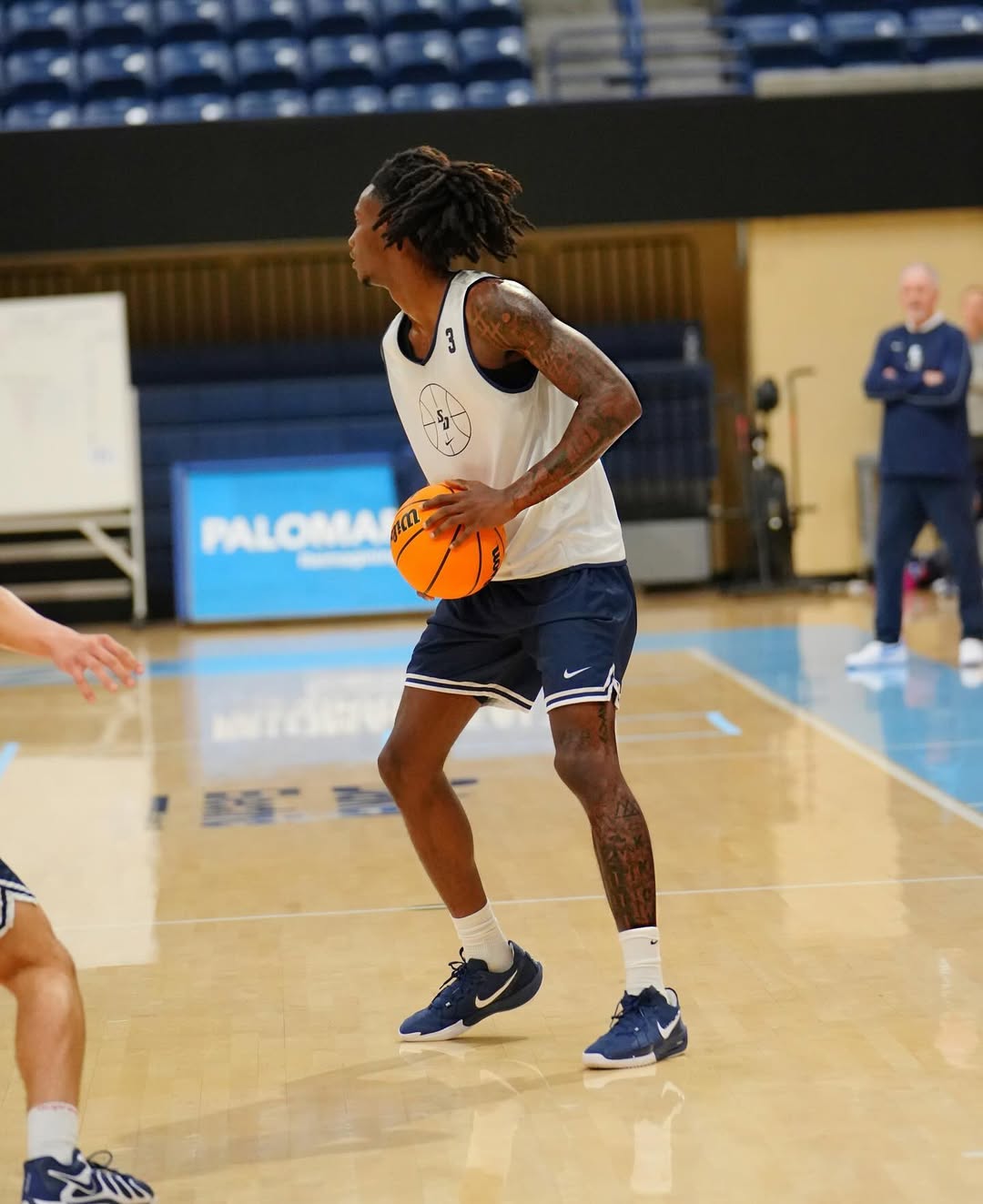
Keyon Kensie Jr. playing basketball post groin and foot injury. Photo courtesy of @keyonkensie/Instagram
“The hardest part is not being able to help my teammates on the court, and also just not playing basketball for a long time,” Kensie Jr. said.
For other athletes, however, the physical recovery is incredibly taxing, such was for USD fifth-year student Christopher Curtis. Curtis played football for Lincoln High School in San Diego, but tore his ACL, MCL, PCL and meniscus in preseason of his senior year in 2019, one year before being recruited by USD. For most, this would end a season. For Curtis, he returned in five weeks, and played the entire season. USD recruited him in 2020, allowing him to be on the roster as a gray-shirt. During that year, Curtis spent lots of time going through rehabilitation.
“When I first came in, they broke my ego down,” Curtis said. “[They said] you gotta re-learn how to walk.”
Former USD trainer Daniel Melara played an instrumental role in Curtis’ recovery, getting him back on his feet. When Melara left in 2021, former USD trainer Maddie Collins took over and got Curtis back in the game.
“It was a big transition from high school where we had one trainer for all sports to where we had a team specifically set for football,” Curtis said. “The student workers were the glue of the thing to be honest with you. In my opinion, Eli should be given a million dollars. One of the best, for sure. Same thing for Maddie C. She should get a raise as well.”
Curtis is not alone in feeling that USD’s medical staff deserves a debt of gratitudes. For athletes and sports fans alike, the medical team plays a vital role in allowing athletes to perform at their best and stay healthy for the long term. The road to recovery is challenging, but thanks to the sports medicine department, it has become much more manageable.
Eli Bisnett-Cobb after being named 2024 USD Sister Virginia Rodee Administrator of the year.
Photo courtesy of @usdtoreros/Instagram

 The USD Vista
Leave a comment