CHERISHANN DIAMZON / CONTRIBUTOR
March Madness is about to begin, the NBA and NHL playoffs are approaching and baseball is back. For sports fans, this is the most exciting time of the year. But for those who haven’t been following all season, it’s also the perfect opportunity to jump on the bandwagon.
Bandwagoning is when someone suddenly supports a winning team without prior loyalty. It’s a time-honored tradition, especially among college students looking to join the excitement of buzzer-beaters, upsets and championship dreams. While some die-hard fans call it fake, others see it as simply enjoying the ride. Either way, it’s a fast pass to the fun without the emotional baggage of years of heartbreak.
For many college students, team loyalty isn’t the priority — social connection is. USD sophomore Alanya Kaçan admitted that her support for teams often depends on her friends’ allegiances, or even friendly wagers.
“Honestly, I’ve never rooted for March Madness,” Kaçan explained. “I just root for whoever my friends are supporting, especially if they have bets placed.”
For many students, team allegiance is less about personal loyalty and more about shared experiences, whether through friendly wagers or cultural trends. Some even base their support on pop culture influence rather than sports history.
USD sophomore Shannen Limqueco referenced the recent Taylor Swift and Kansas City Chiefs craze as a deciding factor in her NFL preferences.
“If I know something about the team, like the Chiefs with Taylor Swift, then I’ll pick them,” Limqueco said. “For March Madness, I’d probably just root for whichever school is closest to San Diego.”
When it comes to college basketball, Limqueco emphasized that proximity plays a big role in her decision-making. Rather than following a specific team year after year, she prefers to support schools with a local connection. Given San Diego’s strong presence in college sports, it makes sense that she’d gravitate toward a familiar name.
“SDSU almost won a few years ago, so I’d probably root for them,” Limqueco said.
While some students, like Limqueco, choose teams based on location, others factor in both geography and success. USD first-year Wyatt Boswell, a member of the USD Rugby team, has been a lifelong fan of Bay Area sports teams, but acknowledges that winning seasons influenced his support.
“To say my teams weren’t picked based on success would be lying,” Boswell admitted. “The Giants were phenomenal when I was really young, so that obviously inspired my fandom.”
For students who don’t have long-standing allegiances, blending in as a fan takes a little time. Simply jumping on the bandwagon isn’t as easy as throwing on a team’s jersey and calling it a day. True fandom requires a bit more. Students need to choose a team that aligns with their interests, understand the team’s history and pick up on key talking points to avoid standing out as a casual observer. Whether it’s memorizing star players, learning rivalries or understanding the latest season’s highlights, fully integrating into the fan culture takes some dedication.
Not all teams are created equal when it comes to bandwagoning. Some teams naturally gain more attention depending on their performance, status or connection to a fan base. Bandwagon fans often gravitate toward teams that fit certain categories.
The “hot favorite” is a team with a dominant record, positioned as a championship contender and widely recognized for its success. These teams often have the highest number of casual supporters.
The “cinderella story” refers to an underdog team making an unexpected run in a tournament, gaining popularity as they continue to defy expectations. Fans who start supporting them early can appear knowledgeable about the sport.
The “local pick” is the team closest to a fan’s city or region, often creating a sense of connection, even for those who have not followed them before. This is common for students who support their college team or the professional team in their area.
Finally, the “cool merch team” is one known for its strong branding, distinctive colors or stylish uniforms. These teams attract fans who may not follow the sport closely but appreciate the aesthetic appeal of their gear.
While some fans choose their teams based on success, storylines or aesthetics, others remain loyal to the teams they’ve supported for years. Boswell has stayed true to his Northern California roots.
“I’ll be rooting for St. Mary’s, the Gaels,” Boswell stated. “My high school, De La Salle, is a feeder school to St. Mary’s, so I have a ton of friends there.”
Bandwagon fans aren’t expected to be experts, but small mistakes can easily expose them. Recognizing a star player, recalling a pivotal game moment or offering a broad take on team chemistry can instantly boost credibility. Even a simple remark about the team’s determination and effort can create the impression of a dedicated follower.
A connection to a player, whether from past games, college affiliations or media coverage, can influence which team earns their support. This approach makes it easy to pick a side without deep knowledge of the sport or season. For students like Kaçan, player recognition is enough to determine a rooting interest.
“If I’ve heard of any of the players, I would root for the team they’re on,” Kacan said. “I’m from Chapel Hill, so if there’s a [University of North Carolina] or Duke player on a team, I’d support them.”
Limqueco takes a different approach, sometimes choosing based on the colors of the teams uniforms.
“I picked the Chiefs in the Super Bowl because they wore red,” Limqueco admitted.
Watching the game with passionate fans means knowing how to react. When a big play happens, jumping up and cheering is a foolproof move. If the referee makes a questionable call, a shake of the head and muttering something about bad officiating is always a safe bet. For close games, sitting with hands on head and letting out a frustrated sigh can make anyone look invested. After a tough loss, staring at the screen and expressing disappointment is the great way to blend in.
While hopping on the hype train is fair game, there are a few unspoken rules to follow. Acting like a lifelong fan despite only recently learning about the team can be a major giveaway. If the team loses, it’s best to have a backup and casually reference another favorite. While many students are comfortable switching teams for the excitement of big games, others like Wyatt Boswell, remain loyal no matter what.
“I’ve always been a Giants fan,” Boswell explained. “My mom was once an A’s fan, but since they left, I’m a firm Giants fan.”
When choosing teams in baseball, football and basketball, he admitted that his choices were based on location, but also success.
“I wasn’t a Raiders fan because one of my best friends was a Raiders fan, so we just had to have a bit of a rivalry,” Boswell said. “And the Warriors, again, kind of based on their success in recent years. But I remember watching Antoine Jamison play for the Warriors, that was a throwback moment. I vaguely remember going to a game when I was six years old, seeing one of the first years Steph Curry played.”
For Limqueco, picking teams for March Madness depends on how deep they make it into the tournament.
“Honestly, only if there is no Southern California team in the bracket, and it’s like the top four or top two, I might pick based on color,” Limequeco said. “If a team looked like they were USD colors, I would pick them just for that. Because I don’t really pay attention to schools or rankings, I just think, if you got to the top five, you’ve got to be good enough.”
For most sports fans, the excitement of the game is about entertainment. Whether students are watching for the love of the game, the social experience or just an excuse to yell at the TV, owning the bandwagon experience with confidence is key. If a team loses, there’s always another one waiting.
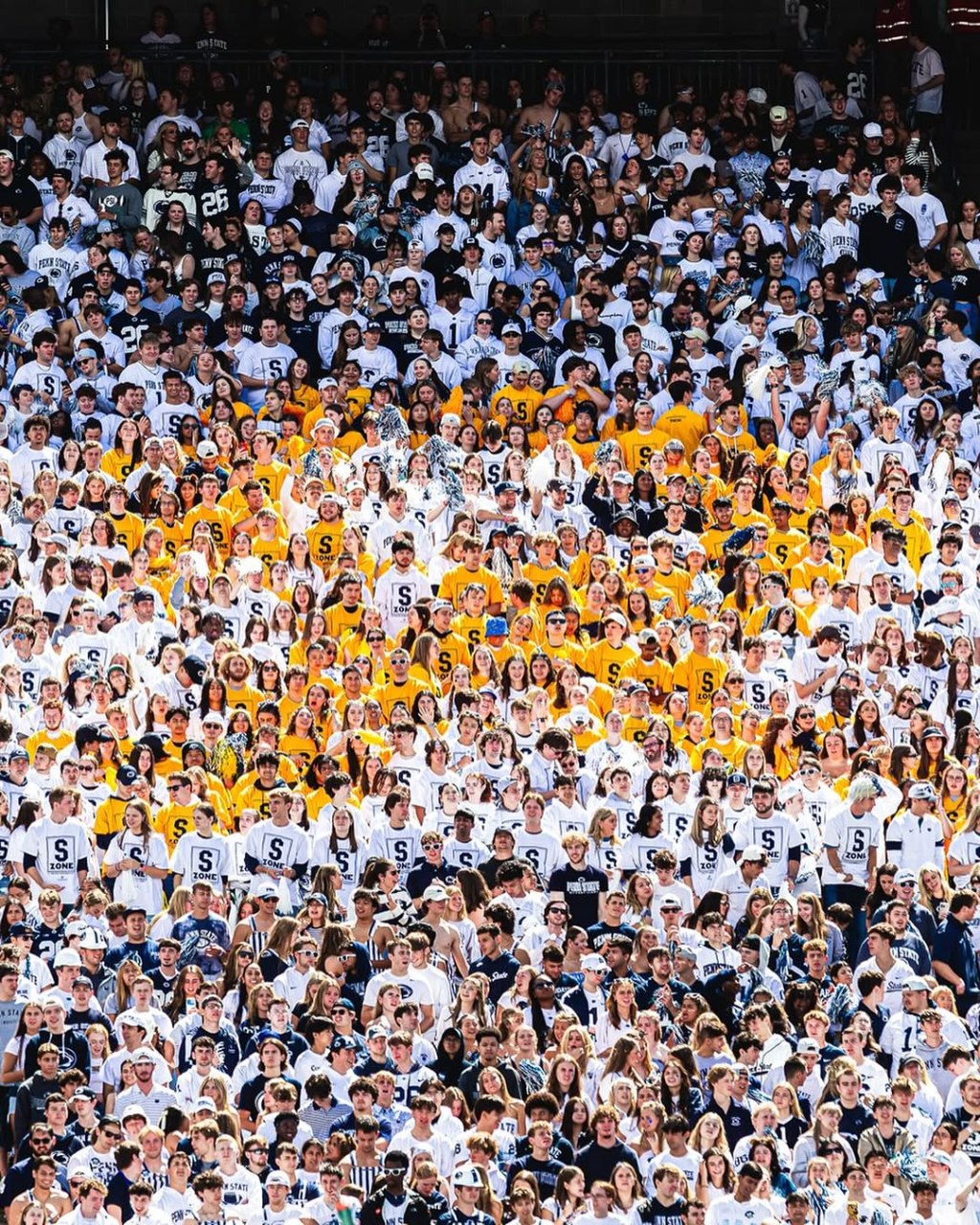
Beavers fans in the Beaver Stadium during a game in late February. Photo courtesy of @beaver_stadium/Instagram

 The USD Vista
Leave a comment