RILEY RAINS / SPORTS EDITOR
“Severance,” the Apple TV+ series starring Adam Scott, released its final episode of season two on March 21, leaving fans distraught. The series surrounds a corporation, Lumon, whose employees have agreed to “sever” their memory — splitting their consciousness between work-life and home-life.
The Emmy-winning psychological thriller challenges a variety of political and social understandings. The show is so controversial that it has caused debate in major news sources such as The New York Times, The New Yorker and USA Today about work and home life, racism and child labor. Influencers and bloggers are eager to share conspiracy theories related to the complex plot, but none know as much as the screenwriter himself, Dan Erickson.
Erickson is an American television screenwriter, showrunner and producer. He graduated from the New York University’s Tisch School of the Arts with a Master of Fine Arts in dramatic writing for television. In an interview with Script, an American magazine, about Severance, Erickson shared how the concept of the show first came to him.
“The idea first occurred to me not as a TV show, but as something that I would actually like to do to my own brain,” Erickson explained. “I was literally walking into work one day at a job I really hated and caught myself thinking, ‘What if there was some way to just dissociate, and for my body to do whatever it needs to do over the next eight hours to earn this paycheck — to not have to consciously experience it?’”
Erickson and his team, including Ben Stiller, the executive producer and director of “Severance,” took the idea and ran with it.
”When Ben got involved, we worked to hone [the plot] down to the more grounded, still very strange, and very askew, but slightly more human-focused version that it is today,” Erickson said.
The plot follows Mark Scout, an employee at Lumon Industries played by Scott, after undergoing the surgical procedure known as “severance.” Scout and his coworkers work to uncover the corporation’s secrets, all while living in the mystery of their “outie’s” personal lives. “Outies” and “Innies” are terms referring to characters’ “inner” work lives, and “outer” home lives.
The series plays with a variety of eerie cinematic strategies, something that Sara Hasselbach, the USD Writing Center director, especially noticed with her literary expertise.
“Something so arresting is the atmosphere it creates,” Hasselbach said. “We’re so conditioned, in season one and beyond, to be used to that sterile office, that when we get outside of it, that starts feeling unnatural. Nature being unnatural is seriously unsettling.”
The uncanny mood that Severance creates was done purposefully as a way to reflect modern day institutions.

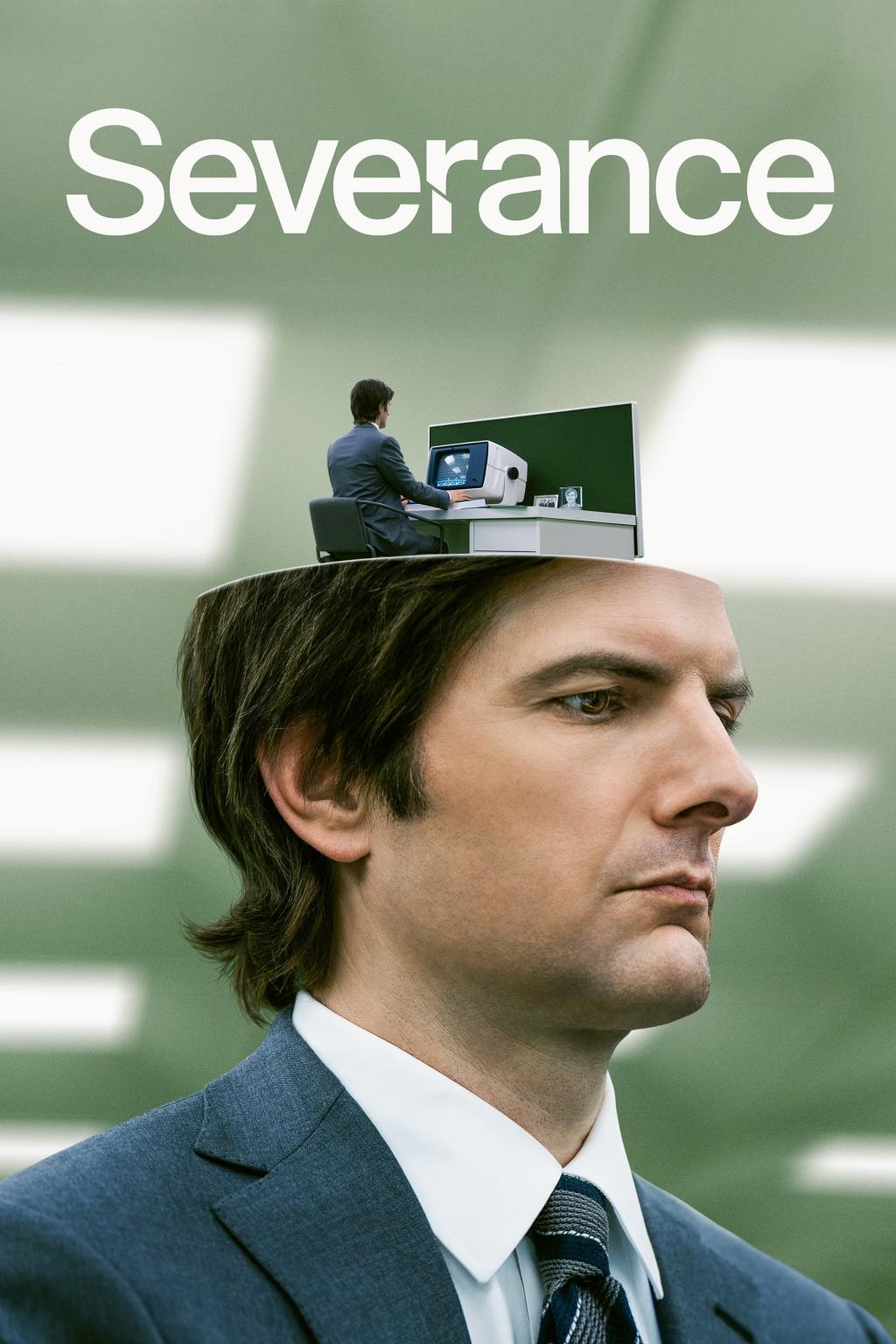
The show’s protagonist, Mark Scout, is played by Adam Scott. Photo courtesy of @thespaceshipper/X
“One thing that we talked about a lot was that you’re never really outside of Lumon, like you can go outside of the building, but their tentacles are still everywhere,” Erickson said. “It’s in the same way that a lot of corporations or institutions will insinuate themselves into culture in a way that’s not often obvious … We tried to have this sort of creeping sense of dread with the company that it’s always there, even if you can’t see it watching you, it’s probably watching you.”
The series includes a variety of visual aspects to convey this unsettling atmosphere. A mysterious goat-breeding sector of the Severed Floor mirrors the outlandishness of the concept. The Severed Floor refers to the workers who underwent the “severed” procedure – they all work on the same level. White-soaked rooms and hallways paint corporate as emotionless — “innies” are less than human. Robotic and stiff language is encouraged by workers, stripping them of personality. This concept in particular centers itself in Mr. Milchick, manager of the Severed Floor.
“I’m dying to know what’s going on with Milchick,” Hasselbach shared. “The racism he’s been treated with, having this black male character being told not to sound smart, not to use advanced language, I think it is wearing on him.”
The scene Hasselbach is referring to is when Milchick gets in trouble for using sophisticated dialect when speaking to severed employees. Issues of racism are just one of the social issues that “Severance” attacks. A few others include child labor, familial relationships, religion, alienation and trauma.
USD students themselves are enraptured in the complexity of the new series. Rio Solis, a USD junior, shared his thoughts.
“My favorite part of Severance is the way it makes you think about yourself, if you had to make a choice like that,” Solis said. “It puts you in a position that is more uncomfortable.”
With the dramatic conclusion of season two, fans are eager for more. Stiller announced that season three will hopefully be released in two to three years. Some Toreros may be impatient for season three, and may consider severing their memory until it’s released to save on time and anticipation. Until then, viewers will have plenty to chew on, with the show’s thought provoking social commentary keeping attention captivated until the day comes.
The show’s protagonist, Mark Scout, is played by Adam Scott. Photo courtesy of @thespaceshipper/X



 The USD Vista
Leave a comment