CHERISHANN DIAMZON / CONTRIBUTOR
San Diego’s animal shelters are operating over capacity, with most stray animals never making it back home. Just down the road from USD, the crisis has continued to grow since the post-pandemic drop in pet adoptions. While some students have become involved through volunteer work or campus organizations, many are unaware of the conditions nearby.
Of the 40,000 animals brought to the San Diego Humane Society in 2024, only about 20% were reclaimed by their owners, according to Nina Thompson, the director of public relations for the organization. The reclaim rate for dogs was higher, at 34%, but most animals remained in search of new homes.
Thompson explained that the main reasons why pets end up in shelters are due to their owners moving, having too many animals and unplanned litters. These situations often come down to life changes that pet owners can’t control — especially when it comes to housing.
“People moving is a big reason for owner surrenders,” Thompson said. “They’ll say, ‘I have to move. I can’t bring my large dog with me,’ maybe due to rental restrictions on breed or weight, or some places not allowing pets at all.”
The rise in unplanned litters has added pressure to shelters already struggling with space and staffing. With more animals coming in than going out, Thompson said shelter staff are working constantly to care of them and find space wherever they can.
She also noted a rise in puppies following a pandemic-era pause in spay and neuter surgeries.
“We call it a little puppy explosion here, because we’ve never seen so many puppies of all breeds,” Thompson remarked.
Transportation and a lack of awareness are also barriers to reclaiming pets. Some people do not know where to look or cannot get to the shelter. This problem is not unique to San Diego.
“We are in a lot of communication with shelters nationwide,” Thompson noted. “We have a coalition here in San Diego, so we’re communicating with our partner shelters. They’re all reporting the same thing, and we’re all full.”
In 2023, the Humane Society took in more than 21,000 stray pets and more than 8,400 owner surrenders — pets given up by people who could no longer care for them. Thompson clarified that the organization does not euthanize for time or space, only when an animal is suffering, cannot be treated or cannot be safely placed in the community.
When over capacity, the shelter must carry out emergency measures like housing animals in hallways and offices with temporary crates and kennels, which can lead to increased stress for both animals and staff.
“You can foster for a weekend, even if you have classes Monday through Friday,” Thompson shared. “Take a dog out of the shelter for the weekend and give them a break from the kennel. Or try our Dog Day Out program, where you can take a dog out for just a few hours.”

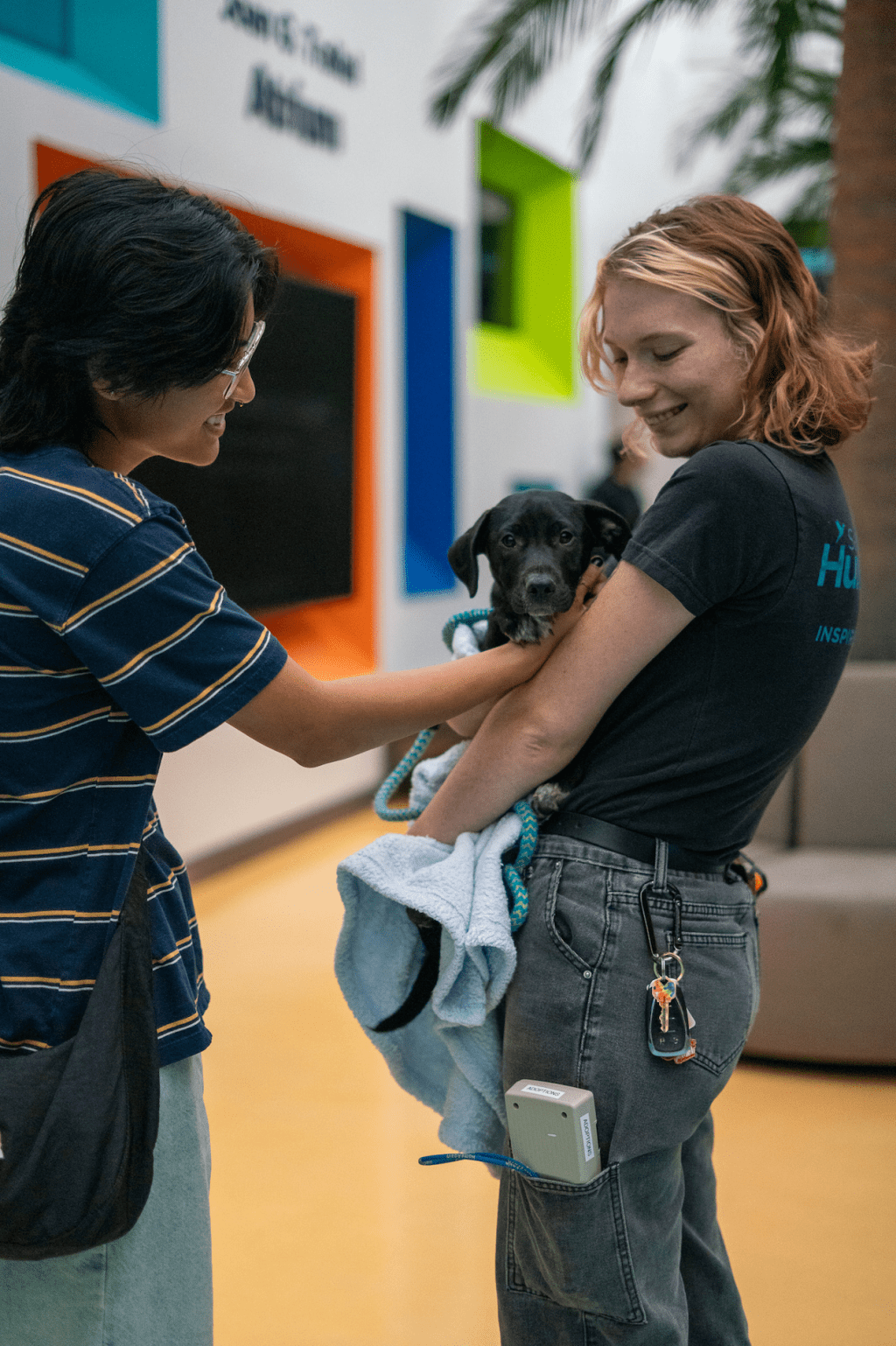
Many pets who are surrendered at the Humane Society are never reclaimed by their owners.
Cherishann Diamzon/The USD Vista
Thompson concluded that every effort helps.
“We’re just a stone’s throw away from you,” Thompson said. “Come on down, whether it’s fostering, volunteering or simply spreading the word, every effort helps us provide second chances for pets in need.”
On campus, some student groups are already taking steps to support animals in need. The pre-vet club on campus offers students a way to support animals in need, including stray and surrendered pets.
“Most of our members aren’t necessarily planning to become veterinarians — they just care deeply about animals,” USD senior Bella Dejesse the club’s president, said. Members have volunteered in different ways, including repairing toys for Paws for Purple Hearts, a nonprofit that trains service dogs for veterans. Several members have volunteered by assisting with microchipping clinics and animal care teams.
“We’ve had several students, including myself, foster short-term or take on lower-hour volunteer commitments at smaller shelters and gain valuable hands-on experience with animals,” Dejesse said.
Even without formal partnerships, Dejesse said that students have found ways to stay involved and support shelters in ways that fit their schedules.
For some on campus, the impact of pet adoption is personal. Jonathan Bowman, professor of communication and director of the University of San Diego Honors Program, adopted his dog Nala from the county shelter before the Humane Society took over operations.
Nala had been surrendered twice and was reportedly sold online as a purebred German shepherd before being given up again as a teenager.
“It was clear her early life had been difficult, but that didn’t stop me from taking a chance,” Bowman said.
Bowman pointed out that some people treat pets like hobbies, something to be excited about for a while, until life gets busy or the excitement fades. He sees that kind of thinking as a part of the problem.
“They get really into surfing or something, and then get over it,” Bowman stated. “Pets aren’t hobbies. They’re family. Sometimes they require more effort than a relationship or even a child.”
Finances are another barrier for prospective pet owners, Bowman acknowledged.
“Dogs aren’t cheap,” Bowman said. “There’s food, vet bills, insurance, enrichment. Folks need to check their budgets first, but once they know they can commit, they should adopt enthusiastically.”
When people adopt without thinking it through, the pet can end up right back in the shelter. But with a little planning, it’s more likely to work out for everyone.
Bowman called adopting Nala one of the most rewarding experiences of his life. Since adopting Nala, Bowman has seen the difference a stable home can make. Nala is now a regular presence at USD Honors events and has become a familiar face for students on campus.
USD senior Sky Johnson said she has considered fostering but has not tried it due to post-graduation uncertainty and housing restrictions. For Johnson, like many students, wanting to help isn’t the hard part — it’s making it work with everything else. Between school, moving and housing rules, fostering just hasn’t been realistic.
“It’s tough wanting to help but not being able to,” Johnson admitted. “Most of us aren’t from here … and don’t follow local news … I see lost pets on Nextdoor, but with student housing and going back and forth between LA and San Diego, it’s hard to commit.”
While shelter overcrowding continues within San Diego, members of the USD community have found small ways to get involved. Through volunteering, fostering or outreach, they’ve contributed in ways that fit within the limits of student life.
Toreros are welcome to volunteer at the San Diego Humane Society.
Cherishann Diamzon/The USD Vista
 The USD Vista
Leave a comment