EMMA PIRHALA / NEWS EDITOR
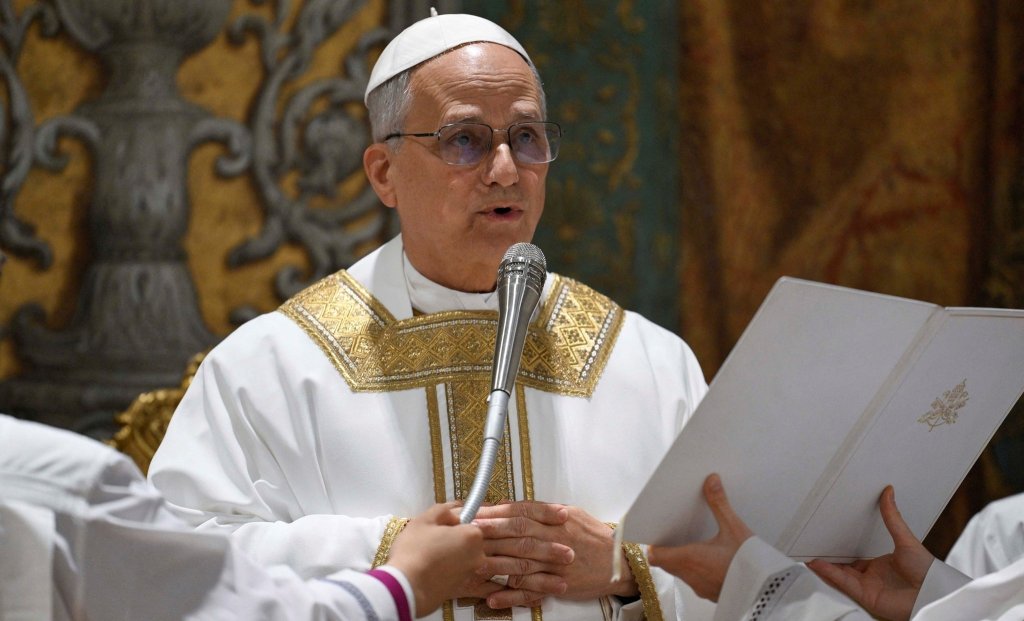
On Thursday morning, as students drifted through their 9 a.m. classes, white smoke billowed from the Sistine Chapel, signaling the election of a new pope. An hour later, the American cardinal, Robert Francis Prevost, emerged as Pope Leo XIV. As the first American pope in the Church’s history, Pope Leo XIV’s election kindled celebration among many Toreros.
USD junior Thomas Forrester shared his excitement for the election of Pope Leo XIV.
“I think having an American pope is exciting,” Forrester said. “There isn’t much representation of Americans in the Catholic Church and vice versa, so I think it’s cool.”
The University quickly released a statement on Instagram honoring the new pope.
“The University of San Diego joins the global Catholic community in celebrating the historic election of Cardinal Robert Francis Prevost as Pope Leo XIV – the first American to lead the Roman Catholic Church in its 2,000-year history,” the post read. “As he addressed the crowd, Pope Leo XIV emphasized building bridges, reaching out to those in need and fostering peace throughout the world – values that resonate deeply with our USD community. As a contemporary Catholic university, we look forward to Pope Leo XIV’s leadership as he guides the world’s 1.4 billion Catholics and shapes the future direction of the Church.”
Born in the suburbs of Chicago in 1955, Prevost was raised in a devout middle-class family. He attended Catholic schools throughout his childhood before attending Villanova University and the Catholic Theological Union for higher education. Prevost holds a doctorate in canon law — the study of the ecclesiastical laws governing the Catholic Church.
Prior to securing the papacy, Prevost had a lengthy career spanning the globe. He spent over 20 years serving as a missionary in Peru, where he was eventually granted dual citizenship. In 2023, Pope Francis appointed Prevost to head the Vatican’s bishops’ office, where he was involved in selecting bishops.
Despite his extensive career, Prevost was an unlikely candidate for the office. Skeptics believed that the papacy would not go to an American due to the country’s role as a global superpower. Many thought that the incoming pope would be from Europe or even Asia. Amongst these skeptics was USD theology professor Emily Reimer-Barry. She previously thought that the concept of an American pope was impossible.
“Well, my reasoning is that the United States already has a lot of power in the world, and it felt like it wasn’t the right time,” Reimer-Barry explained. “And for me, in the sense of, you know, sort of centering the United States or United States cultural values. I think I’ve really appreciated what I’ve learned about the Catholic Church in Argentina with Pope Francis, and Poland with John Paul II thinking about World War II and interesting European history with Benedict. So I feel like my understanding of Catholicism was broadly expanded under previous popes, in part because they were not American. So I just didn’t think it would happen, but it did. So here I am to apologize for my limited moral imagination and to say I’m, you know, excited to see what will happen.”
Pope Leo XIV has been widely described as a centrist candidate. In a meeting with the cardinals, Leo XIV explained that he wishes to follow in the footsteps of Pope Francis. Additionally, Leo noted the growing significance of artificial intelligence and its threat on human dignity and workers. Reimer-Barry noted the role that AI may have had on Leo XIV’s naming process.
“So the last time we had a Pope who took on the name Leo, it was in the late 1800s in the context of the Industrial Revolution and the ways that mechanization and factories were really undermining human dignity in the context of unsafe working conditions and mass migration from rural areas to urban areas, and the kinds of impacts that had in terms of unsafe housing conditions and lots of social problems,” Reimer-Barry said. “Though what was significant for Leo XIII was that he really saw the role of the church as helping the world to think through the injustices of that economy… So this pope is already signaling that in the same way that there were such huge changes in the industrial revolution in the previous Leo’s time, he sees some really significant changes in our current economy on the basis of artificial intelligence and the ways that that is already influencing human workers. So I think that it will be really interesting to see how he’s going to think about updating the Church’s social teaching or updating the Church’s social agenda to really respond to what the new problems of the world are, including the misuse of AI in a lot of context.”
In his first few days in the role, Leo XIV also called for a ceasefire in Gaza and for the media to end the use of divisive language. As Pope Leo XIV settles into his papacy, the world has its eyes set on the future of the Catholic Church.
Pope Leo XIV led the first mass of his papacy on Sunday, May 11. Photo courtesy of @globaleyenews/X

 The USD Vista
Leave a comment