CADEN HAYNOR / NEWS EDITOR
This summer has been a year of exceptional loss as a result of natural disasters across the United States, according to the Las Vegas Sun. This is due to a wide range of extreme events causing the loss of life, large-scale property damage and environmental upheaval.
Numerous notable natural disasters took place this summer, including the June Derecho windstorm that swept across the central U.S., causing serious structural damage along with the devastating floods in the New York metro station and Texas in July, which killed hundreds.
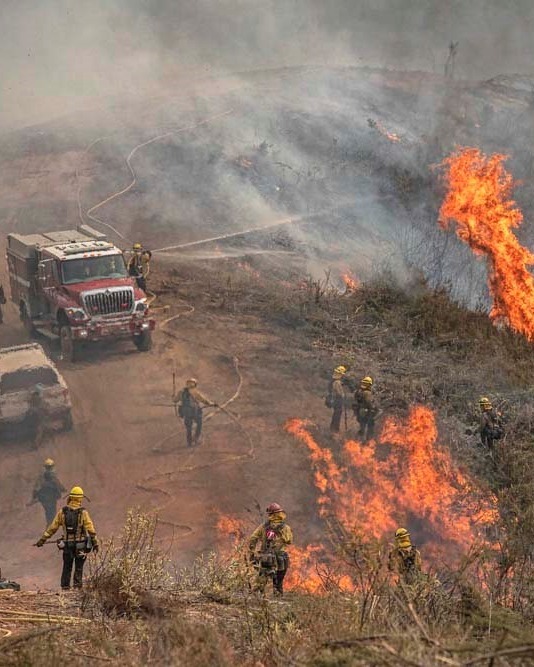
On the West Coast, California has experienced a large amount of intense natural disasters this summer. California is on track for one of its worst wildfire years in recent decades, according to the LA Times, with Southern California bearing a significant portion of the damage.
The Gifford Fire was the largest wildfire in California this year, burning over 132,000 acres across Santa Barbara and San Luis Obispo counties. The Canyon Fire, near Lake Piru in Los Angeles, reported significant property damage in early August.
Compared to the past five years, wildfires from Summer 2025 have burned 13,000 more acres, destroyed 60% more structures and have had 50% more fatalities than average in Southern California. Noah Leary Ceder, a USD sophomore who has lived in San Diego for 16 years, explained how increased fires have impacted his summer.
“So many bushfires came through San Diego this summer, which made me extremely uneasy,” Leary Ceder said. “After seeing the insane destruction of the Palisades fires, I have definitely been worried about all these ones coming through my area.”
Earthquakes have also been recorded throughout Southern California recently, with multiple small earthquakes being felt throughout the region this August, including a 3.5 magnitude in Rialto on August 5. Leary Ceder, who took the Natural Disasters science course last year, explained why earthquakes are so prevalent in San Diego.
“Tecolote Canyon is on the Rose Canyon fault line and the canyon is curved, which is pretty rare, and it’s because there are two different plates moving,” Leary Ceder said. “Since we’re right on the fault, there’s definitely a lot of tiny earthquakes around us we don’t feel, along with the big ones we remember. A lot of people in my middle school and high school said they felt some 3.0 earthquakes, but that would be rare.”
On July 29, a magnitude 8.8 earthquake struck the Russian coast, causing tsunami advisories to shoot through California, alarming many residents on the coast. The first wave hit La Jolla around 1:45 a.m., but it registered less than half a foot and Southern California avoided any major damage. These types of tsunami warnings have flown around California in recent years, but little damage has resulted from the waves. This increased energy in the water is still dangerous for beach-goers looking to go for a swim.
Edie Rudisile, a USD junior, is a regular surfer who also took the natural disasters course last semester. Rudisile shared her thoughts on tsunami warnings and high sea levels.
“Realistically, since we aren’t directly in a subduction zone, we do not have to worry about a tsunami causing any real damage,” Rudisile explained. “With the rising sea levels and climate change, it could be an issue in the future, but it’s not much of a danger right now. As a surfer, I definitely pay attention to tsunami warnings and high water flows before I go out into the ocean and I will continue to look for those this year after that earthquake in Russia.”
As the school year progresses, USD students will continue to exercise caution towards these increasing natural disasters.
California firefighters spray wildfires this summer. Photo courtesy of @calfire/Instagram



 The USD Vista
Leave a comment