DAVID COOK / ASST. NEWS EDITOR
The One Big Beautiful Bill, a package of policies introduced by the Trump administration signed into law in early July, spans hundreds of pages and covers policies from taxes to healthcare to higher education. There are also significant changes to the federal student loan system that may have a lasting impact on University of San Diego students and alumni.

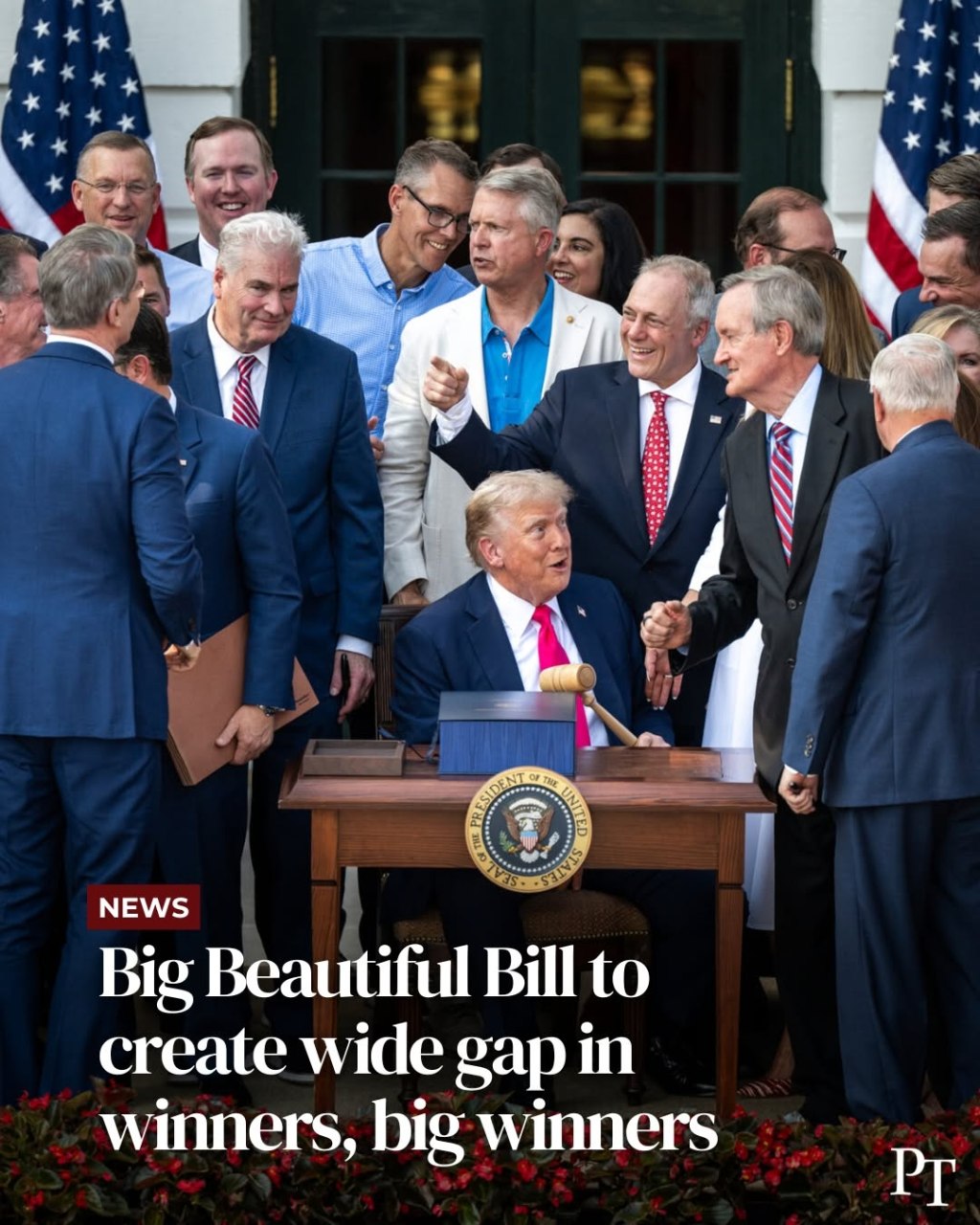
President Donald Trump signed the bill on July 4, 2025. Photo courtesy of @olemericanews/Instagram
Since the bill addresses a wide variety of policy areas, many of its higher education provisions have received minimal attention from the public. However, the changes in the bill will have a long-term effect on how students borrow, repay and in some cases, even which programs remain eligible for federal loan funding.
USD Director of Financial Aid, Kelly Nehring believes that students should keep a close eye on the details of the bill.
“The most significant changes in the Big Beautiful Bill that USD students should be aware of are the new federal loan borrowing caps, the elimination of several income-driven repayment plans, the creation of a new repayment plan and the elimination of the Graduate PLUS Loan program,” Nehring stated. “These changes will go into effect for new borrowers and loans disbursed after July 1, 2026.”
Some of the most significant changes are new federal borrowing caps. Although undergraduate loan limits remain unchanged, Parent PLUS loans, previously available up to the full cost of attendance, are now capped at $20,000 per year and $65,000 in total.
However, a major shift can be seen in loan options for graduate school aid. Graduate students will now be limited to $20,500 per year, with a lifetime cap of $100,000. Professional students in fields such as law or medicine can borrow up to $50,000 annually, with a $200,000 lifetime maximum. Additionally, repayment is also being restructured. Starting in July of 2026, new borrowers will have to decide between only two repayment options: a standard fixed-payment plan or a new income-driven option, known as the Repayment Assistance Plan. This plan waives the accumulation of interest for borrowers who make payments on-time, ties payments to income and forgives balances after 30 years. While this was designed to simplify repayment and prevent inflating prices of tuition, it will replace several existing plans, including the Saving on a Valuable Education (SAVE) plan, which nearly 8 million Americans are shareholders in. These changes ultimately leave borrowers with fewer options.
The bill additionally connects the financial outcomes of degree programs to eligibility for federal loans. Programs may no longer be eligible for federal loans under the “Do No Harm” test if their graduates earn less than a predetermined threshold four years after graduation. This means that if alumni are unable to pay off their student debt, future students could lose access to federal loans. Critics warn that it may limit students’ options in specific fields, while supporters argue that it directs federal funds toward programs that yield positive career outcomes. Others argue that it ensures that taxpayer dollars are directed to programs that yield positive financial outcomes.
Students have started expressing their feelings on what the changes could mean in their own education journeys. USD senior Isabella Weber is one of the many students attending USD with the help of financial aid. Weber shared how the changes might impact her.
“I’m scared of the Big Beautiful Bill and how it’ll affect financial aid,” Weber said. “I feel very grateful to have had financial aid help give me opportunities at USD and I hope that other students will have the same opportunities that I had.”
While Weber focused on the immediate uncertainty around financial aid, other students are more focused on the long-term effects of the bill. USD senior Lucca Deocariza also receives financial aid. Deocariza believes that the new loan limits and repayment changes could reshape the way students think about graduate school.
“I personally had to forgo my original [career/academic?] path due to the inconceivability in paying for grad school,” Deocariza explained. “Now that accessibility to loans has decreased, I imagine the demand for grad school will also decrease as the barriers to entry have become much higher.”
Deocariza also expressed concern that students have not been properly informed about the changes.
“I haven’t received any communication from my loan servicer, school, nor from FAFSA,” he said.
Despite the claim that new caps will help keep students from taking on unmanageable debt, Nehring recognized the possible drawbacks for affordability and accessibility.
“The new federal borrowing caps, coupled with the elimination of the Grad PLUS loan program, may create financial barriers,” Nehring said. “While some argue the caps will prevent students from taking on excessive debt, it may also make it more challenging to finance their education.”
Nehring also said she has been encouraged by how students are approaching the issues related to the bill.
“The questions we’ve received from the USD community have been thoughtful and strategic,” Nehring explained. “This forward-thinking approach allows us to provide timely and relevant guidance without a sense of panic.”
Administrators and students agree that financial aid will look different in the future as USD gets ready for these significant changes. While students like Weber and Deocariza are concerned about whether opportunities will continue to be as accessible as they have been in the past, Nehring stated that her office will continue to be a reliable resource for students as the new regulations go into effect.
The Big Beautiful Bill’s full effects are still unknown, but for the many of Toreros who depend on financial aid, the new provisions will not only change how they plan to pay for their degrees. The bill may also affect how they will pay for graduate school and manage their debt post-graduation.
Donald Trump signs the One Big Beautiful Bill into law on July 4, 2025. Photo courtesy of @peoriatimes/Instagram



 The USD Vista
Leave a comment