
CADEN HAYNOR / NEWS EDITOR
The Campus Space Study at USD began in Summer 2025, taking inventory on existing academic and administrative-built areas, with a goal of trying to to maximize the use of buildings and classrooms. This inventory data collection is done through small white boxes that are plugged into the walls and connected to WiFi in classrooms, conference spaces, grouped or shared office spaces, community spaces and specialty spaces.
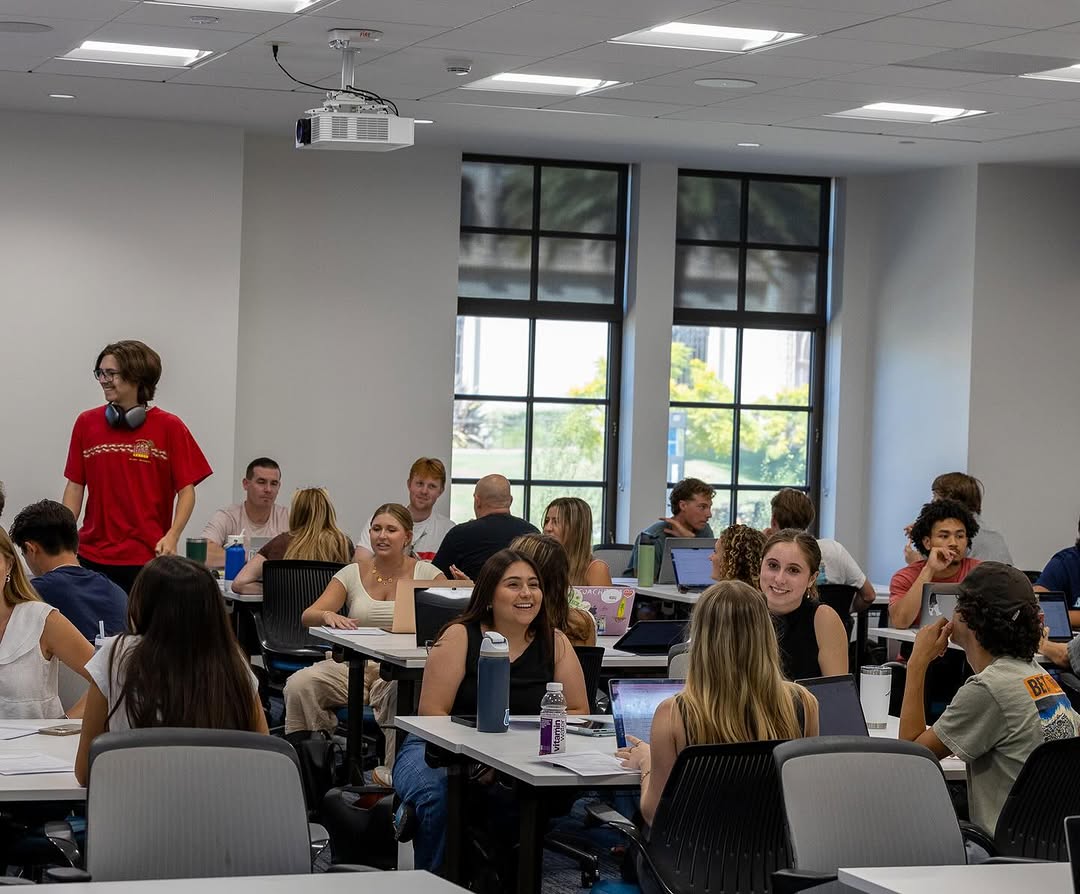
Occuspace sensors have been plugged into classrooms and office spaces since Summer 2025. Photo courtesy of @usd_business/Instagram
A company called Occuspace makes these sensors, using WiFi and Bluetooth to detect the amount of people in a space. These sensors work by detecting signals from connected devices in an allotted area and use signal density and movement patterns to estimate occupancy levels.
USD junior Justin Cann explained his take on these space studies.
“I was never made aware that this was even happening,” Cann stated. “Now that I know this is going on, I would have liked it if the school told us that when we all came back this semester. That’s pretty messed up and definitely invasive.”
The USD Vista requested an in-person interview with the two steering committee co-chairs of the space study. A university public relations representative responded with a statement and asked that it only be attributed to the University.This statement explained why USD is conducting the campus space study this semester.
“The goal of the space study is to inventory and assess how we are currently activating our existing academic and administrative built assets and identify recommendations as to how we can improve or maximize our existing built environment to be able to deliver high quality undergraduate and graduate education, research and other mission critical student services,” the University explained. “The purpose of the study is not to remove programs or take away space.”
USD senior Briana Burton is working with the University on this space study project as part of the McNair scholars program. She described the goal of optimizing utility operation with this study.
“We want to be more sustainable,” Burton said. “We’re trying to really cut down. We’ve had lots of space requests from people who think we do not have enough space on campus, even though in 2020, we added 120,000 extra square feet, so we were like why are we still being told there isn’t enough space. Also, we have our utilities on a schedule. So, let’s say that maybe someone reserved a classroom to be used every day, but in reality, they’re only going there one day a week between the hours of 12 and 2, for example. We don’t need to be pumping AC in that classroom all week if it’s only being utilized for a few hours during one day. So, it’s also to cut back on utility costs.”
Burton continued to speak about if this study is trying totake away classroom spaces.
“This doesn’t have to do with class attendance,” Burton explained. “It has to do with determining overutilized and underutilized spaces, and how we can efficiently reorganize them… Let’s say 30 students registered for a class, but on average, only 12 attend regularly. We wouldn’t move him to a smaller room based on average attendance, because there’s a chance that all 30 will show up on exam days, project presentation days, or other days that are deemed very important. The professor would still be able to use the large classroom that can seat all 30 of his students.”
The information gathered goes to Occuspace’s cloud, but the sensors do not collect personally but the sensors do not collect personally identifiable information during the process, according to their website. After that data is in, the University will send a person into a physical classroom or office space while it is in session to physically count the number of people in the room.
USD senior Emma Vertiz was confused when an employee walked into her classroom while it was in session.
“I really have no idea about the study, other than hearing and seeing that these boxes are being placed heavily in CAS buildings and rooms,” Vertiz stated. “I was in a class in Saints when a random USD employee came into our room. He rushed out but when we asked if he needed anything, did a quick headcount and ran right back out.”
Burton explained where this student data ends up and why employees are entering into USD rooms.
“Occuspace has these iPads that show all the counts and everything, and that’s how we know and calibrate the amount of students in a space,” Burton said. “So we’ll have the number that the sensors are counting, and then we’ll go in and do a physical headcount to make sure that those numbers match… No sensors are placed in living spaces (dorms), athletic training spaces, or parking areas. This doesn’t have to do with class attendance. It has to do with determining overutilized and underutilized spaces, and how we can efficiently reorganize them.”
There has been some student and professor backlash at these sensors being abruptly placed into classrooms and office spaces. When Burton was placing Occuspace sensors into a science lab over the summer, she received backlash from a professor who was worried about the live animals in the lab.
“With the people I was placing sensors with on one particular day, we did have some questions asked of us,” Burton explained. “I guess the professor was very passionate and did not understand. She was very resistant. She was like, ‘I do not want you entering this room,’ ‘I don’t know enough about these sensors,’ ‘I have animal testing.’ She just wanted actual physical documentation saying that the boxes won’t, I guess, harm the animals. So, we weren’t able to do that whole back section with the animals that day… I’m not sure if Occuspace ended up putting a sensor in there. I wasn’t able to install the final sensors due to being in class. I know that the university sent her emails and documents confirming that the sensors won’t affect the rats.”
Vertiz described her hesitation toward this new space study.
“One of my professors told me that she came into her office and found one placed in the electrical outlet without warning,” Vertiz said. “Considering students and faculty in CAS have ‘clearly’ not been made aware of why this is happening, it feels like an invasion of privacy. I think this is all sending a message to certain disciplines more than others.”
Along with the data the sensors are recording, class schedules, anticipated section enrollments and event management system reports are also being used as a part of the study, according to the University Operations website.
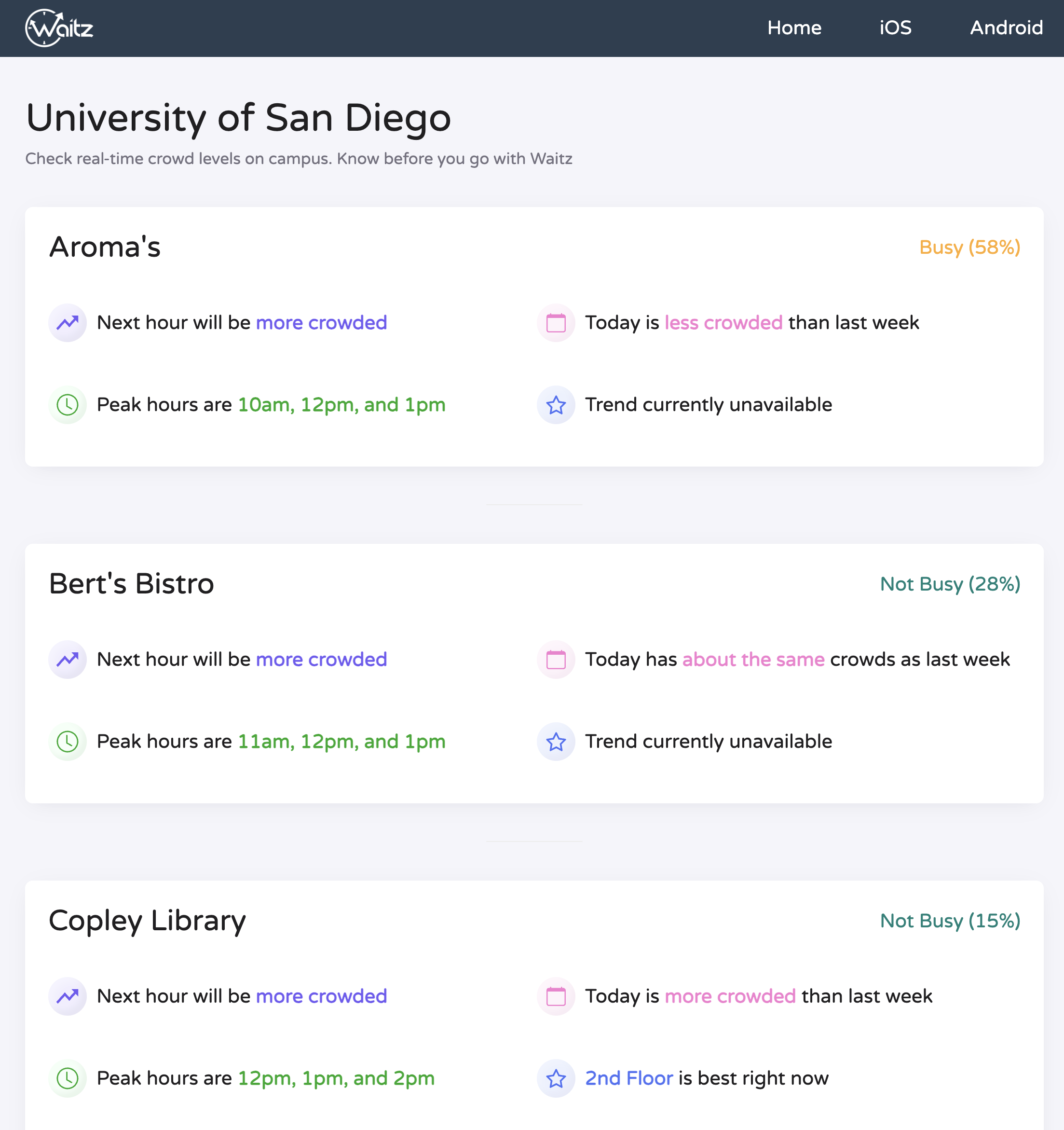
Occuspace technology sends data to waits.io/usd, which is accessible by all USD students. Caden Haynor/The USD Vista
USD community members can access real-time examples of data from these sensors on popular campus buildings through waitz.io/usd. This shows peak hours of operation, what floor is more available and how crowded the building might be in the next hour.
Most Occuspace sensors have been installed in campus areas and some may need adjustments as the year progresses. According to the University Operations website, the Campus Space Study steering committee plans to prepare a report on this study by May 2026.
Occuspace sensors detect Bluetooth and WiFi. Hailey Howell/The USD Vista



 The USD Vista
Leave a comment