KATARINA MARIC / CONTRIBUTOR
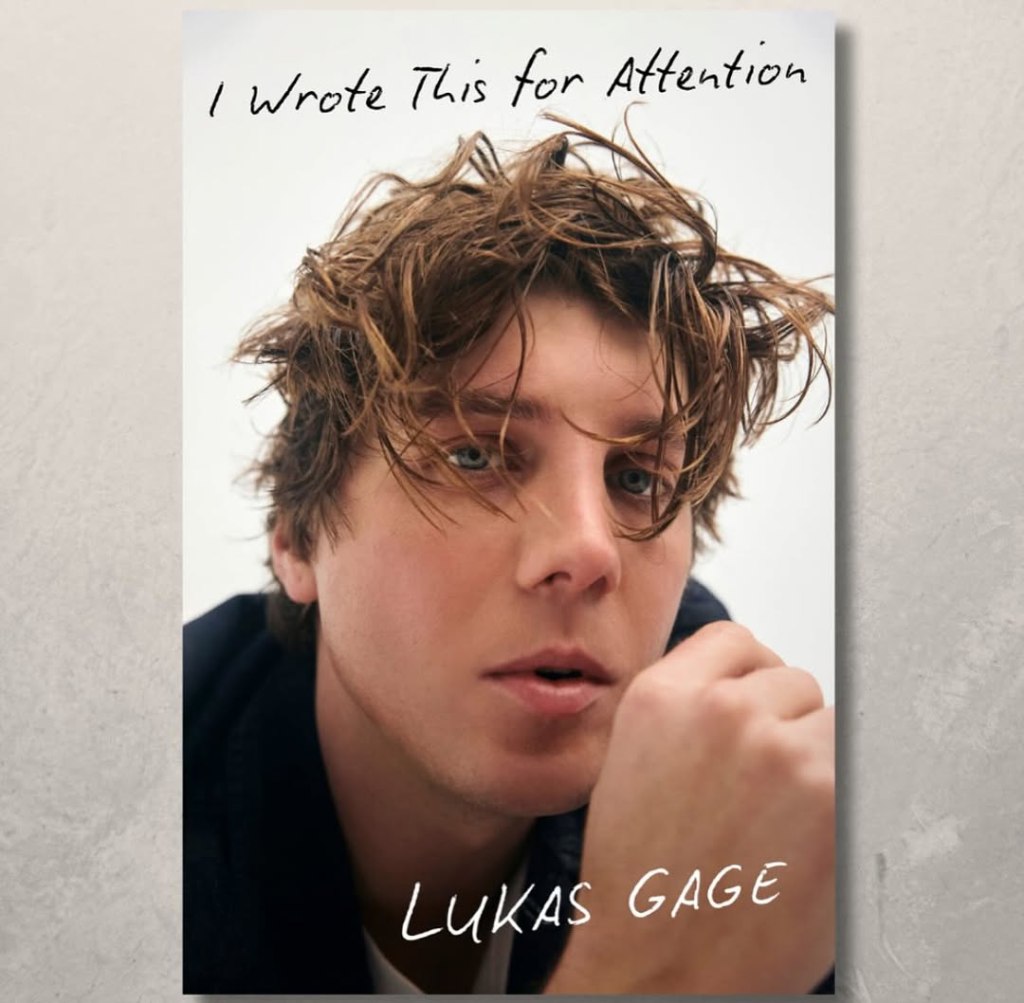
The Humanities Center welcomed 30-year-old actor, writer and producer Lukas Gage to discuss his memoir, “I Wrote This for Attention,” alongside actor Lili Simmons, on Oct. 20.
Lukas Gage is known for his roles in Emmy Award-winning shows and movies such as HBO limited series, “The White Lotus,” “Euphoria,” “Fargo” and feature-length films such as “Road House,” “Smile 2” and the highly anticipated “Rosebush Pruning.” In 2020, a recording of his Zoom audition was leaked online — where a director made classist remarks about Gage’s apartment. The video went viral, which brought more attention to Gage.
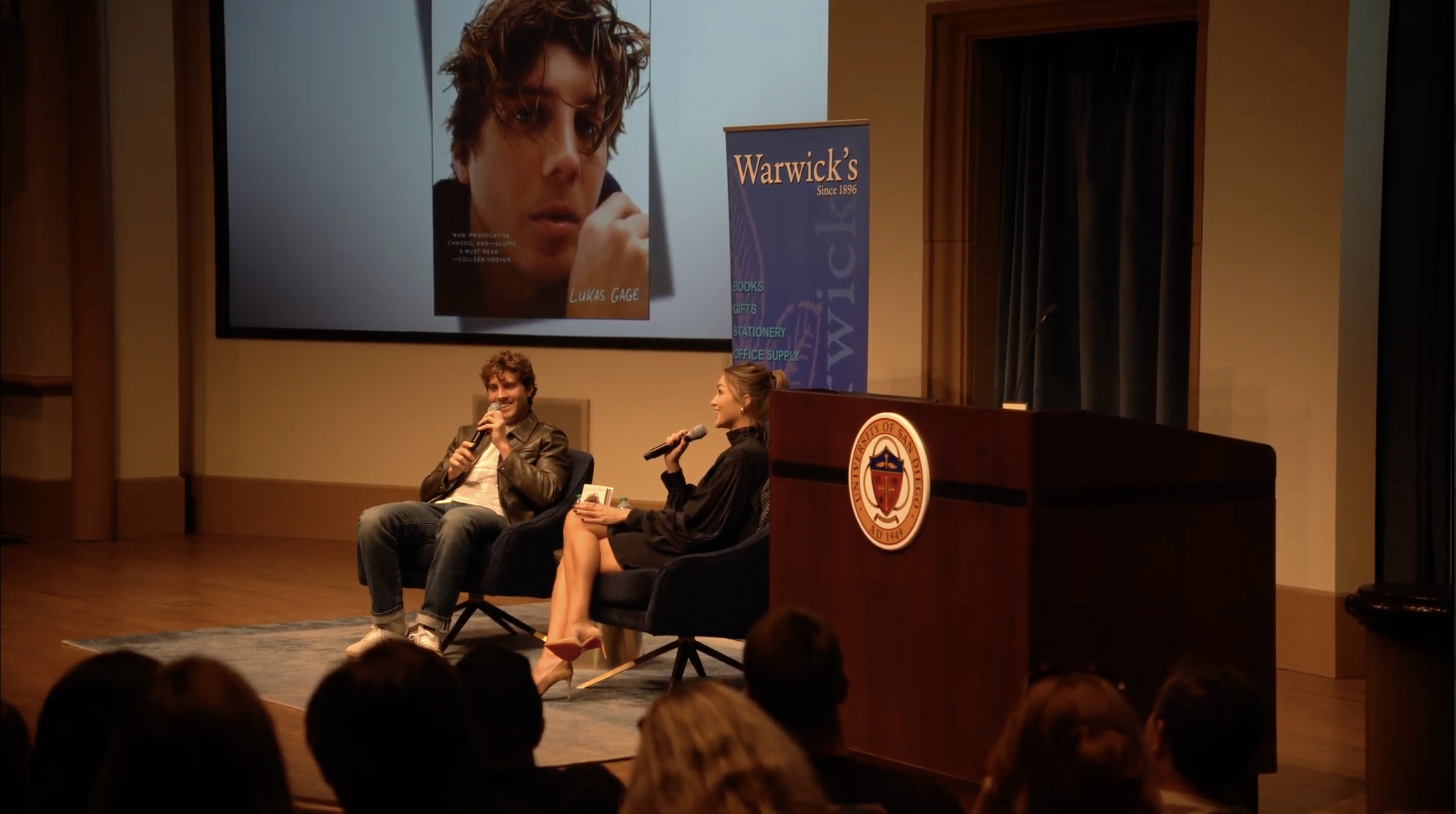
Lukas Gage speaking with Lili Simmons about his memoir. Photo courtesy of Cherishann Diamzon
While some students at USD aren’t as familiar with Gage, others recall him from HBO. USD sophomore Jasmine Williams shared her take.
“Sometimes I don’t think I can escape him,” Williams said. “[Lukas Gage] is in so many popular TV shows, popping up as a side character out of nowhere. I like how unique the characters he portrays are and how genuine he is as an actor. I think he has a very good attitude with all the different spotlights he’s been under in the media.”
His memoir “I Wrote This for Attention” encapsulates the anxieties and emotional weight that Lukas Gage felt transitioning from innocence to adulthood: his childhood in Encinitas, Calif., struggles with a broken family, addiction, sex, bipolar personality disorder and his commitment to being the center of attention at all times. With alterations between self-deprecating confessions and revealing recollections, Gage spent his presentation discussing the deeper implications of the desire for attention, tying it to his past and the culture of stardom.
Becoming a young man, he felt a desperate desire for validation and to be seen, explaining that it was the only appropriate topic for his memoir.
“I think everyone wants attention, and I wanted to embody that,” Gage expressed during his presentation.
Gage further discussed the contradictions and tensions of seeking attention, yet fearing vulnerability — both through the lens of an actor and of a young adult.
“I thought I wanted attention for so long, but when I got it, then I was suddenly so scared of it and wanted to hide, and hated it,” Gage said. “That’s the whole contradiction of wanting to be seen: wanting attention and running. It’s a classic actor thing. Look at me, then don’t look at me.”
It is the idea of wanting to be someone else, performing, wearing a mask, a desire to be looked at as another person, but not to be looked at authentically. The obsession with perception and how we are seen roams our society, dangerously shaping how we view ourselves and the decisions that we make.
For example, college students at USD and beyond may seek attention by making choices of participating in so many extracurriculars or choosing a certain major to gain validation from others, even though those decisions don’t reflect their passions or what they truly want to do with their time and lives.
“I wrote this book for attention, but I hope that people leave with a connection,” Gage continued. “I think that I hope people can get out of reading this that there’s good attention, and everyone wants to be seen and validated, but that there’s also bad attention in areas that you cannot look for external forces to feel good about yourself, especially in the culture that we’re living in, and internet, and everything. It’s okay to want attention. It’s okay to be an attention wh—. But just do it for the right reasons.”
Gage argued that true self-love and self-esteem comes from the inside of a person, and it is not something that students or people in general should lean on others to develop. He reframed his validation-seeking behaviors to point toward our discomfort with the uncomfortable — the things people don’t talk about — and highlighted the importance of being more vulnerable with one another to destigmatize mental health issues. In an interview with USDtv, Gage shared the ways in which he hopes to inspire USD students and youth in general.
“I think that in general getting rid of any stigma behind these conversations are the way that we move forward and don’t fill ourselves with shame and embarrassment about them,” Gage said. “For me, it was important to talk about all of those very vulnerable things, but at the end of the day, I think there’s a part of me that wanted to get rid of just the embarrassment of having those conversations.”
USD senior Dana Wright, who attended the presentation, reflected on his message.
“The contradiction between wanting attention while also trying to be vulnerable really stood out to me because it highlights such a universal struggle,” Wright said. “The tension between craving recognition and staying authentic. It speaks to such a core paradox of modern life since we live in a world where we’re constantly encouraged to put ourselves out there, but at the same time, vulnerability requires us to be honest and unfiltered. Being vulnerable opens us up to judgment, criticism, and exploration. In a way, wanting to be vulnerable goes against the very instinct that drives us to seek approval, attention, and recognition.”
Gage argues that this stripping of facework is important to allow people to receive the support they need, and to decrease the need for negative attention, revealing our truths and carving a place where we can be as we are. Especially for college students, during a great transition and uncertainty, where the hard truths and deep inner passions are essential to guiding them toward a happy career and future.
Gage encouraged students to authentically grow into themselves.
“I would say you don’t have to have it all figured out even though it feels like you do,” Gage stated. “I would say don’t try to fit a mold to be anything other than what is uniquely, authentically you because that’s the only thing you’ve got and lead with that. Don’t try to be anyone else for anybody. Just be you. Truly.”
After the presentation, Wright expressed her thoughts.
“I had a great time at the Lukas Gage Event,” Wright said. “I think he is an amazing person and is inspiring because he makes the best out of every situation. I have watched him since I was in 7th grade, so it was really a full circle moment because I have kept up with his current projects and stuff. I would say I personally got a lot of the presentation. It definitely inspired me because he’s achieved so much success at such a young age and has even written an early memoir. So I guess it inspires me to remind myself that anything is possible.”
With the excitement dying down after Gage’s talk, only time will tell what other presenters attend USD to inspire Toreros.
This is the cover of Lukas Gage’s book, ‘I Wrote This for Attention.’ Photo courtesy of @lukasgage/Instagram




 The USD Vista
Leave a comment