AMELIE SEDLACK / FEATURE EDITOR
October is Domestic Violence Awareness Month (DVAM), a national marker and a time to remember those who have experienced domestic abuse and to learn more about how to prevent it with ourselves and our loved ones. Continuing to the end of October, USD has hosted multiple events to raise awareness, support survivors and educate allies about support and prevention.
Sarah Diamond is the Associate Director of Prevention and Education, and a Campus Assault Resources and Education (CARE) Advocate. Diamond oversees all DVAM programming, introducing what DVAM is and what it looks like on USD’s campus.

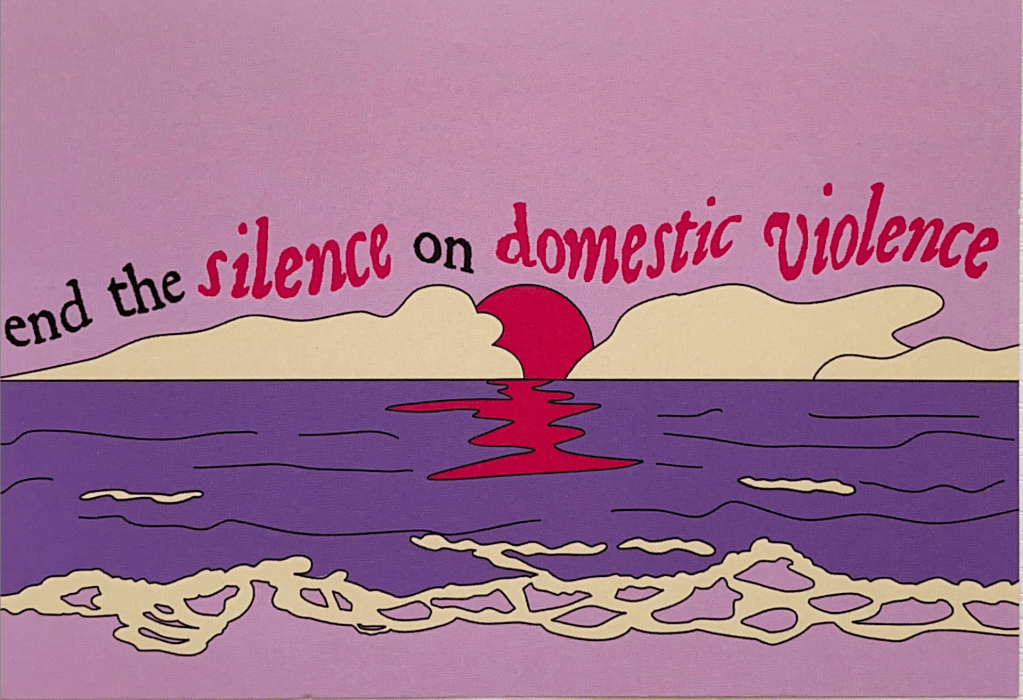
This graphic was used to advertise the Domestic Violence Awareness Month events to Toreros. Photo courtesy of @usd_care/Instagram
“DVAM is an annual awareness month that is used to raise awareness about domestic violence, to raise support for survivors and to educate the community on what it looks like to actually prevent violence,” Diamond explained. “We like to choose a wide variety of activities or events for our campus community, a wide variety of events that kind of do all of those things. That raises awareness, shows support for survivors and also educates the community on what it looks like to prevent violence and what it looks like to be in a healthy relationship.”
The month started off with the event, “Cycle to End the Cycle,” a spin class to help heal and support survivors. Next was “Fostering a Culture of CARE: Supporting Students Impacted by Violence,” which encouraged faculty and staff specifically to attend and learn how to better support students who have experienced domestic violence and trauma.
“In that workshop, we provided some foundational knowledge about what intimate partner violence is,” Diamond shared. “We walked through how domestic violence or intimate partner violence is where one partner aims to have power and control over another and it’s an ongoing tactic … and how that can show up for students in particular. Then we talked about what it looked like to approach a disclosure with trauma-informed care as well as what is their duty as responsible employees.”
Diamond continued to explain more about mandated reporters here on campus — differentiating a mandated reporter and who is a confidential source. While a mandated reporter is obligated by law to file a report with Title IX about anything that they may be told about abuse and violence, a confidential source is not obligated by law to report any knowledge of violence or abuse disclosed to them by a survivor or ally.
“Essentially all staff and faculty hold a mandated reported status,” Diamond explained. “We taught them how to gently pause the conversation before a disclosure happens so that a person can have a fully informed decision in whether or not they share with a mandated reporter or if they want to get connected to a confidential person … All staff and faculty are considered mandated reporters with the exception of confidential CARE advocates, like myself, counselors — so folks that work in the counseling center or counselors that work in the student health center. But not medical staff. And then, full-time university ministry and pastoral staff. Think of the fathers on campus — the priests — as well as full-time resident ministers. All three of those groups are considered confidential. So what is shared with that person is not documented to the University.”
USD sophomore Arianna Trette helped plan and lead the DVAM events this month as a Relationship and Sexual Violence Prevention (RSVP) peer educator. She shared how her position as a student and leader helps her to understand both sides.
“It helps to understand the things that students my age may be struggling with, socially or relationship wise,” Trette explained. “Which I do think are different from [what] a middle-aged person may experience. Domestic violence looks different sometimes in college-aged students. Having students involved in this prevention is important because it brings attention to the issues that people in our demographic face.”
USD senior Devin Reyes, is also a student RSVP peer educator. She shared something she wants all Toreros to know about the DVAM events offered this month.
“While DVAM is designated to run for the month of October, the team at [Center for Health and Wellness Promotion] and RSVP is here for all students all year,” Reyes shared.
Some of the other spaces created for USD students this month were Healthy Relationship Circles in various residential areas around campus that aimed to build healthy relationships among the residents in each residential area on campus. The “Community Healing Night” also included art for attendees to create.
Another event, “Purple Thursday,” is a nationally recognized day to support survivors and raise awareness about domestic violence. On this day, USD invites all to wear something purple to show their support for those impacted by domestic violence.
“Purple Thursday is the national day of awareness for DVAM,” Diamond said. “So every school or DV organization tries to do programming on the third Thursday of October which is considered Purple Thursday. We do that every year because that is the national day of awareness.”
The last event, “Trauma-Informed Yoga” was a yoga session aimed to empower survivors with resources and strength and allies with knowledge to help and prevent further abuse and violence. “Trauma-informed” is part of a vocabulary meant to actively support those with trauma by creating a way to give them knowledge of what is to come, such as trigger warnings.
“Trauma-informed means that a person recognizes a person might be coming to them having had a traumatic experience,” Diamond elaborated. “That doesn’t have to necessarily be domestic violence or sexual assault but that they’re essentially committing to not retraumatizing that individual and opperate in a way that gives that person agency — that helps them know that they are a strong person — that they have bravery and strength within them, and then to connect them with the referrals that are on campus. Trauma-informed approaches is more of a philosophy of how you approach different things. Recognizing that people may be coming to you with a variety of traumas. That’s why trigger warnings can be so helpful or why sometimes professors who assign a really sensitive topic or assignment, will provide alternatives to a student.”
Reyes shared her feelings toward student attendance across all the events.
“I absolutely wish more students could have experienced what we’ve created this month … I genuinely hope we can continue sharing experiences like those of this month with even more students in the future,” Reyes shared. “Ultimately, I’m so grateful and happy to see the difference we make, even for smaller groups, and we’re all always eager to welcome more people into these experiences.”
Trette also expressed her thoughts on student attendance at the DVAM events this year.
“Turnout was something that we struggled with a lot,” Trette shared. “I think that if more students come out, perhaps the school would be able to shift to a culture that was really accepting and knowledgeable about these issues. It’s not that we’re not but it’s more that there isn’t as much awareness, especially among our age demographic. If more people came, they could learn how to support themselves [and] someone else.”
Diamond shared her thoughts on what she wanted all who are a part of the USD community to know through the DVAM events.
“My hope is that the USD community knows that we unequivocally stand with survivors,” Diamond said. “That we believe a world free of violence is truly possible and that healing and prevention happens in community, together, and rarely through isolation … We want people, whether they’re a survivor or ally, to come to the events and to know that true prevention requires the entire community to come together.”
Trette gave one thing she wanted all students to know about the topic of domestic violence in general.
“Domestic violence is not one size fits all,” Trette said. “There’s a lot of different ways that someone might experience it and it doesn’t always occur in the way that it’s presented in media. There’s ways that you can help someone that you think is showing signs.”
Diamond ended on a message for the whole USD community.
“It’s not just one group of people — everyone has to work to end violence. Violence prevention is everyone’s responsibility.”
This is a photo of a small flyer given out to Toreros at one of the DVAM events. Amelie Sedlack/The USD Vista
 The USD Vista
Leave a comment