CADEN HAYNOR / NEWS EDITOR
USD students constantly weigh various pros and cons of each airline when deciding how to fly home for breaks. Each airline has shifted its policies over the years to adjust their flights’ affordability, structure and extra prices.
Southwest Airlines, which some USD students use to travel domestically, is undergoing changes that have not occurred during its 53 years of service.
These changes include ending the free checked bags program, eliminating open seating, adding assigned and premium seats and including a “plus sized tax” for passengers that need extra room.
The airline will also be adding and removing certain flights from their route network. Southwest plans to cancel 30 daily routes. Denver and St. Louis will each lose seven nonstop routes this March, and other various nonstop destinations will be permanently discontinued.
The flight redactions from Southwest allowed them to add multiple routes from San Diego to West Coast destinations.
Beginning August 2026, students traveling from San Diego can fly to Santa Barbara and will have more flight options from San Diego to Portland.
USD sophomore Kiera Sheehan, a regular Southwest flier from Denver, reacted to these recent changes.
“Discontinuing seven nonstop flights is absurd granted Denver is such a big airport,” Sheehan stated. “A lot of my flights that I have taken from San Diego to Denver have been really full, so I don’t really understand where they’re going with it from that perspective… I am finding that the ticket price for Southwest is more expensive than other airlines.”
Other airlines are undergoing similar changes. American Airlines has eliminated physical carry-on bag sizers at gates with the goal of streamlining the boarding process. Delta and WestJet are updating their carry-on size limits and personal item policies this year, tightening security and baggage rules.
In 2025, multiple airlines have reduced ticket prices, with average airfares down 7.4% over the year according to the Bureau of Transportation Statistics. Delta Airlines, United Airlines and Alaska Airlines are among many that offered lowered and discounted fares this year, contributing to the decline in average airfare prices over the past four years.
Southwest executives repeatedly called their trademarked “Bags Fly Free” policy a core part of the company’s identity, promising to never remove it for their customers. It gave each Southwest customer two free checked bags each. The policy changed in March 2025, charging all Southwest fliers $35 for a checked bag and $45 for the second.
Southwest will also end its open seating system in May, adopting assigned seating and offering seats that are closer to the front of the plane and with extra leg room. The A, B and C boarding groups, which order Southwest passengers in a pre-boarding line, will be eliminated as a result and customers will have their seats assigned to them when they purchase their ticket.
USD sophomore Tate Schwerin, who flies various airlines, including Southwest, on his trips, explained what he thinks about the seating structure.
“Assigned seating is better than what Southwest was offering beforehand,” Schwerin said. “The previous model was not a perfect, it was a lot more chaotic, but it’s also what Southwest was known for, so at that point what sets them apart? It was also difficult because, with the overhead baggage space, I would always have to sit separate from my overhead baggage. It’s a positive change I think.”
Additionally, the policy that used to allocate a full refund for a plus-sized passenger that bought an extra seat will be changed. Critics are calling this change a “plus-sized tax.”
Effective next month, any customer that does not fit within one seat’s armrests will have to buy a second seat up front without a guaranteed refund. Currently, no other major U.S. airline is explicitly requiring larger passengers who cannot fit a single seat’s armrests to purchase an extra seat in advance.
Sheehan expressed her opinion about this new policy.
“Changing that policy that helps plus-sized people on planes is absurd,” Sheehan said. “I have family members who are plus sized and if they can’t get a refund for their extra seat, that really limits their travel. Companies need to be way more supportive of their customers because these changes are not going to help business.”
Policy alterations like that tax have shifted company earnings in the past. Airlines anticipate the customer reaction to the recent changes throughout this year.
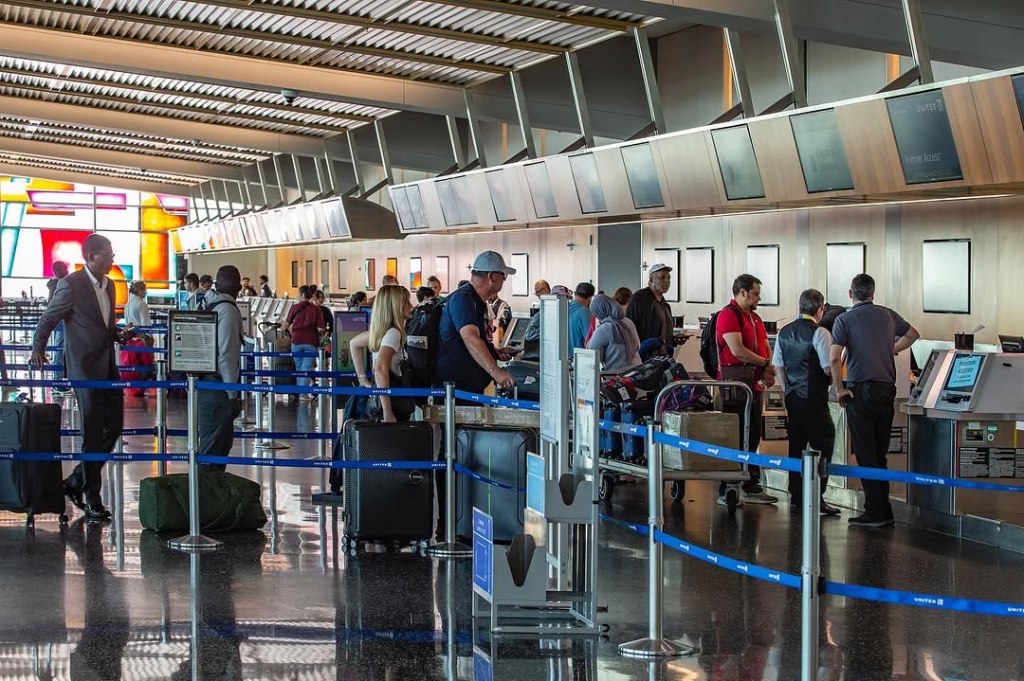
The San Diego International Airport is adding more flights to various areas across the West Coast. Photo courtesy of @sandiegoairport/Instagram




 The USD Vista
Leave a comment