RILEY RAINS / ARTS & CULTURE EDITOR
After watching the Seahawks kick field goal after field goal on Super Bowl Sunday, the second quarter came to a close and fans geared up for the event crowds were raving about: Bad Bunny’s Super Bowl performance. Fresh off his historic Grammy win, the unapologetically authentic Puerto Rican artist used the halftime stage to honor a vision of America that stretches beyond U.S. borders.
Benito Antonio Martínez Ocasio, more commonly known as “Bad Bunny,” took on Levi’s Stadium just one week after “Debí Tirar Más Fotos” won Album of the Year at the 2026 Grammys. This is the first time in Grammys history that an all Spanish-language album has taken home the top prize.
During a privately hosted press conference on Feb. 5, Bad Bunny explained how his creative inspiration originated from his homeland, not a chase for fame.
“I wasn’t looking for album of the year,” Bad Bunny explained. “I wasn’t looking to perform at the Super Bowl halftime show. I was just trying to connect with my roots, connect with my people, connect with myself.”
“Debí Tirar Más Fotos” exemplifies Bad Bunny’s mission to represent Puerto Rican culture. Songs like “NUEVAYoL” are a tribute to the Puerto Rican diaspora and a recognition of the Latin American immigrant experience. While his beats are lively, many of his lyrics attack the gentrification being faced in Puerto Rico.
“LO QUE LE PASÓ A HAWAii” in particular addresses the negative impacts of Puerto Rico’s admission to the Union in relation to Hawaii. Puerto Rico is an unincorporated territory of the United States, meaning it belongs to the U.S. but citizens do not receive representation in Congress or a vote for president. The main difference between the islands is Hawaii is a part of the 50 states; Puerto Rico is not — yet. Assimilation could cause a loss of political autonomy and cultural identity — issues that Bad Bunny addresses throughout his discography. The complex lyricism might be lost on English speakers, but the infectious sound is not.
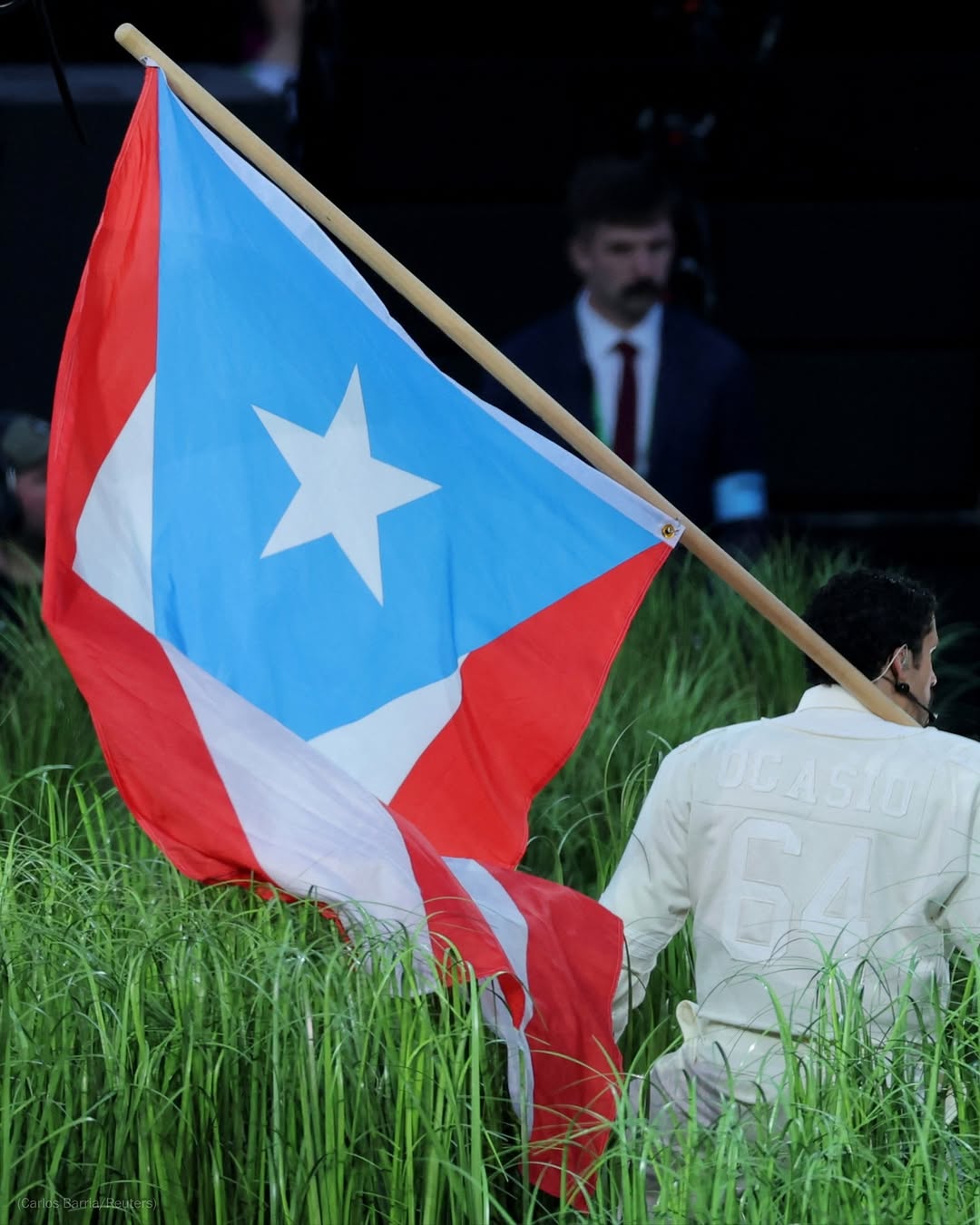
Bad Bunny carrying the Puerto Rican of Independence flag, flown to represent political autonomy. Photo courtesy of @washingtonpost/Instagram
The track list from his most recent album sparked popularity all over the United States. Bad Bunny accumulated 19.8 billion streams on Spotify, making him the most-streamed artist on the platform for the fourth time since 2020. Just 10 years ago, Bad Bunny was working at a supermarket in Bayamón, Puerto Rico, making his rise to fame all the more incredible.
USD Spanish Professor Aldara Fernandez Sierra teaches students about Puerto Rican traditions as a part of the Spanish curriculum. Fernandez Sierra commented on how she internalizes Bad Bunny’s growing popularity.
“His popularity has helped normalize Spanish and Latin American culture expression in the U.S., especially at a time when conversations around immigration identity and belonging are very present,” Fernandez Sierra stated.
USD sophomore Rylie Getty was excited to watch a performer represent Latin American culture at such a famously American event.
“It is really important that we show a singer from another culture to represent how vastly popular not only Latin American music is, but that culture within the United States,” Getty said. “It is a really powerful movement. Also, his songs are amazing. I’d love to be friends with him. I’m excited to have a wholesome person perform.”
Another one of Bad Bunny’s fans is Assistant Professor Wilnelia Recart González, PhD. Growing up in Puerto Rico, González connects to Bad Bunny’s music in a unique way. González shared what she was looking forward to for this year’s halftime performance.
“I’m excited for people to have fun and see a glimpse of how Puerto Ricans have fun,” González exclaimed. “I got tickets to see him in Colombia. He managed to make a football stadium look like it was an old school discoteca [disco nightclub] where you have the most intense perreo [Puerto Rican dance traditionally to reggaeton music] of your life.”
The golden sun began to set as “Tití Me Preguntó” kicked off the 13 minute halftime show. Bad Bunny emerged amidst a sugar cane field, dancing with workers wearing authentic jíbaros in pavas, straw hats traditionally worn by Puerto Rican field workers. The undeniable symbols of Puerto Rican culture continued through the iconic plastic chairs that special guest Ricky Martin basked in; a scene that mirrors the “Debí Tirar Más Fotos” album cover.
Ricky Martin, one of Puerto Rico’s most iconic crossover artists, wasn’t the only celebrity appearance during the show. Fans spotted cameos of Lady Gaga, Pedro Pascal, Cardi B and Alix Earle.
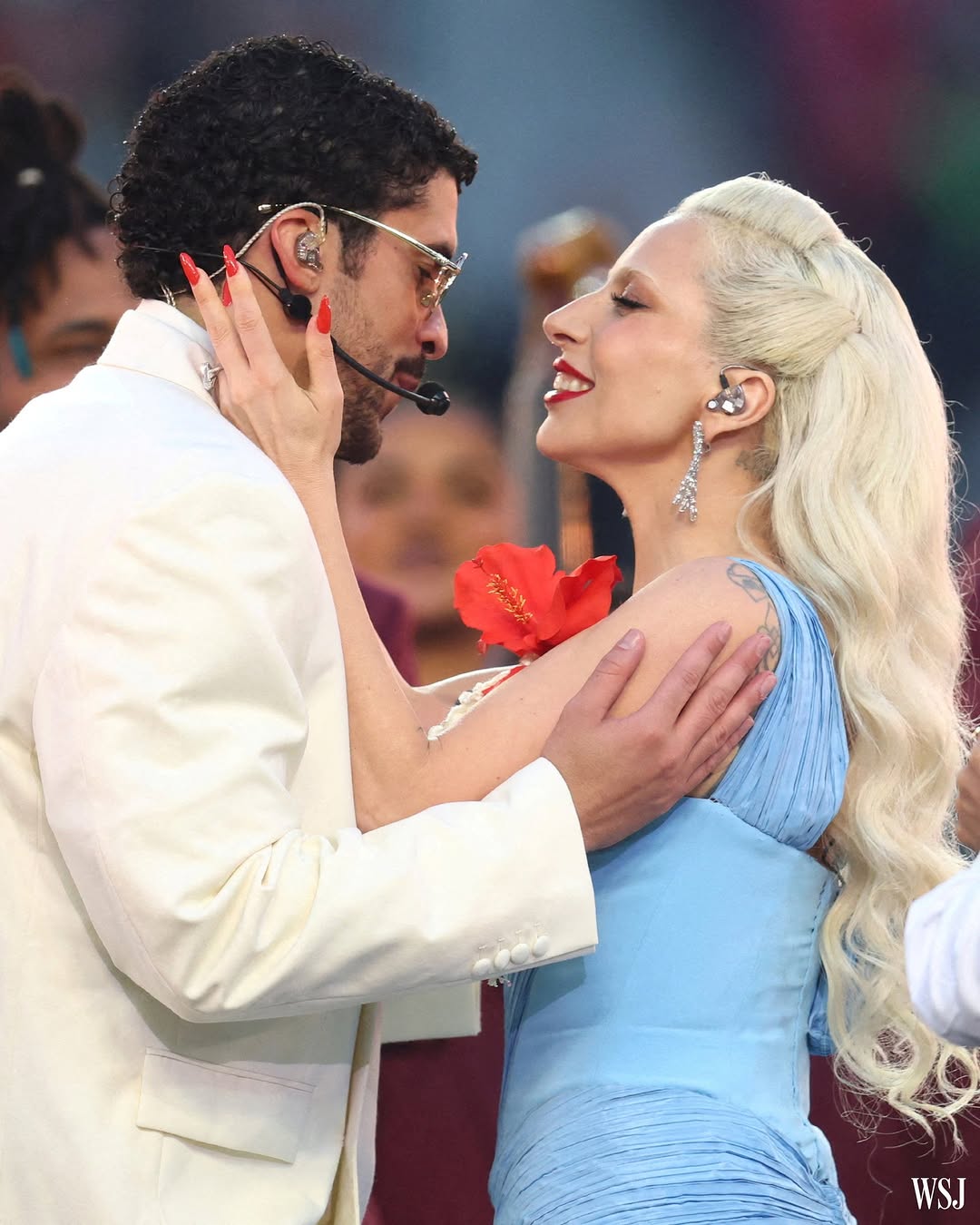
Bad Bunny looking at Lady Gaga during Super Bowl LX. Photo courtesy of @washingtonpost/Instagram
USD junior Sophia Salentine was skeptical of some of the special guests, and their place in the cultural driven performance.
“The special guests were very unexpected,” Salentine commented. “Like Alix Earle and Lady Gaga? Odd.”
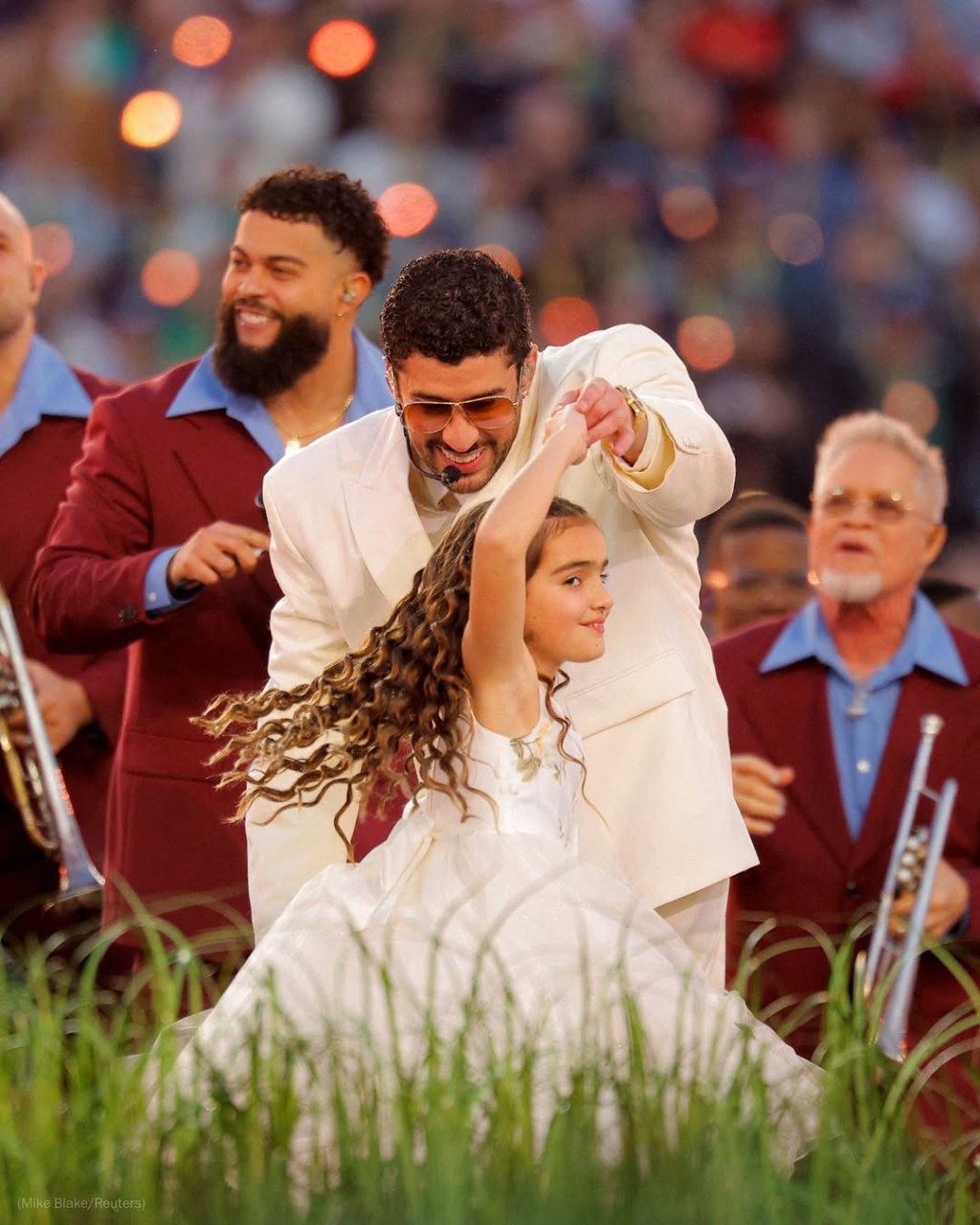
Another event that caught fans’ eyes was the wedding that took place during the halftime show. The two individuals — Eleisa Aparico and Thomas Wolter — were legally married while drowning in a sea of dance and song; Bad Bunny acted as the witness. The Wolters’ wedding symbolized Puerto Rican love and a call for unity.
The jubilant artist moved through songs such as “BAILE INoLVIDABLE,” “VOY A LLeVARTE PA PR,” and “NUEVAYoL” with a majority Latino dance group. Authentic love bled through the screen and sparked emotional reactions from viewers. USD junior Kendall Adams explained her experience.
“There were tears in my eyes,” Adams choked. “When he handed the kid the Grammy I lost it. I loved it so much.”
Around the ninth minute of his performance, the camera panned to a family watching Bad Bunny’s acceptance speech. The artist danced up to the little boy and handed him a Grammy, prompting a big enough smile to light up the entire stadium.
The fiesta came to a close as Bad Bunny spiked a football labeled “Together, We Are American” into a sea of red, green and blue. He thanked the crowd listing every nation in North, South, Central and Latin America, suggesting that “God Bless America,” could apply to an entire hemisphere.
Exiting the stadium below a billboard that read “The only thing more powerful than hate is love,” Bad Bunny reminded the crowd that “America” doesn’t just mean the United States. With political motives at every edge of his performance, Bad Bunny left the stadium giving fans a message of hope.
Bad Bunny spinning the flower girl during Eleisa Aparico and Thomas Wolter’s wedding. Photo courtesy of @washingtonpost/Instagram

 The USD Vista
Leave a comment