CADEN HAYNOR / NEWS EDITOR
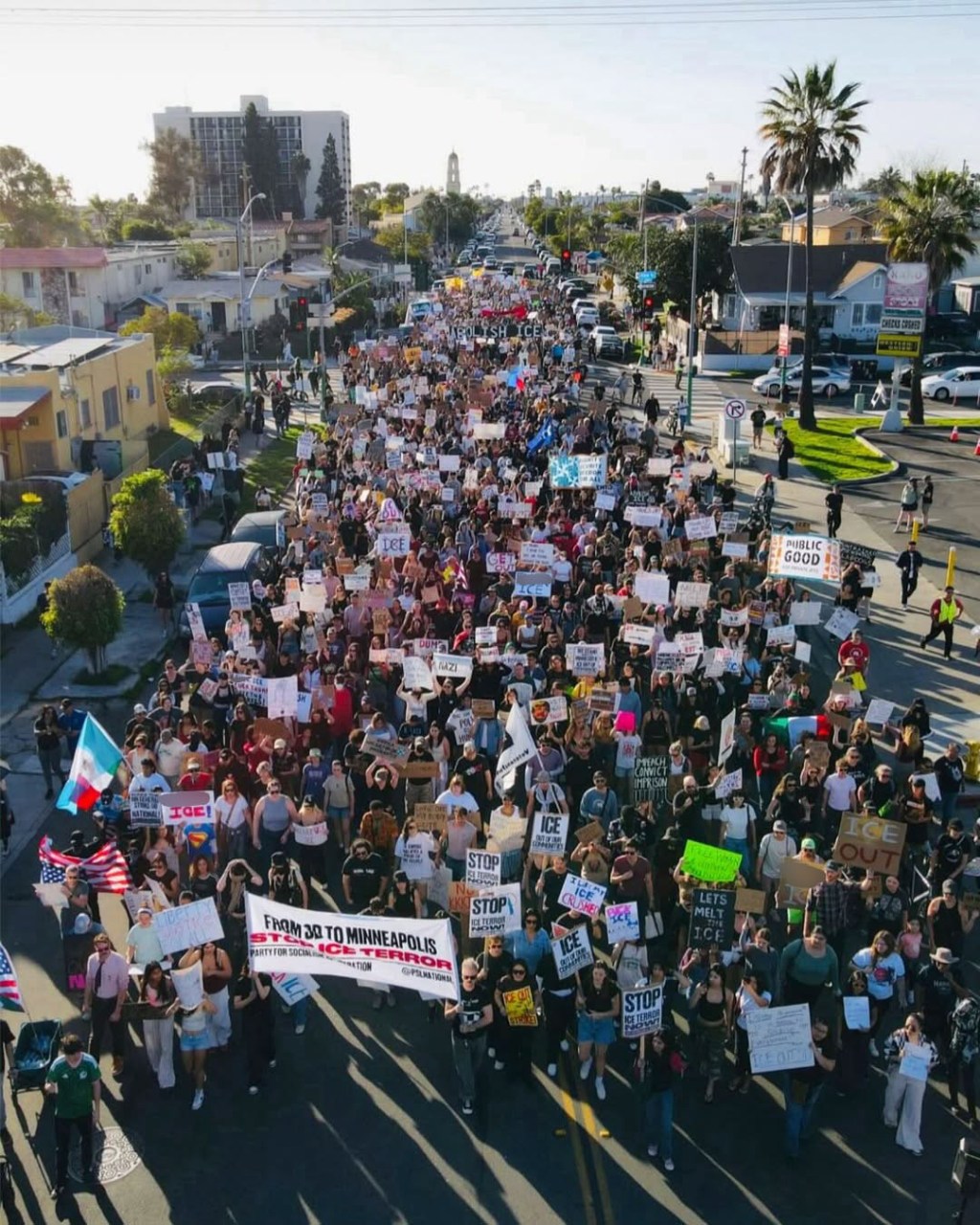
Mexican and American flags rippled through the warm air, joining Sharpied signs flashing “ICE OUT” and “Immigrants Make America Great” on Jan. 30. Hundreds of San Diegans of all ages rushed out of class and work, marching through the streets in response to the recent national actions of the Immigration and Customs Enforcement (ICE) agency.
San Diegans took to the streets in City Heights to protest recent national ICE actions. Photo courtesy of @pslsandiego/Instagram
USD junior Sophia Raia arrived early to the protest with friends. Raia described the atmosphere at the protest.
“[The organizers] said we were going to walk up the side of the street, but we instantly took up the whole road,” Raia said. “It was really cool, everyone had their posters and my friend had printed out little pictures for us… I turned around 15 minutes in and the entire park behind us had been filled in. It was fifty percent young people, like ages 16 to 25, which was great to see.”
Raia explained why this protest is important to people in San Diego.
“As San Diego is a border city, it is definitely up there on future targets,” Raia stated. “So I think it’s so important to start resisting now and for other people to be aware of what’s going on because it sounds dystopian, but a lot of us know we’re next here.”
ICE is currently detaining the highest number of people in the agency’s 23‑year history, 70,000 people as of Jan. 25. According to a 2023 population review, 47 states hold less total prisoners in their state prisons.
CalMatters, a non-profit news organization, released an article outlining an almost 1500% increase in San Diego and Imperial counties arrests by ICE from May to October 2025 compared to the same months in 2024. They also analyzed government data which outlined that federal immigration officers arrested over twice as many people in the San Diego region from September through October 2025 than they did in all of 2024.
In a letter to the USD community on Jan. 28, President James T. Harris III addressed concerns about ICE activity in the United States. This statement was released at the beginning of the semester when ICE activity was heating up nationwide.
“[T]oday, many are arguing that individual rights, protected by the Constitution, are under assault,” Harris wrote. “As an academic community, we must continueto search for the truth and that requires an unwavering defense of academic freedom and the freedom of inquiry in all that we do… Just as a civil and just society has to find balance, as a contemporary Catholic university located on an international border, we need to lean into our own values to understand what role we can each play at this moment as Changemakers committed to confronting humanity’s challenges.”
Border Patrol has nationwide authority to pursue immigration-related offenses, and they have increased jurisdiction within a 100 mile zone of the border. Within this zone, Border Patrol can board buses and trains to look for unauthorized immigrants and question individuals, but they cannot search personal belongings without a warrant.
A city over 300 miles from the border, Minneapolis, has experienced intense violence and ICE activity over the past two months. This activity includes the death of Renee Nicole Good, who was shot three times by an ICE agent, killing her as she drove away.
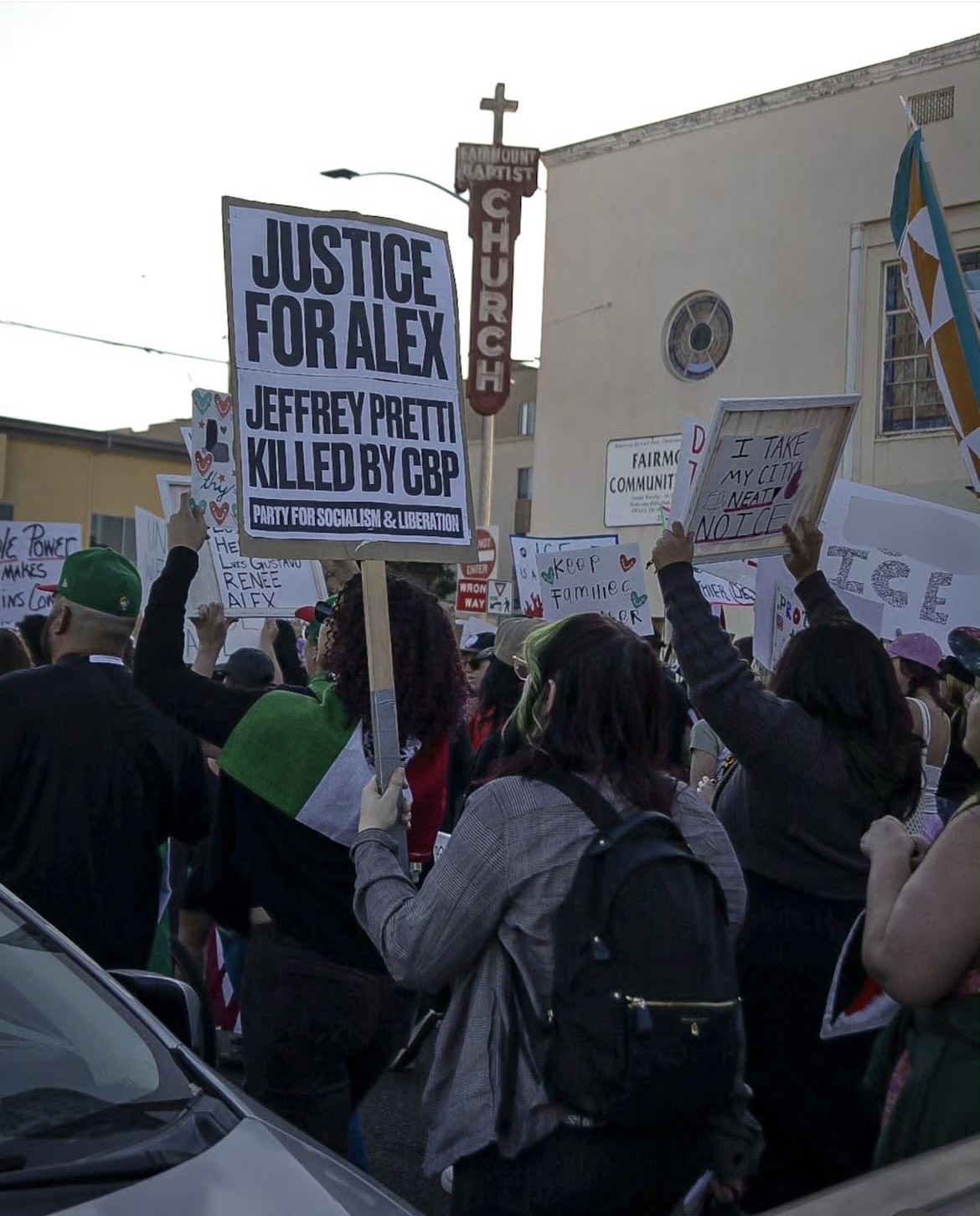
Alex Jeffrey Pretti, an intensive care nurse, was another Minneapolis resident and U.S. citizen killed in January by ICE agents. He was shot multiple times by an ICE agent after placing himself in between the agent and a woman on the ground.
Following the shootings and increased arrests, residents of Minneapolis increased their efforts patrolling and monitoring ICE, along with large scale protests and strikes.
The protesting residents wear whistles to alert others of ICE’s presence, occupy many street corners to witness and record any activity and light controlled fires for warmth in the below freezing temperatures. Some play loud music all night outside of hotels with agents inside.
USD senior Danny Honsa lives 15 minutes outside the city of Minneapolis. Honsa commented on the Trump administration’s response to protesters of ICE within the city, including the response to the killing of Pretti.
“It’s just crazy that Trump is referring to peaceful protesters as domestic terrorists,” Honsa said. “I mean, when someone puts hands on you, you’re not going to let that happen if you didn’t do anything illegal. These ICE officers are attacking people and I don’t think they are allowed to have the same power as actual police. It’s ridiculous that people shove ICE off of them, then they get shot, and then Trump is calling them a domestic terrorist. It’s like, watch the entire video.”
Members of the Minneapolis community have banded together in solidarity during this turbulent time. Basic functions of the city have been disrupted, including school and small business operations.
USD sophomore William Edwards, who calls Minneapolis home, described how his community has been affected by the recent ICE occupation.
“I think the biggest impact has been in schools,” Edwards stated. “My dad’s a teacher and forty percent of his kids won’t come to class right now because they’re scared to come because a lot of kids have been arrested on their way to school, even if they are citizens, or noncitizens, it doesn’t matter.”
Edwards continued with an example of a student affected by ICE activity.
“One of his students he would have lunch with every day stopped coming to class,” Edwards said. “This girl’s like fifteen and she’s having to worry about being safe going to school. She got dragged out of her car driving her 7-year-old sister to school. They were detained for, I think her mom said, five hours before getting to speak to an attorney. So there’s a cloud of fear.”
Honsa went on to describe the current disposition of Minneapolis residents.
“I think people are more concerned with the fact that people are being ripped away from their families and mistreated horribly,” Honsa said. “That’s the scary part because it’s so intentional and so legal. There’s nowhere in the constitution that says you can’t do that and I think that’s the biggest thing that needs to be addressed. So many countries don’t use such an old document and it’s so misinterpreted.”
In response to the high ICE detention rate throughout the country, Raia spoke to the broader San Diego community.
“Sometimes I can get stuck in the cycle of educating myself and educating others, but I just don’t think that is enough,” Raia stated. “I think that actions truly do speak louder than words. If you are able, with the time and ability to get somewhere, we have to stand up and advocate.”
Even though ICE agents continue to occupy many cities around the country, there has been some recent change. On Feb. 5, 700 immigration enforcement agents were removed from Minneapolis effective immediately, leaving around 2,000 agents on the city streets.
Following this update, Edwards looked ahead to a future without ICE agents in his home city.
“[The violence] is still happening and it’s going to continue to happen for months until they decide to leave,” Edwards said. “And when they decide to leave, there’s gonna be aftershocks. Businesses are going to be shut down, families are going to be broken apart like a puzzle, but to the agents that are there, their life will continue just how it was.”
In a news conference on Jan. 28, White House Border Czar Tom Homan described the removal of troops from Minneapolis as a one time reduction, due to “unprecedented cooperation” between federal, state and local authorities.
Some USD students protest, and others watch the progress of ICE agents throughout the country.
Hundreds of San Diegans marched through the streets, holding signs with anti-ICE sentiments. Photo courtesy of @pslsandiego/Instagram


 The USD Vista
Leave a comment