DAVID COOK / OPINION EDITOR
A few months ago, I wrote an opinion piece about the Pentagon’s attempt to impose a new journalism pledge that would have restricted how journalists report on the Department of Defense. While the policy ultimately collapsed after widespread backlash, it now reads less like an isolated controversy and more like an early warning sign of a broader campaign to control information and intimidate the press. That campaign may have intensified under Trump’s second administration, however its foundation was laid years earlier, beginning in 2016, when attacks on the “fake news” media first became a political strategy.
Since then, those attacks have shifted from language to action. The Pentagon pledge was not about protecting classified information, as existing laws already do that. It was about testing how much control the government could take over journalism itself. When that effort failed, the pressure simply changed form. Restricting access, threatening credentials and sending a message that aggressive reporting comes with consequences have become part of the new normal, signaling that the goal is no longer to challenge the press, but to control it.
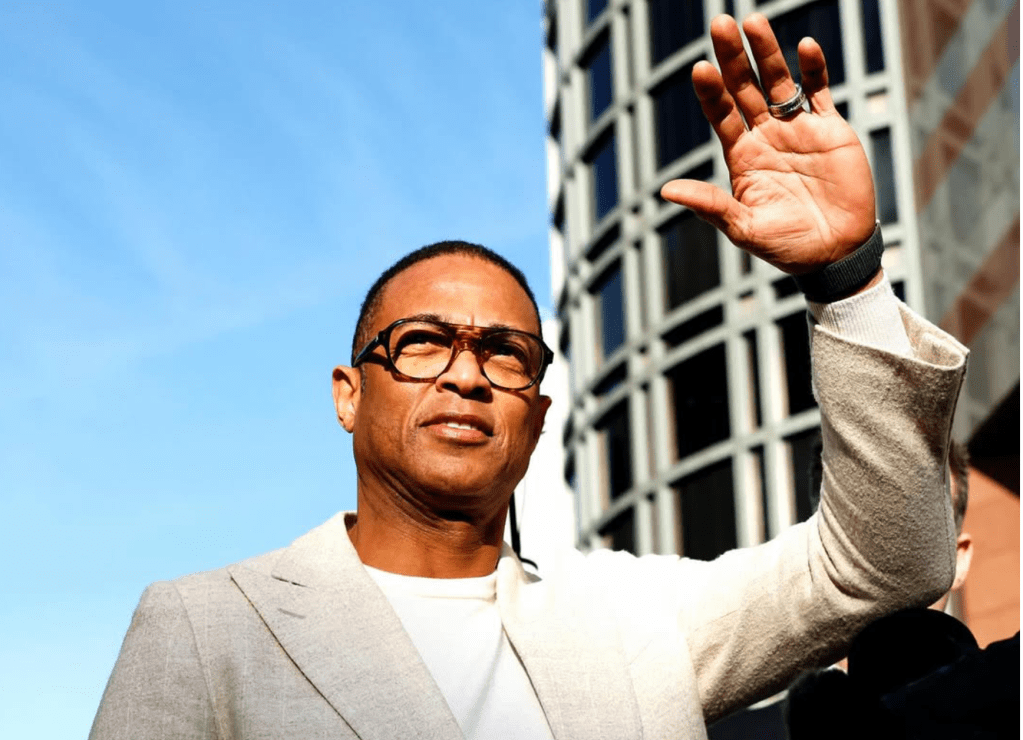
The current administration now appears to have crossed its most dangerous line. The arrests of journalists Don Lemon and Georgia Fort represent one of the clearest and most extreme confrontations between the federal government and journalists in recent American history. Both Lemon and Fort were working as independent journalists when they were arrested by federal authorities after covering an anti-ICE protest that disrupted a service at Cities Church in St. Paul, Minn.
After widespread demonstrations following the fatal shootings of Renee Good and Alex Pretti by federal immigration agents, a grand jury in Minnesota indicted them and several protestors on conspiracy and civil rights charges related to the protest. Prosecutors say the protest amounted to a coordinated disruption of worship.
Lemon, Fort and press freedom advocates, on the other hand, have emphasized they were there to document the event, not to lead or organize it, and that arresting journalists for covering a protest raises serious First Amendment concerns.
In a White House press briefing on Jan. 15, eight days after the killing of Renee Good, Press Secretary Karoline Leavitt responded sharply when The Hill reporter Niall Stanage questioned the administration’s defense of the ICE agent involved in the killing of Renee Good.
“Why was Renee Good unfortunately and tragically killed?” Leavitt asked Stanage.
“Are you asking my opinion? An ICE agent acted recklessly and killed her unjustifiably,” Stanage responded.
“Okay, so you’re a biased reporter with a left-wing opinion,” Leavitt snapped. “You’re a left-wing hack. You’re not a reporter, you’re posing in this room as a journalist, and it’s so clear by the premise of your question. And, you and the people in the media who have such bias, but fake like you’re a journalist, you shouldn’t even be sitting in that seat.”
The monologue went on and the message was clear: report on an event that contradicts the Trump administration’s narrative, and prepare to be made an example of.
Video evidence shows an ambiguous story at best for Good’s shooter, ICE agent Jonathon Ross. While some Americans believe that this was an unjustifiable murder by a federal officer, others have seen the video evidence of the killing and decided that this was an act of self defense by the ICE agent. While people are of course allowed to come to this conclusion, the situation is unclear at best, making questioning from a journalist valid. The haste from Leavitt, which has been seen by Trump and other members of the cabinet, is a sign of a larger war against journalism.
These moments reveal something deeper and more dangerous than isolated controversies. They show a pattern in which questions aren’t answered transparently and journalists aren’t treated with respect. They’re met with resistance, hostility and legal jeopardy. When critics ask tough questions about federal agents’ conduct, the response has the purpose to deflect, deny and demean. That pattern doesn’t happen in a healthy democracy, but it happens in systems where power fears exposure more than it fears criticism. One example of where this theory of censorship is tested is in Iran, where journalists are under constant surveillance, deal with arbitrary arrests and receive long prison sentences for “spreading propaganda”.
In a government where traditional checks and balances have been weakened by partisanship and seemingly unwavering loyalty to the executive branch, journalism has emerged as the fourth branch of government to restore said checks and balances. The responsibility for maintaining democracy has fallen on journalists to act as the eyes and ears of the public when the government fails to do so.
That role can only be fulfilled if journalists are free to operate. This means having the ability to ask hard questions, to pursue inconvenient truths and to speak truth to power without fear of arrest or retaliation. When reporting itself becomes criminalized or delegitimized, the entire idea of accountability collapses. The public loses information, and as a result, trust, causing the gap between power and the people to widen.
The Trump administration’s rhetoric and actions have made it clear. It is more about control than it is having favorable coverage. They want the narrative. They want the public to see only what they allow and control reality itself.
That means you, me, our friends, our families and anyone who relies on journalism are affected when the public’s right to know information is under attack. It is not just journalists who are under attack, but also the very people that they serve: the American public.
Information is our way of holding those in power accountable, and propaganda is how those in power hide from scrutiny. We live in an era where the line between information and propaganda is extremely blurry, and when that line is blurred, democracy slowly and quietly begins to erode away, leaving the public less informed, and thus, less free.
Regardless of whether Americans agree or disagree with the Trump administration’s policies, attacks on journalism should alarm everyone. Governments that act in good faith do not need to intimidate reporters, restrict access or punish those who ask difficult questions. An administration that treats the press as an enemy signals what they may believe is strength and unity, but in reality is fear of scrutiny. When those in power fear scrutiny, it suggests they have something to hide. A government with something to hide cannot be trusted, and in a democracy, that loss of trust is far more dangerous than any headline.
Journalist Don Lemon waves to the press after being released from jail, following his arrest for covering a protest over the killings of Renee Good and Alex Pretti. Photo courtesy of @justjared/Instagram
 The USD Vista
Leave a comment