CONNOR DUFFEY / ASST. NEWS EDITOR
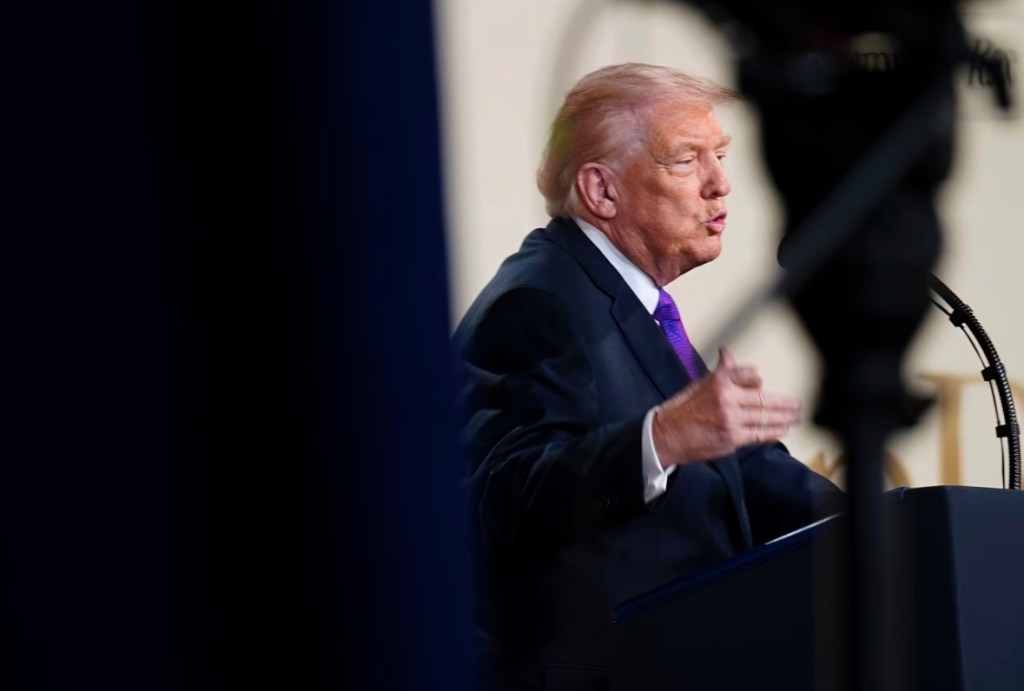
Deleted tweets, political backlash and a canceled dinner all followed a recent video posted by Donald Trump to his official X account. The video depicted Trump as the “king of the jungle” while portraying Barack and Michelle Obama as apes.
This controversy coincided with the first week of Black History Month. This year marks the 50th anniversary of the month’s official recognition, while the week has been recognized for 100 years.
Black History Month was officially established as a national observance by President Gerald Ford in 1976. The designation of this time was intended to recognize the struggle and progress of African Americans throughout the history of the United States. The video received immediate backlash from prominent political figures and USD students alike. USD sophomore Pema Roseman shared her thoughts on the post, noting its jarring nature.
“It seems pointless,” Roseman stated. “And it’s really gross and off-putting. It’s interesting that they used photos of their faces where they seem really happy.”
Beyond the campus community, leaders across the political spectrum, including Bernie Sanders, Tim Scott and Wes Moore, condemned the video.
“It goes beyond a dog whistle,” stated Moore, the Governor of Maryland. “The video is blatant racism. The words our leaders choose matter. The images they invoke matter.”
Moore’s condemnation led to his exclusion from Trump’s “Governors’ Dinner,” a move that sparked controversy with the National Governors Association (NGA). Moore, the nation’s only African-American governor, was one of two leaders barred from the event. The second was Jared Polis of Colorado, who is among the nation’s few openly LGBTQ+ governors.
In a show of bipartisan solidarity against executive exclusion, the NGA, under the leadership of Chairman Kevin Stitt, an Oklahoma Republican, withdrew from the event entirely.
Dr. Donnetrice Allison, a professor of Africana Studies at Stockton University and creator of the series Teaching While Black, shared her reaction while visiting USD for a guest lecture.
“I wasn’t surprised,” Allison stated. “The Obamas take up a lot of headspace for him. A lot of that is jealousy, because [the Obamas] have a level of reverence and respect among people that he doesn’t seem to have.”
The Trump administration has not apologized. Allison suggested this lack of remorse is a calculated political move.
“He can’t actually apologize,” Allison explained. “In doing so, it would be an admission of wrongdoing, which could cause [Trump] to lose a large base of his supporters.”
White House Press Secretary Karoline Leavitt dismissed the criticism during a Feb. 6 press conference.
“Stop the fake outrage,” Leavitt told journalists. “This is an internet meme. Report on something that actually matters to the American public.”
Derrick Johnson, President of the NAACP, fired back at Leavitt.
“It’s utterly despicable,” Johnson said. “The video is a stark reminder of how Trump and his followers truly view people.”
Historically, multiple U.S. presidents have used their position to support a forum for healthy political debate.
President Franklin D. Roosevelt began broadcasting his “Fireside Chats” starting in 1933, the first of a long line of broadcast media usage by U.S. presidents. The “Fireside Chats” aimed to create a “national living room,” with FDR giving transparent policy updates, as well as advice for life after the Great Depression.
Since the “Fireside Chats,” the means and frequency of presidential communication have varied significantly, ranging from John F. Kennedy’s use of television broadcasts to Bill Clinton’s implementation of a campaign website.
USD students will look ahead to future social media correspondence by President Trump, continually assessing its propensity for political unity or division.
President Trump posted the video to Truth Social. Photo courtesy of @WSJ/X.com



 The USD Vista
Leave a comment