OWEN FUGIT / ASSISTANT OPINION EDITOR
The University Galleries at USD house over 5,000 works of art, but many Toreros may complete four or five years of college without seeing most of them. Shiley Theatre, while iconic, literally drains noise into art department faculty offices during performances. As San Diego’s premier liberal arts University, USD — and its students especially — have an obligation to enjoy the art that surrounds them, and to support it wherever possible.
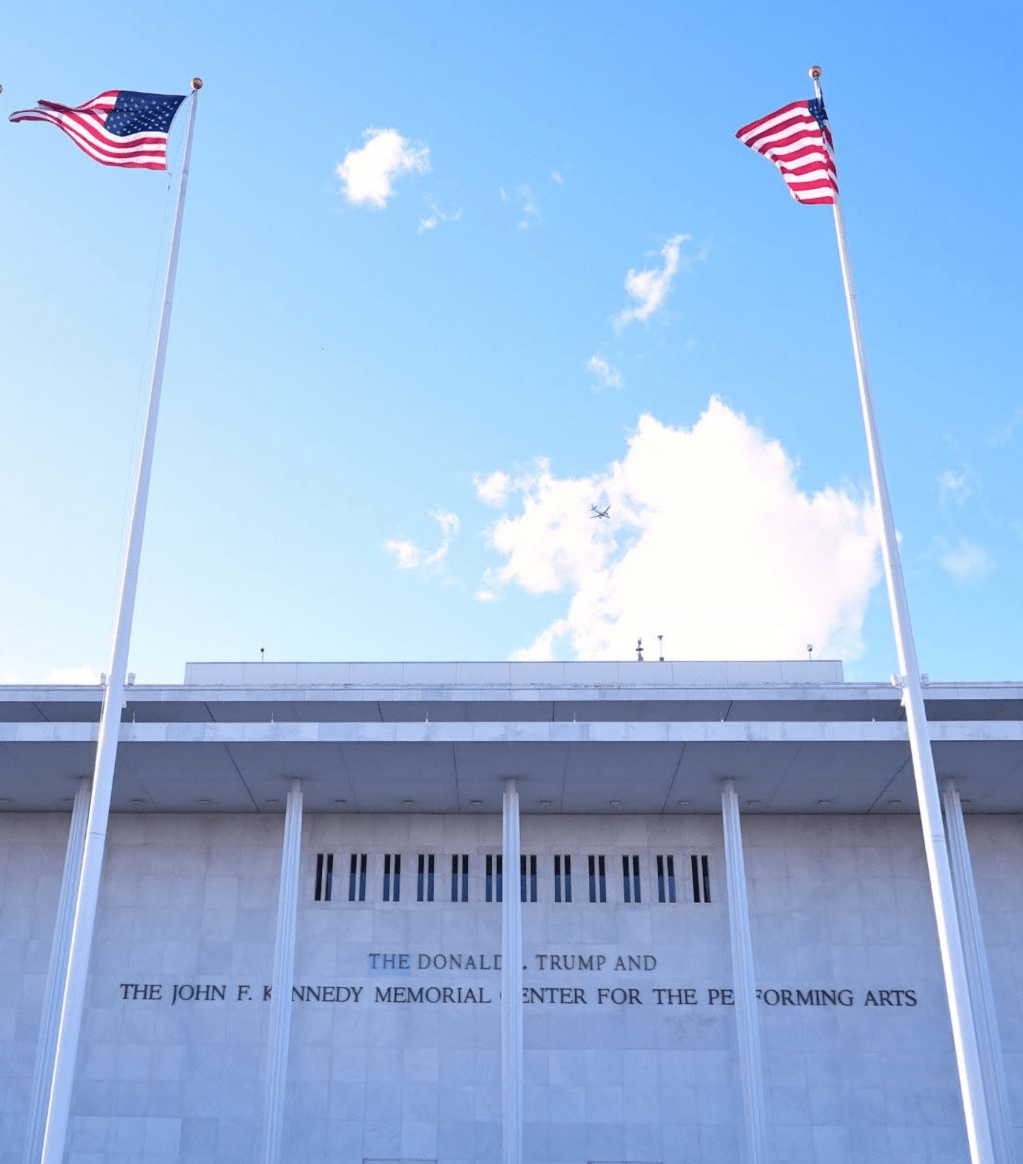
The recent lack of support for the arts mirrors what is happening in the country’s political landscape. Since President Trump took office last year and began his takeover of the beloved John F. Kennedy Center for Performing Arts, the endangerment of culture has been a focus of national news.
Beyond his goals with the Center, Trump has forced the National Endowment for the Arts (NEA) to re-evaluate how it doles out its 150 million dollars in grants, leaving many arts organizations without the funds they need to support themselves.
While the future of the arts is fairly uncertain on a national level, students can and should amplify their support for the arts.
Dr. Jeffrey Malecki, the music department chair and associate professor and director of bands, explained how USD’s founding impacted its performing arts programs.
“So this is my 11th year [as music department chair], and I was hired to actually start the band,” Dr. Malecki said. “We didn’t have a band. And one of the things — when I came here and looked around — I was like, well, where’s the band room? And they’re like, we don’t have one, there’s literally no space on campus where a band can really rehearse, which is why our classroom is Shiley Theater, and even that is, it’s not ideal in many ways. So we weren’t really designed with any of the performing arts in mind with music and theater.”
College of Arts and Sciences Dean Noelle Norton addressed some of the common misconceptions around supporting and growing arts programs.
“It’s complicated,” she said. “I’d say that, actually, the budget is not necessarily what I would consider the issue. I would consider [that] if you build a facility, [students] will come. And if they came, we have the money to support [them]. So I think what we’re working on in the College is to improve our facilities.”
Due to lower student engagement, performance spaces and practice rooms in Camino feature several unique design flaws that the music department is forced to reckon with on a limited budget, as Dr. Malecki illustrated.
“In our percussion room of all things, there are drains that go down into art faculty members’ offices. So the sound goes right there.
If you wanted to pour water on them, you could. We don’t have that because we like our colleagues. The one in Shiley Theatre is stuffed with old rags right now to help. It’s a bit silly.”
One of the most effective ways students can actively force USD to improve music spaces is by simply participating in music department classes and activities. Dean Norton explained this further.
“People don’t understand that you can graduate from USD with two majors and three minors and still do it in four years most of the time,” she said. “So think about participating. You know…majoring in the arts does not stop you from having a wonderful career.”
Students are widely encouraged to try a minor in music, which helps increase direct department funding, a factor partially based on enrollment. An uptick in funding via student enrollment growth would help the music department absorb some of its naturally higher costs, something Dr. Malecki explained.
“[The music department] just costs a lot more because now you need instruments, you need different kinds of spaces,” he said. “You need music that rotates every single semester
you’re not just playing the same thing over and over again.”
Similarly to the music department, the department of art, architecture, and art history faces similar issues, with similarly achievable solutions. Dr. Derrick Cartwright, an art historian, museum curator and associate professor at USD, revealed the state of USD’s fine arts programs.
“One of the things that USD already has that no other local university can claim is an established teaching collection,” Cartwright explained. “Today, USD’s art holdings come close to 5000 works. Identifying a safe place to display, study, store and continue to grow those collections makes sense to me as an area for thoughtful improvement.”
On USD’s part, our art programs are exceptional, however, students by and large ignore these programs despite being enrolled at a liberal arts institution emphasizing the exploration of different fields. With dozens of expert professors, award-winning exhibitions, several performing ensembles and a widely-respected theatre MFA program, the arts at USD need student support.
In a statement given by the University, it is clear that alumni and current faculty care for the arts programs, citing several upcoming projects already beginning to take shape.
“The university is currently fundraising for a stand-alone museum to house our growing print collection. We have several benefactors who have committed to this effort – spearheaded by a lead gift from former Board Chair, Robert Hoehn – and are actively pursuing additional gifts to help realize this effort. Our remaining collection remains under the care of University Design as well as University Galleries.”
The way we treat our arts programs — the organizations on this campus that give it life and legitimacy — is embarrassing, but it is something that Toreros at every level can work to change. Students can visit one of the music department’s many free, peer-led shows, or stop by one of the exhibition spaces on campus to enjoy some of the beautiful paintings, photographs, and sculptures USD possesses. Some of the most notable upcoming events include an exhibition of Francisco de Goya’s “Disasters of War,” on display at the Hoehn Family Galleries in March, a series of senior music student recitals from April onward and various art exhibitions taking place across campus. Dr. Cartwright restated the urgency for student support of the arts.
“It’s a fragile ecology and those who take it for granted, or are willing to cede its potential to those who know very little, will regret losing it.”
When the arts come under fire nationally, as happened with the Kennedy Center and the NEA, the responsibility to support them falls on local institutions just like USD. While the changes that must take place certainly will not happen overnight, Toreros are obligated to begin these processes as soon as possible to fight the attacks on the arts we see today across the nation, and to foster a deeper culture of performance and creativity on campus.
The John F. Kennedy Center for the Performing Arts stands in Washington D.C., as debates over federal arts funding continue. Photo by @apnews/Instragram


 The USD Vista
Leave a comment