DAVID COOK / OPINION EDITOR
For many years, the sports world has entered a new era, which I call the analytics era. It started with “Moneyball.” Oakland A’s baseball club turned its program around in 2002 using analytics to get the most bang for its buck. Then, in the mid-2010’s, the Golden State Warriors showed everyone that shooting more three-pointers is the best strategy, leading the NBA to become dominated by the three-pointer. In football, we watch coaches make “analytical” decisions almost every Sunday, by regularly keeping their offense on the field on fourth down, or going for a two-point conversion when trailing by seven. The numbers usually win. Front offices think in probabilities, and coaches manage games in expected value.
Now in the NBA, there has been a dramatic shift into either competing for a championship or competing for the top pick in the draft. For those unfamiliar, the NBA, like the NHL and MLB, uses a lottery system to assign draft picks. This means every team that misses the playoffs is put in a lottery, where the worse their regular-season record is, the better their chance of landing a top draft pick is.
In the NBA, the draft lottery began in 1985 to combat tanking, which is when a team strategically loses to improve its odds of a higher draft pick the following season. However, this introduction did not solve the problem, as it is in the NBA where the clearest signs of tanking have been seen.
Recently, the NBA fined the Utah Jazz $500,000 and the Indiana Pacers $100,000 for “conduct detrimental to the league.” Essentially, these teams benched, or intentionally left their star players out of a game, during a matchup that had a greater impact on their draft position.
Worse records mean better lottery odds, and front offices aren’t in the business of ignoring that. If finishing with one of the worst records gives you the best shot at a franchise-changing player, some teams are going to aim for that outcome. It’s very rational.
Now the NBA is reportedly considering a list of draft lottery changes to address tanking. The problem is that most of the proposals feel extreme. They treat tanking like it’s breaking the league, when it’s really just the predictable result of how the rules are set up.
One idea would be to completely flatten lottery odds, so every team in the lottery would have the same chance at every pick. That would pretty much eliminate the incentive to tank. Losing more games wouldn’t improve your odds at all.
But the draft exists for a reason. It’s supposed to help bad teams get better. If the lottery becomes a 14-team coin flip, the worst teams could easily end up picking 10th or 12th year after year, while mid-tier teams jump into the top three by luck. Small-market teams already struggle to land elite talent in free agency. Taking away their structural edge in the draft undermines fairness and makes rebuilding harder.
Another proposal would extend the lottery to include play-in teams, further flattening the odds. A play-in team is either the seventh, eighth, ninth or tenth seed in each Conference, who play each other before the playoffs to fight for the seventh and eighth seeds in the playoff bracket. Currently, the bottom-three teams in the NBA have a 14% chance each to land the first overall pick. The NBA already flattened odds in 2019, though, and tanking didn’t disappear. Adjusting the percentages again doesn’t change the underlying incentive. It just chips away at the advantage for the teams that actually need it.
There are also proposals to ban consecutive top-four picks or restrict teams that finish in the bottom three multiple years in a row. But the current system already gives the three worst teams about a 50% chance at a top-four pick. If a team finishes near the bottom, misses out and then isn’t allowed to draft high again the following year, that’s heavy-handed. Bad teams already deal with variance. Adding more restrictions doesn’t really fix the core issue.
A lot of these ideas feel like they’re trying to eliminate tanking completely. That’s not realistic. As long as the draft position is tied to record, there will always be some incentive to lose. The better question is when that incentive exists.
Freezing lottery odds at the trade deadline, or even at the All-Star break, both of which are about two-thirds of the way through the season, makes more sense than changing the entire system. Through most of the season, the worst teams would still earn the best odds. That keeps the draft aligned with its purpose. But once the odds are locked, losing no longer improves draft position.
Right now, struggling teams have a reason to lose every game. Under a deadline freeze, that incentive disappears in the final stretch — when tanking becomes most obvious and frustrating. The standings are largely set. The lottery race is clear. And suddenly, there’s no benefit to sitting healthy players just to slide down a spot.
Teams would still evaluate what they have early in the year. Some would still pivot toward rebuilding. That part isn’t going away. But for the final third of the season, everyone would have the same reason to compete: to win games, and not to throw them for a better chance at landing a top draft pick.
There will always be bad teams in the NBA. The draft is supposed to give them a path forward. Most of the current proposals risk making that path harder in the name of solving a problem that’s really about incentives. The NBA doesn’t need to redesign the lottery every few years, they just need to structure it so that trying to win makes sense for more of the season.
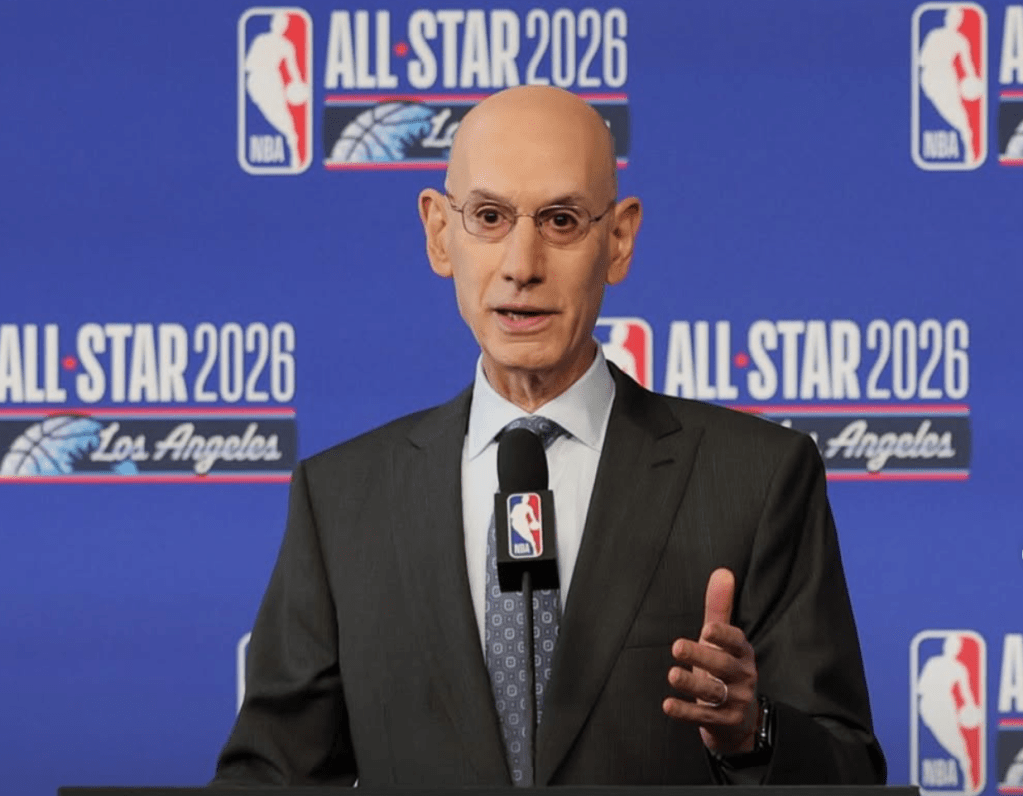
Over the all-star break, NBA Commissioner Adam Silver announced that the league is considering multiple potential rule changes to help combat tanking in the NBA. Photo courtesy of @complexsports/Instagram



 The USD Vista
Leave a comment