CADEN HAYNOR / NEWS EDITOR
SOPHIE HUMMEL / CONTRIBUTOR
A major East Coast blizzard formed on Feb. 20, with severe conditions causing multiple states to declare emergencies. Millions of people were put under blizzard warnings and some areas saw historic snowfall.
The storm, known as Winter Storm Hernando, intensified into a bomb cyclone on Feb. 22 as it moved off the East Coast and into Atlantic waters. A bomb cyclone has a massive pressure drop, which is characterized by strong winds.
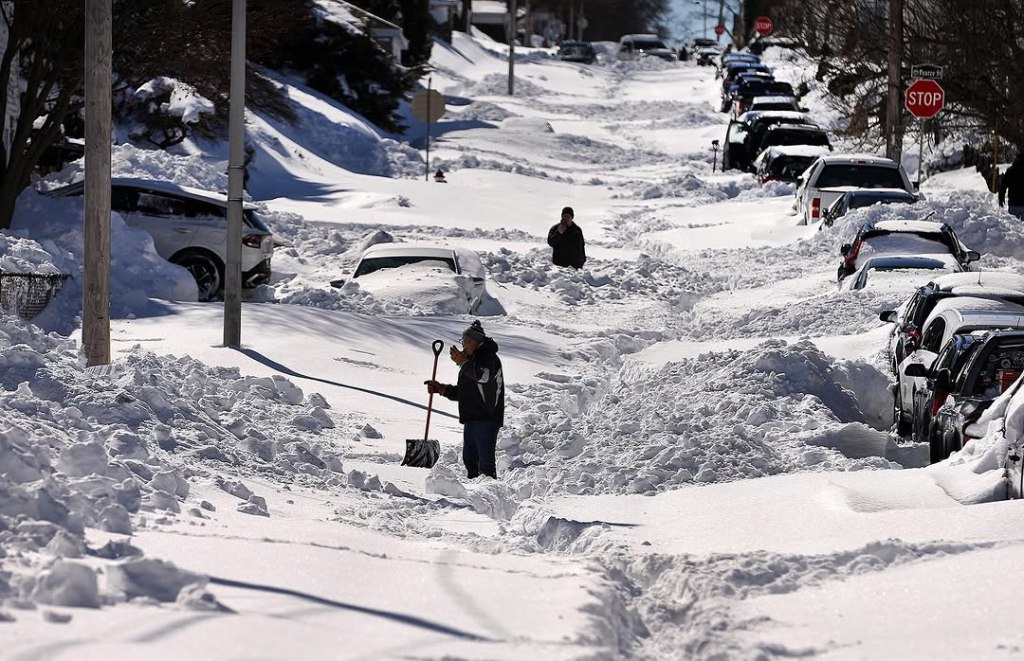
Currently, more than 40 million people are under winter alerts, with blizzard warnings stretching 600–700 miles from Virginia to Maine. New England experienced widespread 18–24 inches of snow, with pockets of up to 30 inches possible.
Winter Storm Hernando is a Category 3 major blizzard with a Regional Snowfall Index of 9.69, placing it among the most powerful winter storms of the decade. Rhode Island recorded 37.9 inches of snow, the highest ever measured in the area and peak gusts reached 98 miles per hour in Massachusetts.
USD junior Skyler Headrick flew to the East Coast to visit her mom the week of Feb. 16. Headrick explained how the forecast unexpectedly intensified as she departed.
“It’s definitely been a lot more severe this year,” Headrick said. “This is the first blizzard they’ve had in a while. A day or so before the flight my mom said it would snow. When I got on the flight, it was only predicted to be a few inches but with time the forecast said 12 inches.”
Headrick explained that one of her classes was affected by the storm.
“I emailed all my professors and one of my professors in the city actually had to move class virtually this week because she couldn’t make it back either,” Headrick stated.
USD junior Evan Zub, who calls Wilmington, North Carolina home, explained how the storm has affected his hometown and how this storm is different from previous years.
“A lot of places close down, like, 24 to 48 hours beforehand,” Zub explained. “So if it’s supposed to snow that night, restaurants, coffee shops and other places will close down the day before because we don’t have any salt to put on the ground. We don’t have any snow plows… This winter has definitely been colder, and more different than previous years. Previous years, it usually only snows about two inches, or it doesn’t snow at all.”
Despite the storm moving offshore and completing its land exit on Feb. 24, there remains lasting impacts on the East Coast, including power outages, flight cancellations and road closures.
New England experienced heavy snowfall throughout the storm on Feb. 24. Photo courtesy of @johntlumacki/Instagram



 The USD Vista
Leave a comment