ALEX KUETER / ASSISTANT OPINION EDITOR
Lately in education, a common topic of discussion is tech: to use or not to use. Slides are posted online, lectures are recorded and classrooms continue to involve tech to further and more integral degrees.
Over the past few years, there has been a surge in using iPads and computers to take notes during class. Online note-taking can offer some advantages, such as being able to write directly on slides, and being able to quickly transcribe ideas.
However, I find that students are rarely only using technology to actually help them. When I am in class, I typically see students focused on 50% class material, and 50% on anything else; coloring, scrolling Instagram or doing work for other classes. While I understand technology can sometimes be helpful with note-taking, I think that overall, it is a net negative to student attention, and returning to paper notes benefits everyone.
The support I always hear for paper notes over computers is a 2014 paper by authors Pam Mueller and Daniel Oppenheimer, which has been cited over 1,000 times. They found students taking notes on laptops demonstrated a shallower understanding of material, and were less able to answer conceptual questions on the material. This study however did not analyze the potential for distractions, which I think is the modern and most pressing issue.
It’s widely accepted that students perform better when writing handwritten notes, but the majority of those studies don’t even consider the impact distraction plays when using computers. Every time I look up in class, I see people on all sorts of websites; often shopping, playing games or occasionally watching shows or movies.
When students are swiping screens between notes and entertainment, there is no possible way they are able to pay attention and actually learn. Beyond that, their distractions distract me. Maybe they can transcribe sentences, but they lose the context that creates their meaning and actually leads to learning. I find that students “taking notes” on computers tend to be paying the least attention, and ask repetitive questions that were already covered in the lecture.
While this is not only distracting to them, it is also incredibly disrespectful to other students. It can be very distracting to watch a classmate watch a movie, or online shop during lecture. Asking previously covered questions wastes time and slows everyone down.
As someone who started by taking notes on computers, but now exclusively takes handwritten notes, I can attest to how much more I pay attention and learn. My engagement with the material, grades, attendance and understanding has all dramatically improved. While it can be a daunting leap to take, it ultimately ends up being so much better for you.
I can theoretically understand the positive impact iPads specifically can have on note-taking. The biggest advantage of iPads that I hear is you can draw directly on images, and label things such as diagrams or graphs.
However, I am still able to do this with handwritten notes. Not only can I print figures beforehand, but most helpfully, I can draw them out. While it does take a little longer, I find that actually sketching out a graph helps me understand why and exactly where values are changing. You can always go back after lecture and make it look prettier, or replace it with a printed version. But being able to use your brain to redraw something helps you to understand its real meaning and context. As such, I don’t think they are actually necessary, and still find that people on iPads are typically not focussed on class.
This improvement in attention is so notable that many faculty members require device-free note-taking in their classes. USD Assistant Professor of Psychology Rebekah Wanic, PhD, started a no-laptop policy in the Fall of 2025, citing studies and observations of students.
“I started the policy this Fall … in response to both reviewing a large number of studies showing they interfere with learning and the learning experience of other students in the course,” Wanic said. “Because last year Spring I noticed when I was sitting in the student position observing presentations, that students with their laptops out were working on all kinds of other things, watching content, shopping or texting. From what I have observed, very few students on laptops are paying attention to lecture. When iPads are being used, I have seen some students who are on task but others who are not.”
I tend to agree with this observation, as most people on devices seem more to be looking for ways to pass the time, rather than be present in class. This is not only distracting, but also disrespectful to professors, and a complete waste of money. College classes cost a few thousand dollars each, so wasting away time is just burning money.
As technology becomes more and more ingrained in our lives, more studies increasingly come out that show how bad increased screen time is for our brains. Class is a time we should touch paper and get back to our roots. Electronic notes are not as good for your learning, but also when you are distracted, so is everyone else in the class. This year, do your brain and grades a favor and consider going back to paper.
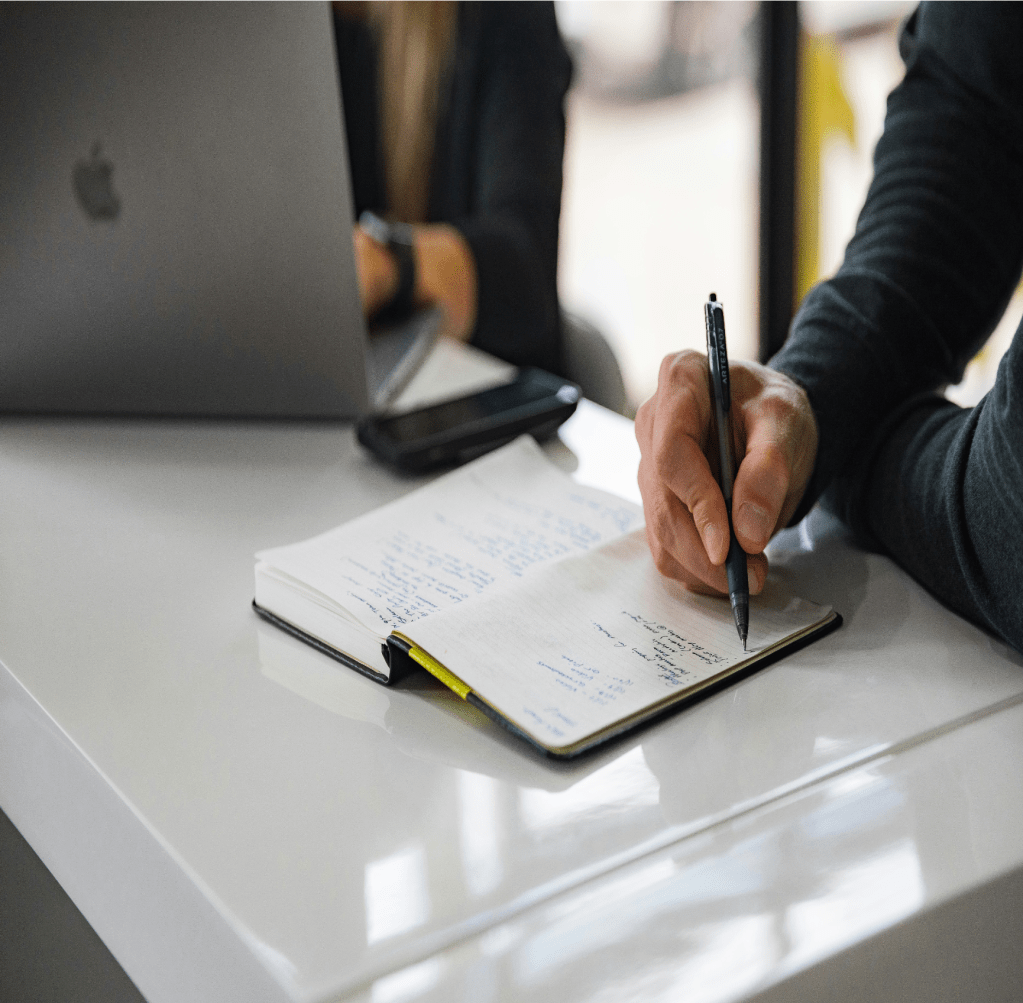
Some students at USD choose to take notes on their computers, while others elect to use a pen and paper. Photo courtesy of Luke Southern/Unsplash



 The USD Vista
Leave a comment