RILEY RAINS / ARTS & CULTURE EDITOR
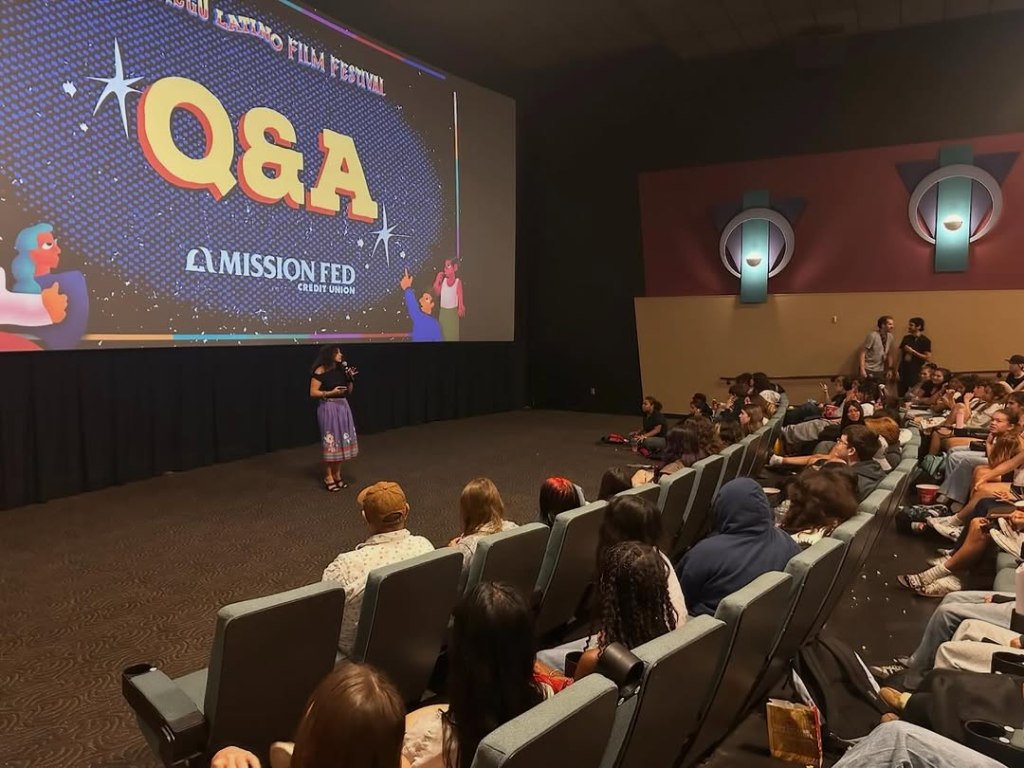
Film enthusiasts gathered at various San Diego screening locations to watch the five-day streaming of over 145 documentaries, shorts and feature films from around the globe. The San Diego Latino Film Festival (SDLFF) is a nationally acclaimed event that draws the attention of producers and fans from around the country. The nonprofit Media Arts Center San Diego has hosted the event every year since 1994. This year SDLFF was held at AMC Mission Valley, Digital Gym Cinema and Southwestern College Performing Arts Center.
The five-day festival began on March 18, with an opening ceremony featuring the Grammy-winning band Quetzal. Fans had the opportunity to pick from the 25 plus films screened each day with a filter on the SDLFF official website. Films were categorized by venue and theme. Options included anything from “Somos Cine LGBTQIA+! Showcase” to a Bolivian “Narrative Feature.”
Ethan Van Thillo founded the festival in 1993 with hopes to bring communities together and celebrate upcoming filmmakers. Van Thillo was forced to cut back on the usual 11-day festival because of budget — however, the limitation didn’t seem to hinder fan’s enjoyment.
“We actually found that we had the same amount of people come and the same wonderful energy,” Van Thillo said in an interview with KPBS. “That’s what I love about the festival. I want people to come and just experience different things, and you feel that energy in the theatre.”
SDLFF works in parallel with the San Diego International Film Festival — a fall event that funds an intense competition, rewarding over $12,000 of champion money for films who earn “Best Narrative Feature Film,” “Best Documentary Film”or “Best Short Film.” Both film festivals encourage international participation. The spring event holds competition for a variety of mediums: there were over 150 worldwide submissions for this year’s SDLFF flyer.
USD junior and visual arts major Eduard Hovhannisyan reacted to the festival.
“If I had heard of this event before, I honestly would have submitted some of my artwork,” Hovhannisyan said. “The recognition of people’s art is so important. Especially with people nowadays using AI. I think it is a shame, it’s a loss of culture. You are losing the human touch.”
SDLFF did not accept any art that tampered with or used AI in any capacity. This year’s winner, San Diego local graphic designer Axel Arevalo, earned $1,500 and exclusive tickets and interviews with SDLFF special guests. During the closing ceremony on March 22, fan-favorite filmmakers received a monetary award for their efforts. This presents a unique opportunity for private artists to showcase their art and earn a profit.
While famous filmmakers such as Luis Valdez, Josefina Lopez and Ianis Guerrero drew an audience, the SDLFF spotlighted all mediums of film. Small, independent artists were able to break through the difficult movie scene with SDLFF. USD Associate Professor in Art History Michael Witte commented on the accessibility of SDLFF.
“Commercial U.S. cinema is usually premised on exclusion and systematic barriers to entry, whereas — as evidenced by the sheer diversity of the films in the program — SDLFF is premised on inclusivity, the bending of genre, radical truth-telling, and experimentation,” Witte shared.
One of the screened films was “ASCO: Without permission.” The documentary highlights a group of artists from Southern California and their protest against mainstream media through rebellious forms of creation. Witte argued this type of documentary is exactly what SDLFF sets out to prove.
“The significance of many of the films screened at SDLFF comes from the fact that they proceed ‘without permission,’” Witte shared. “The lesson of ASCP was to create — not wait for the approval of Hollywood … but to take matters into their own hands.”
The festival’s Director of Development Moises Esparza praised the film lineup that highlights the Latino community.
“[SDLFF] provides entry points for a very authentic look at Latino life from music to stories that speak of the current moment, to joy and grief in community,” Esparza said in an interview with Vanguard Culture.
The majority of films are in Spanish and offer English captions. With fans and artists congregating in San Diego to enjoy movies and documentaries alike, filmmakers were excited to share their work highlighting the Latino community.
The intricate history of the Chicano community and Latino community is preserved in the films that were screened at SDLFF. The artistic medium appeals to some Toreros. Hovhannisyan shared his thoughts on how SDLFF could benefit students.
“You never know what might spark something creative inside of you,” Hovhannisyan shared. “Watching these films is a great way to stay inspired.”
With the SDLFF coming to a close, students can look forward to the adjacent fall event. San Diego International Film Festival between Oct. 14 and Oct. 18. The regular deadline for film and flyer submissions are due April 1.
A youth screening of ‘Tracing of Home’ hosted during the San Diego Latino Film Festival. Photo courtesy of @cocos.sanctuary/Instagram


 The USD Vista
Leave a comment