CADEN HAYNOR / NEWS EDITOR
On March 18, an investigation accused César Chávez of sexual abuse. The New York Times published the article accusing United Farm Workers co-founder Chávez as a sexual abuser.
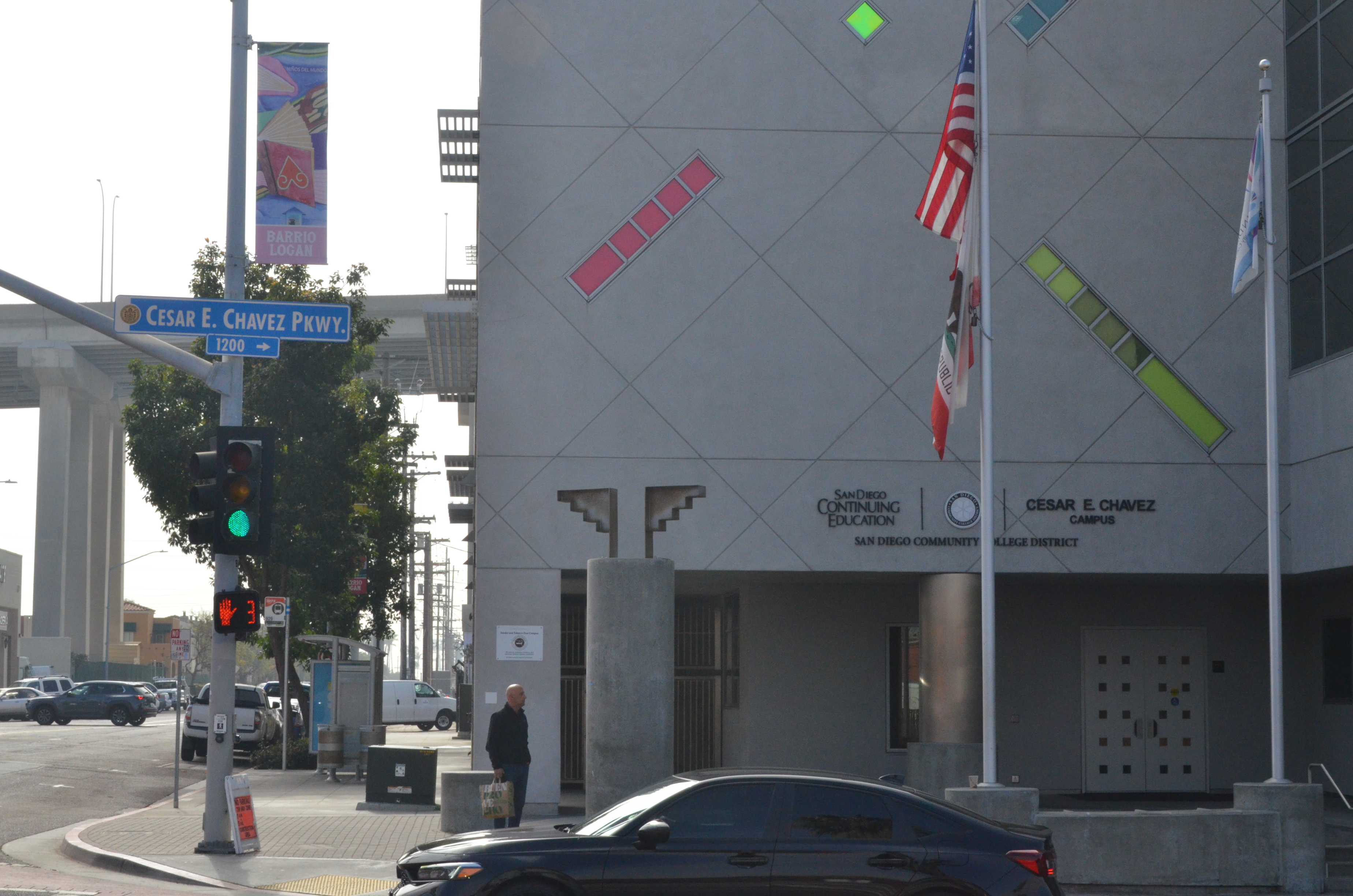
The San Diego Community College District is reviewing the possibility of renaming its César E. Chávez campus. Caden Haynor/The USD Vista
The New York Times investigation reported that Chávez sexually abused multiple women and girls in the 1960s and 70s, including United Farm Workers’ co-founder Dolores Huerta.
Chávez was a central labor leader in the farmworkers rights movement, organizing multiple strikes, boycotts and other nonviolent protests. His actions helped win union contracts, better wages and increased basic protections for farmworkers from the 1950s, peaking around the 1970s with union contracts covering tens of thousands of farmworkers.
Following this activism over multiple decades and his death in 1993, the investigation tainted the world’s image of Chávez, alarming some USD faculty and students. Associate University Minister Alec Hartman described his reaction to the investigation on Chávez relating to a Catholic worldview.
“The reports regarding César Chávez are deeply unsettling,” Hartman wrote. “As someone who admired his advocacy for labor rights and the way he drew strength from his faith, this news feels like a profound betrayal. It shakes the very values that the intersection of faith and social justice (rooted in Catholic Social Teaching) should uphold: dignity, integrity and the preferential option for the vulnerable.”
USD’s lower-division theology course Christian Changemakers observes multiple Christian activists that have made a difference in the world. USD Senior Teaching Professor in the Theology and Religious Studies department Brian Traska teaches the class. Traska explained how the posthumous investigation on Chávez surprised him.
“I was shocked by the news,” Traska explained. “All the activists I teach about in my THRS 231 class are imperfect, but the severity of these allegations raises the question of whether I should continue highlighting [Chávez] as a model of Christian Changemaking. I’m still processing the story and collaborating with my colleagues in discerning how best to proceed.”
The article framed Huerta’s silence as the result of multiple factors, including generational norms and Chávez’s position as a central figure in the movement for workers’ rights.
As a Catholic activist, there was a time when Chávez was informally considered by some Catholic leaders and activists for canonization. This was not formally considered by the Vatican, but remained a topic of discussion at masses that mentioned Chávez and his work.
States throughout the U.S. are changing and canceling “César Chávez Day,” traditionally celebrated on March 31, following the investigation. In California, the name change to “Farmworker’s Day” is currently being considered.
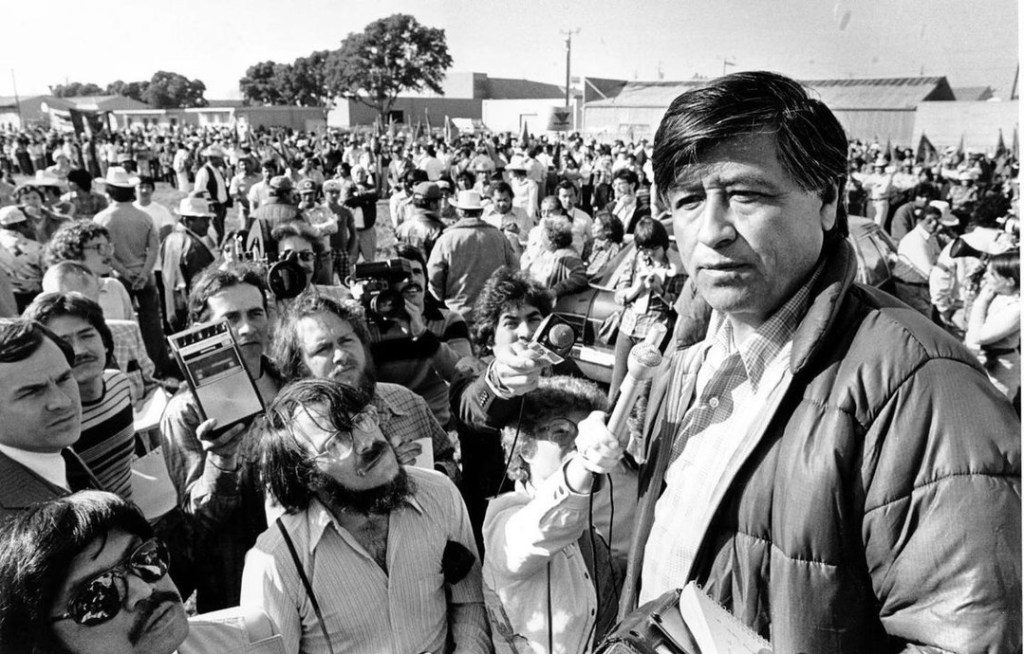
Chávez often spoke to large crowds of people, pushing for farmworkers’ rights. Photo courtesy of @chavezfoundation/Instagram


 The USD Vista
Leave a comment