DAVID COOK / OPINION EDITOR
Prime Video’s “The Boys” returned on April 8 with the first two episodes of its fifth and final season, bringing back one of television’s most violent, cynical and politically charged superhero stories. Created by Eric Kripke, the series takes place in a world where “Supes,” or superheroes, are not noble public servants. Instead, the characters are branded celebrities managed by the powerful corporation: Vought International.
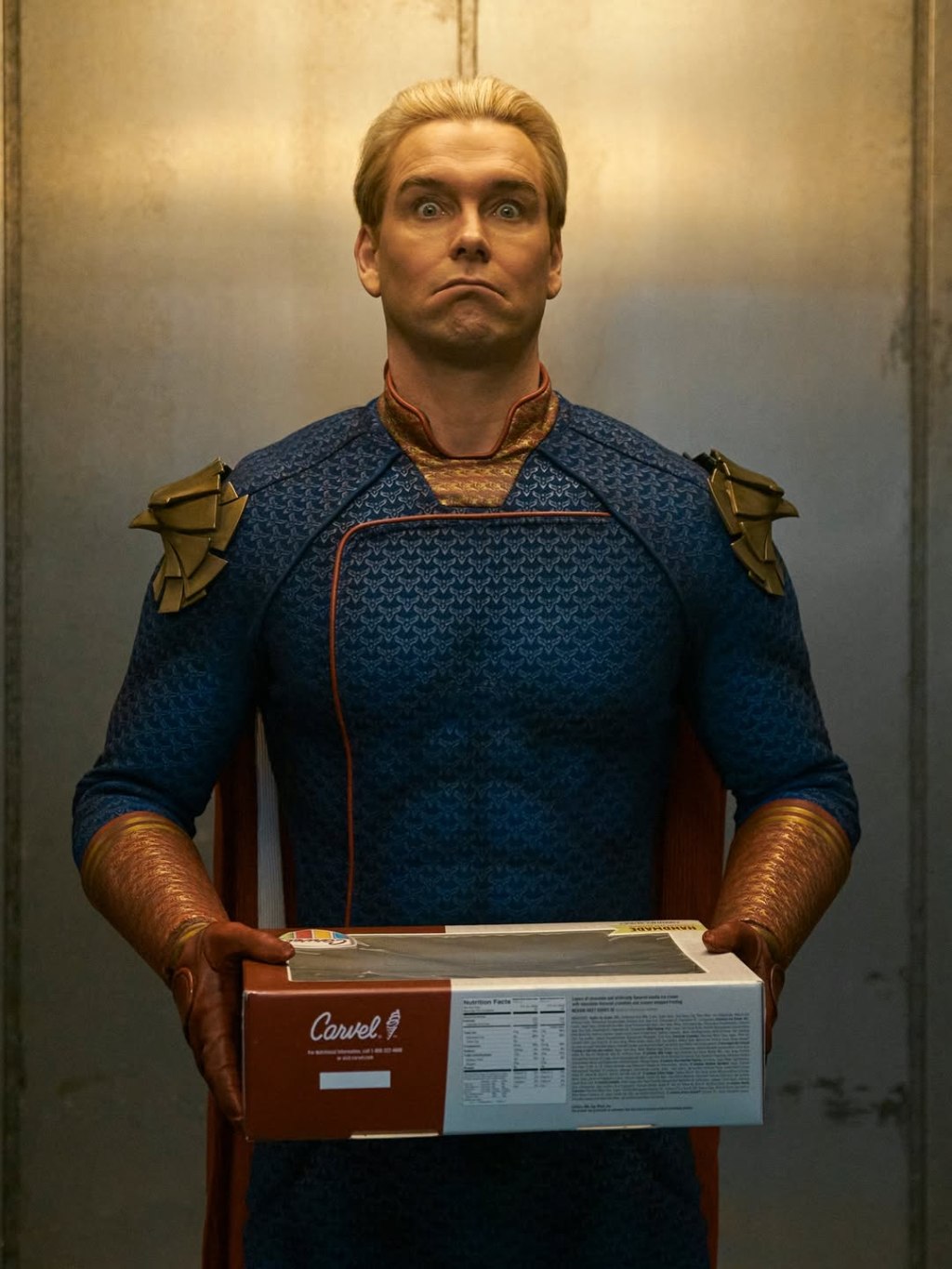
At the center of the chaos is Homelander, Vought’s terrifying mascot, whose smile, patriotic image and god complex have made him one of the most disturbing villains on television. Across from him stands Billy Butcher, the foul-mouthed antihero whose war against Superheroes, commonly referred to as “supes,” began as something deeply personal: avenging Becca, the woman he loved, after her life was destroyed by Homelander. Meanwhile one of the two main protagonists, Hughie Campbell, was pulled into the fight in the show’s first episode after A-Train, Vought’s super-speed superhero, killed his girlfriend Robin by running straight through her. Then there is Starlight, once one of Vought’s golden girls, now one of Homelander’s fiercest opponents. Together with Hughie, Mother’s Milk, Frenchie and Kimiko, Butcher helped form The Boys, a group that once worked with the CIA to keep supes in check. Now, the group acts more as a vigilante group, trying to stop a man who has come dangerously close to total power.
That setup has always made “The Boys” feel different from other superhero shows, but the season five premiere makes it clear that the series is not just interested in mocking capes and costumes, but it is now fully committed to showing what happens when celebrity worship, political propaganda and authoritarian power collapse into one person.
USD junior Cael Burnett has been a fan of the show since its release.
“It is not a Hallmark-style show that just makes you feel good,” Burnett said. “It changes the way we see the real world, which I would say is the true purpose of powerful media.”
Kripke has openly described Homelander as a Trump analog, and over the years, he has framed the series as a warped reflection of the culture around it, even admitting in interviews that some of the plot is even inspired by real events. For example, when Homelander shot lasers from his eyes and essentially disintegrated an anti-Homelander protester, he was met with cheers from a sea of cheers. Kripke says this scene was inspired by Donald Trump’s claim during his 2016 Presidential campaign: “I could stand in the middle of Fifth Avenue and shoot somebody, and I wouldn’t lose any voters.”
This is exactly what makes this final season feel just a little bit more eerie. What once felt exaggerated now feels a few touches closer to reality.
“The writers are showing modern America’s worst flaws on a silver platter,” Burnett claimed. “It would be unrealistic to call its simplicity a call to action, but it is most definitely a call to awareness.”
“The Boys” has always been outrageous, but now its satire feels like a cracked mirror held up to modern America. Burnett noticed these parallels.
“The hero’s in The Boys universe, or the elite running the United States, operate above the law,” Burnett continued, “All the slimy corrupt moves from modern leaders are not masked under the superhero metaphor. It is so obvious that it’s almost a slap in the face; like the writers are mocking the audience themselves.”
Now, Homelander has now effectively seized control of the government, and the question is no longer whether he wants power, but what happens now that he has it.
Season five kicks off with Homelander essentially controlling the government while key members of The Boys are locked away in “Freedom Camps,” which are essentially concentration camps for those who support The Boys and oppose Homelander and Vought.
To understand why season five opens with so much dread, it is important to remember where season four left off. The finale shattered the group. Butcher killed supe and Vice President Victoria Neuman, embracing the supe powers growing inside him. Starlight escaped as the team fell apart. Hughie, Mother’s Milk and Frenchie were captured, and Homelander moved even closer to open domination. By the start of season five, that nightmare escalated. Homelander now looms over the White House and the country looks increasingly shaped by fear and propaganda. Ashley Barrett, Vought’s former CEO, is even elevated into the vice presidency in the new season, after she took Compound V at the end of season four — the drug that turns humans into superheroes.
At the center of season five is a race against time. “The Boys” now have a virus that can kill supes, but it is far from a perfect solution. Because the virus is highly contagious, it could potentially wipe out every supe on Earth, not just Homelander. Meanwhile, Homelander is chasing something even more dangerous than political power. As he tightens his grip on America and pushes toward even greater control, he is also searching for V1, Vought’s first version of Compound V, which he believes could make him truly immortal and immune to the virus.
Unlike some franchise shows that are reluctant to kill off major characters or fully commit to the consequences of their own world, “The Boys” enters its endgame with the sense that nobody is safe. Early coverage of the season has emphasized that “all bets are off,” and the premiere backs that up. That choice matters because it tells viewers the show is not trying to protect fan favorites for the sake of a softer ending.
Just as importantly, the premiere shows how much “Gen V” now matters to “The Boys.” “Gen V” is the series spinoff, highlighting young superheroes attending Godolkin University — a college for supes. The season four finale of “The Boys” already pointed in that direction by bringing characters like Marie Moreau and Cate Dunlap. The season’s satire leaned heavily into college culture, internet language and pop-culture overload. That influence can now be felt more directly in “The Boys.”
Some of that crossover helps move the plot forward, and some of it works as comedy. “The Boys” has always referenced the real world, but “Gen V” pushed the franchise even further into internet-native humor and rapid-fire cultural references. The final season is filled with jokes, slogans and references that sound pulled from real social media feeds. There are mentions of billionaire influence like Peter Thiel, public figures like the Obamas and online masculinity culture, showing that the writers want this season to feel more real than ever. That is part of why the show still lands. The satire is not subtle, but it understands the culture it is mocking.
With two episodes now out and six left to go, “The Boys” is setting up a finale that feels bigger than a superhero showdown. It is a story about propaganda, loyalty, grief and revenge. The difference now is that, in its final season, that idea feels less exaggerated than ever.
If the first two episodes are any indication, “The Boys” is not going to end as a victory lap, but a bloodbath. Jack Quaid, the actor who plays Hughie Campbell, gave the fans an idea of how the season might end up while interviewed on “The Tonight Show Starring Jimmy Fallon.”
“It’s not going to be a fairytale ending in any regard,” Quaid said.
This unpredictability is what excites many USD students to tune in to the show’s final season.
“I am definitely excited to see how the season will end,” Burnett said. “There has not been a season so far that is predictable.”
If the first two episodes prove anything, it is that “The Boys” is not interested in going out quietly. The final season sharpens the show’s mix of violence, political satire and cultural commentary, while making it clear that nobody is safe and nothing will be wrapped up neatly.
Homelander holding his birthday cake in Amazon Prime’s ‘The Boys.’ Photo courtesy of @theboystv/Instagram



 The USD Vista
Leave a comment