RILEY RAINS / ARTS & CULTURE EDITOR
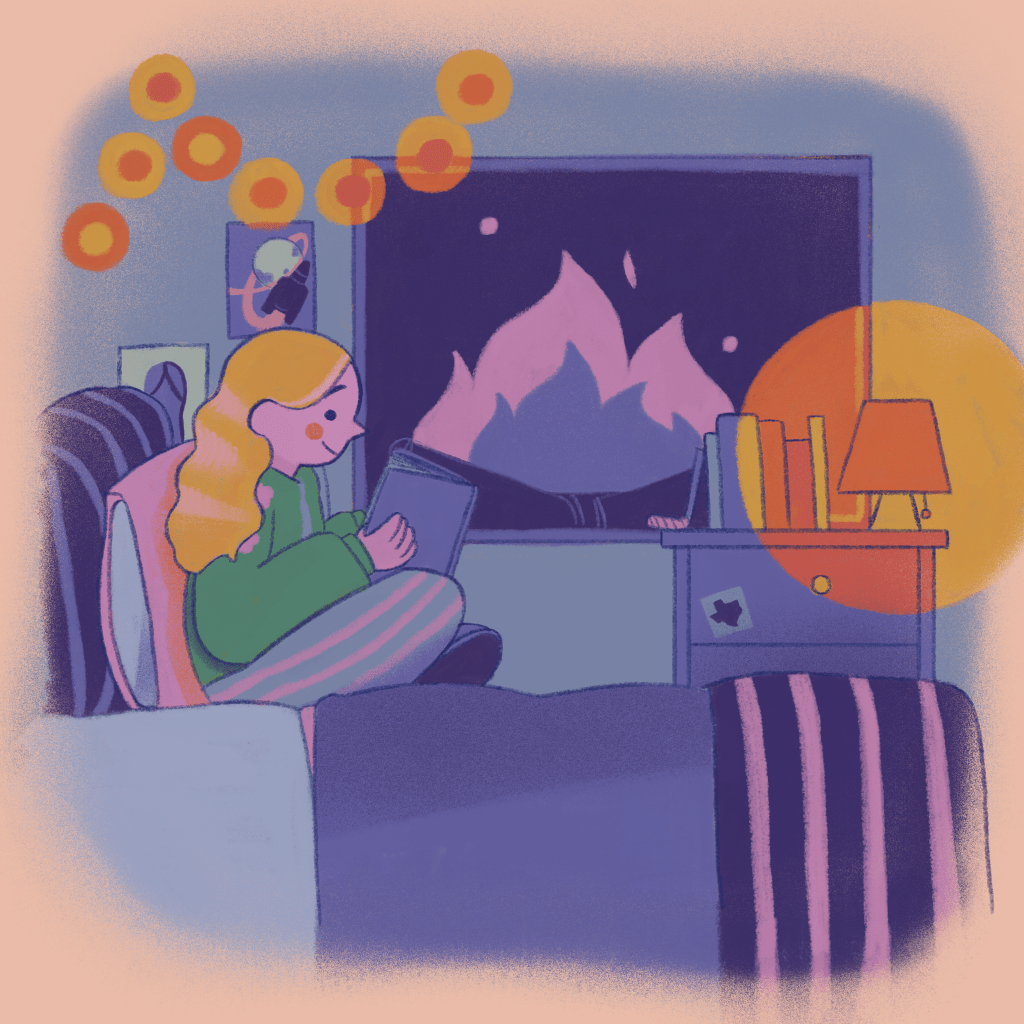
When I stroll into my San Buen apartment after a long day, I take one non-negotiable action: I turn off the big light. Fairy-lights, orange-toned lamps and even a YouTube fireplace illuminate my homework pages rather than that overbearing, overwhelming and overconfident fluorescent light architects are so adamant about including in every room.
While this decision may not be my roommate’s favorite, the overhead light sparks a certain sense of impending doom that is reminiscent of a corporate prison. The reason these fluorescent lights are so irritating is because they are composed of high-concentrations of blue light.
Blue light is naturally emitted by the Sun. Have you ever wondered why the sky is blue? This specific ray suppresses melatonin, evolutionarily keeping mammals alert throughout the day. However, this natural helper has been exploited by technology companies and schools to keep us attentive despite our body’s plea to slow down.
The blue light emitted through phones, laptops and overhead-lights is an extremely calculated tactic to keep consumers consuming. Even the “night-mode” on Apple doesn’t block all disturbing rays. The human brain evolved to consume sunlight, firelight and cave-darkness — any and all amounts of blue light at the wrong time of day confuses your internal clock, scientifically referred to as the circadian rhythm.
When the body is out of sync, it starts a loop that perpetuates poor sleep, poor brain function and then a need for more stimulation: it is a vicious cycle that poses more consequences than one might expect.
A recent study suggests even more harm from these pesky lights. Dr. Pratima Khandayataray works out of the Department of Biotechnology in Utkal University. Her study verified that circadian misalignment is linked to impaired function in the brain’s waste removal system, increased brain inflammation and even higher risks of neurodegenerative conditions like Alzheimer’s disease. Khandayataray outlines how at night, the brain performs essential tasks like repairing micro-cellular damage and organizing memory. Over time, if sleep is disrupted, so is the brain’s resilience to damage.
However alarming this might sound, there is hope. Keeping good and consistent “light-hygiene” can improve your brain health significantly. Actions like getting natural light early in the day, using orange lighting after sunset and wearing blue-light glasses maintains the homeostasis the human brain needs to thrive.
While the physical health effects of blue-light are important to note, the aesthetic value of lighting has recently overtaken the interior design world. As a child, my elementary school teachers would drape sheer cloths of fluffy clouds or fluttering butterflies over the overhead fluorescent boxes. While this creative touch is characteristic of a sweet teacher who loves her students, the adjustment served more functions than just entertaining rambunctious 8-year-olds.
Third-spaces like coffee shops and bookstores resort to ambient lighting over fluorescent lights to simulate the same calm, relaxing atmosphere that my elementary school teachers created. The placement of lamps and electrical outlets plays a large role in how a room is illuminated. Because of the increased discussion around lighting recently, interior designers have been tasked to be innovative with how they light an area.
The classic option is an overhead fluorescent light. While many, myself included, are bothered by this staple, it is the most financially conservative choice. Fluorescent bulbs are 70% more cost effective than their incandescent counterparts. Their longer lifespan makes them cheaper over time. However, I will prioritize my brain health over a dime saved any day of the week.
So yes, I will continue turning off that big light every time I walk in, not just for the ambiance, but for my sanity. Worst comes to worst, I can always scour for glow worms or crack the refrigerator door for safer, more aesthetic illumination while I tackle that history assignment.
Warmer ambient light offers a softer alternative to harsh overhead fluorescent lights. Art by Kyra Lefebvre


 The USD Vista
Leave a comment