CONNOR DUFFEY / ASST. NEWS EDITOR
Reopen the Strait of Hormuz, or face permanent destruction of Iran’s critical infrastructure. That was the ultimatum President Trump issued to Iranian officials via a Truth Social post on April 7, with an 8 p.m. EST deadline.
“A whole civilization will die tonight, never to be brought back,” President Trump stated. “I don’t want that to happen, but it probably will. Who knows?”
USD graduate student Tony Moreno expressed disappointment with the post.
“It was purely absurd,” Moreno said. “The tweet just gives the world something to be anxious about.”
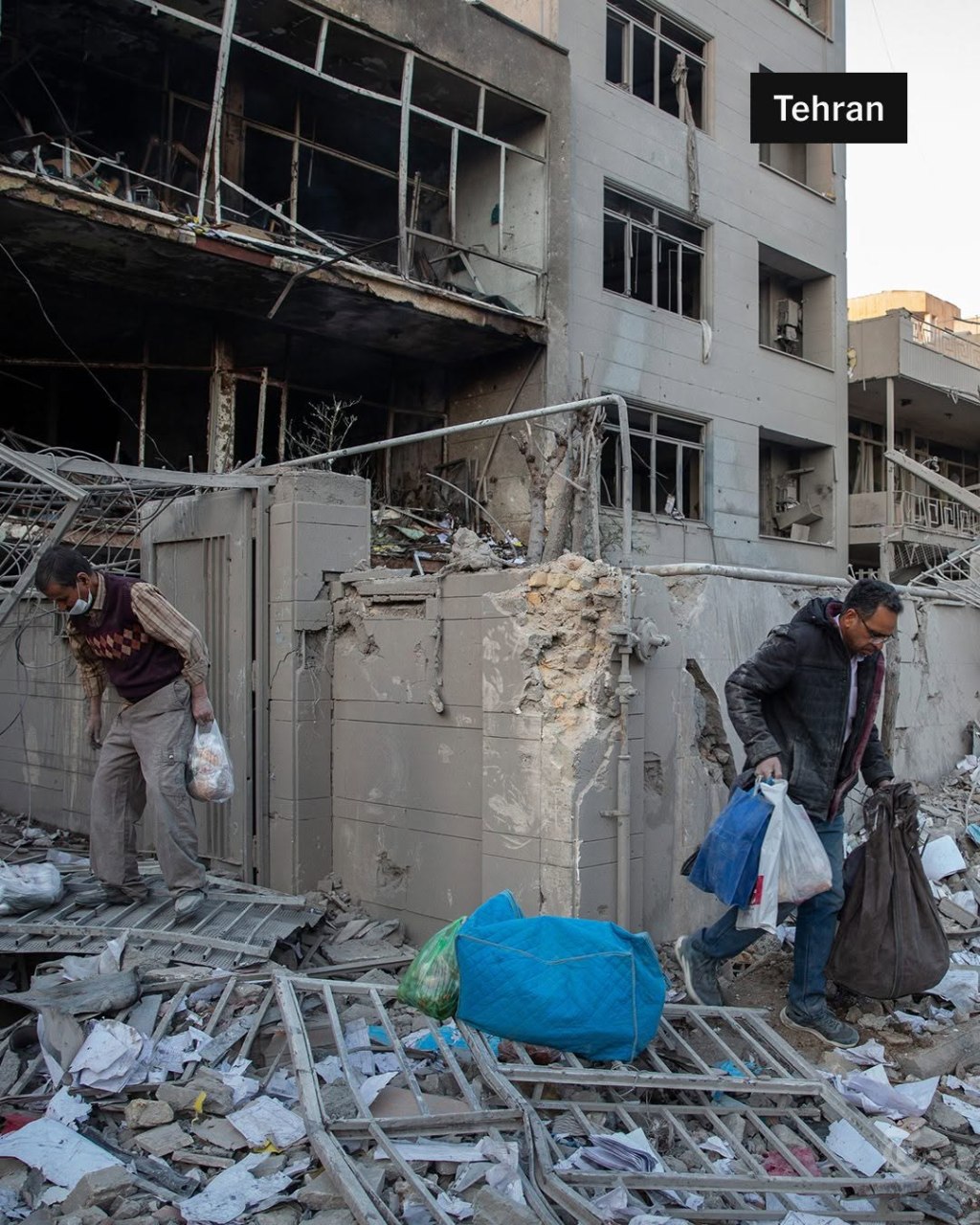
The war, now in its seventh week, has rattled global energy markets, driven a large U.S. inflation spike and killed thousands across more than a dozen countries. Just before Trump’s deadline, a ceasefire was reached on April 8. For many Americans, the consequences of the war have already arrived.
The national gas price average reached $4 per gallon, driven in large part by Iran’s closure of the Strait of Hormuz, through which approximately one-fifth of the world’s daily oil supply passes. Iran has not been spared from domestic economic pains either. The country issued its largest banknote to date, a 10-million rial note — approximately $7 U.S. — reflecting inflation and economic strain.
USD political science professor David Shirk weighed in on the effects of the war.
“Ordinary Americans are really in a difficult position,” Shirk said in an interview. “What’s happening right now will surely have long-term consequences. To me, it’s a sign that the liberal international order is dead.”
The conflict extends well beyond Iran’s borders. In Lebanon, Israeli airstrikes have killed approximately 1,750 people and displaced roughly 1.2 million citizens — about one-sixth of the country’s national population — since the Israeli bombing campaign began on March 2.
As Trump’s April 7 deadline neared, Iran agreed to a two-week ceasefire brokered by Pakistani Prime Minister Shehbaz Sharif, who had urged Washington to extend its deadline and called on Iran to reopen the strait. The agreement was finalized approximately one hour before the deadline expired. Under its terms, Iran agreed to ensure safe passage through the Strait of Hormuz for the duration of the truce; however, transit fees will be charged to passing vessels, a departure from the strait’s pre-war status as a free international waterway.
The ceasefire’s durability remains in question. Despite the agreement, Israeli strikes in Lebanon have continued. On April 8, hours after the truce was announced, Israeli airstrikes killed at least 254 people in Lebanon in a single day, the deadliest day of the conflict’s Lebanon front. Israeli Prime Minister Benjamin Netanyahu stated that Lebanon is not included in the ceasefire agreement, directly contradicting Pakistani Prime Minister Sharif’s claim that the deal covered Lebanon.
Peace talks began in Islamabad on April 10, with Vice President JD Vance leading the U.S. delegation alongside envoys Steve Witkoff and Jared Kushner. Iran’s chief negotiator was Foreign Minister Abbas Araghchi, with Pakistan serving as mediator.
Iran presented a 10-point peace proposal that included: the lifting of all U.S. sanctions, the creation of a war-loss fund to compensate for destruction caused by U.S.-Israeli strikes, a U.S. troop withdrawal from the Gulf region and recognition of Iran’s right to enrich uranium in exchange for a pledge not to develop nuclear weapons.
Peace talks proved unsuccessful, with the Pakistani foreign office stating that progress had been made on several points but differences on sequencing and guarantees remained. Those differences were large enough for the United States to institute a naval blockade on Iranian ports, the Persian Gulf and the Strait of Hormuz. The stated goal of the blockade is to prevent weapons from flowing into and out of Iran while ensuring civilian ships can travel as normal.
Pakistan’s efforts to coordinate peace opened a narrow window. Vance arrived in Islamabad with the leverage of U.S. military force and the domestic pressure of rising prices, while Iran arrived with an economy in freefall, a new and untested Supreme Leader, and a public that is still processing the scale of destruction inflicted over seven weeks of war.
The information in this article is current as of The USD Vista’s send to print deadline of April 14.
People sift through remnants in Tehran, Iran after a strike hit nearby buildings. Photo courtesy of @nytimes/Instagram


 The USD Vista
Leave a comment