DAVID COOK / OPINION EDITOR
I was in fourth grade when I downloaded Instagram. My parents didn’t want me to have it and looking back, they were probably right. But like a lot of kids, I eventually convinced them. At the time, it felt harmless, just another app everyone was getting. What I didn’t know then was that it would be the first domino to fall. It opened Pandora’s box: years of scrolling, constant distraction and a relationship with my phone that has been hard to undo.
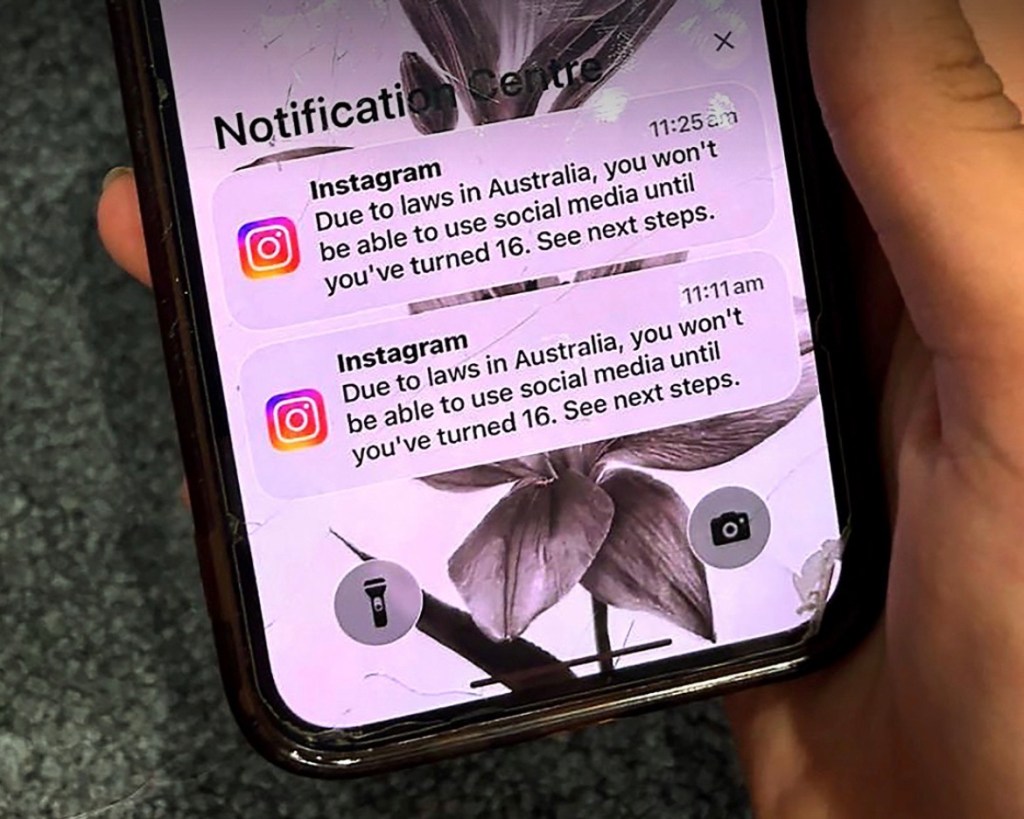
This personal experience is what made me understand why Australia banned social media for users under 16. Australia’s law took effect on Dec. 10, 2025, requiring age-restricted social media platforms to take “reasonable steps” to stop users under 16 years old from creating or keeping accounts. Recent reports show enforcement has been weak. One study found more than 60% of underage Australian kids were still using restricted social media. Separate data found about one-fifth of teens ages 13 to 15 were still using TikTok and Snapchat.
Some people will look at those numbers and say the ban failed, but I don’t see it that way. I think it proved something else: social media restrictions without serious enforcement are not enough.
That does not mean the concern behind the ban is overblown. If anything, it shows how deeply social media has sunk into young people’s lives. These platforms are designed very intentionally. They are built to keep users engaged for as long as possible. Infinite scrolling, algorithmic recommendations, notifications, streaks and endless short-form videos are blatantly addictive design choices.
That matters because young people are still being used as the test group. Gen Z grew up in the middle of this experiment, essentially working as the guinea pigs of the social media epidemic. We were told social media would help us connect, but often, it does the exact opposite. It has shortened attention spans, rewarded mindless consumption and ironically hurts people’s ability to genuinely connect with others. People sit together while staring at separate screens, checking their phones during every pause of conversation. They scroll for hours and call it relaxing, even when it leaves them feeling worse.
Some critics say banning social media for minors is too extreme, especially in America, a country that historically leaves its citizens with the right to make similar decisions on their own. Parents should be able to decide for themselves what their children can and cannot use. I understand that argument. In a free country, people are naturally suspicious of new restrictions, especially those involving speech and technology.
But we already accept age limits all the time. You have to be 21 to drink alcohol. You cannot legally gamble or buy certain products at any age. Why are these rules not viewed as attacks on freedom? They are viewed as guardrails against harmful things. Social media may look less dangerous because it lives in a phone, but that does not mean it is harmless.
There is growing evidence that the harm is serious enough to justify action. In March, a Los Angeles jury found Meta and Google negligent in a case involving a young woman who said she became addicted to Instagram and YouTube as a child. The jury found the companies were negligent in the design of their platforms and failed to warn users about the risks. Soon after, Massachusetts’ top court ruled Meta must face a state lawsuit, alleging it deliberately designed features to addict young users. This moment ultimately showed Americans that courts are beginning to treat this as a real issue.
It is not only one side of the political aisle paying attention. California lawmakers are currently considering a bipartisan bill that would bar users under 16 years old from creating or maintaining social media accounts. That matters because it shows this is not some fringe panic. Concern about youth social media addiction is becoming one of the few issues people across the political spectrum can agree on.
If there is one lesson from Australia, it is that a ban cannot just exist on paper. It needs real age verification. I bypassed age restrictions when I joined, as the minimum age requirement was 13. If 10-year-old me can figure out how to circumvent Instagram’s age restrictions, then they definitely aren’t strong enough.
Age verification would make age restrictions easier to enforce, but it could also help solve another major problem online: fake accounts. Social media is full of impersonation, anonymous harassment and people pretending to be someone they are not, so verification is just another way to protect minors from the dangers of social networks.
Verification would not fix everything, and it would raise privacy concerns that deserve serious attention. But if lawmakers are serious about protecting minors, they cannot keep pretending platforms will police themselves.
For too long, the burden has fallen on kids and parents to navigate apps that were designed by some of the richest companies in the world to be as sticky as possible. The companies that built these systems should bear more responsibility for the damage they cause.
I don’t think every teenager using social media needs to be treated like a criminal, and I don’t think a ban alone magically solves the problem. But I do think the basic principle is right: children should not have unlimited access to platforms engineered to hook them.
Australia’s rollout may have exposed the flaws in enforcement, but it also exposed something bigger. The status quo is not working. If anything, it has shown just how hard it is to pull young people away from something that was designed to keep them trapped, which is exactly why stronger action is justified.
Citizens of Australia under the age of 16 receive notifications after the Australian government implemented the ban. Photo courtesy of @bbcnews/Instagram


 The USD Vista
Leave a comment