JULIANNA FLORES / FEATURE EDITOR
Throughout the sunny San Diego summer, some USD undergraduate students were testing chemical reactions, researching diseases and hitting the textbooks to get answers for complex scientific questions.
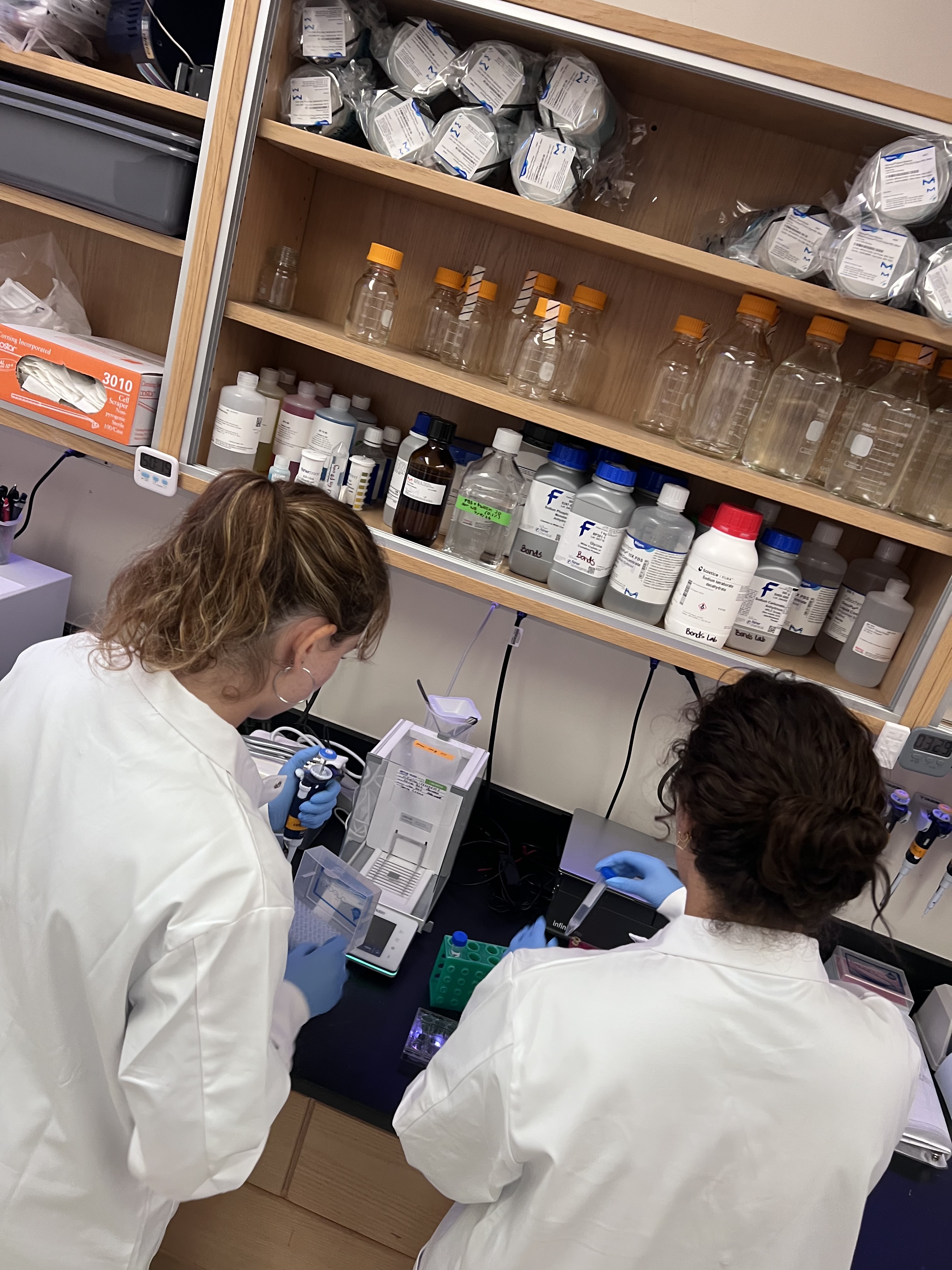
Students work alongside faculty in the STAR and BURST programs. Photo courtesy of Shayne Hall
In 2024, the Summer Training in Advanced Research (STAR) program and Beginning Undergraduate Research Summer Training (BURST) program were created to fund students so they are able to live in San Diego over the summer while participating in research labs on campus.
STAR students are required to complete a 2-page research proposal, while BURST students are required to submit a shorter statement of interest.
USD program coordinator for the Office of Undergraduate Research Andrea Machado spoke on the differences in programs.
“The main purpose of these distinctions is to provide an opportunity, especially for students who have little to no research experience,” Machado explained. “We want them to know that there’s an opportunity to start because we all start somewhere.”
The application pool has decreased in recent years. In 2024 there were 142 STAR/BURST applications, while in 2026 there were only 104 applications.
Machado explained a potential cause in the declining application numbers.
“I think that has more to do with when we first launched it.,” Machado remarked. “There was a lot more excitement about the program, it’s this brand new thing. I wouldn’t say that these declining numbers have anything to do with people losing interest.”
USD senior Rebecca Albracht is studying biochemistry and is a part of a research lab with Joan Schellinger, Ph.D., associate professor of chemistry and biochemistry. Albracht is an undergraduate researcher funded by the STAR program at USD.
Albracht spoke on the work she does on campus during the summer in her lab.
“I do one day for labs doing the peptide systems, or there’s a peptide synthesis portion and then a conjugation reaction portion,” Albracht stated.
“I will usually do a day of reaction time, then also a day of getting literature together or doing the analysis products that I made.”
Peptide synthesis is the chemical creation of amino acid chains that allows scientists to study biological mechanisms.
Albracht recalled how she was able to participate in this lab and her experience with Schellinger.
“I talked to [Schellinger], and I just asked about her various projects,” Albracht recalled. “She kind of gave me the choice. [Schellinger] asked, ‘Which one would you be most interested in?’”
After a summer of researching under Schellinger, Albracht and her fellow lab group presented their findings at the end of their program. STAR/BURST applicants may receive up to $500, if they apply for a grant, for travel to these conferences.
“At the end of the summer, my last group and then some other chemistry law groups went to a symposium at the [University of California Irvine] and we all presented a poster about our findings,” Albracht stated.
Internal funding for STAR/BURST comes from the Office of Provost and the Vice President from Academic Affairs, while the advancement services department supports STAR/BURST in securing outside donations.
However not all undergraduate researchers are funded by the STAR/BURST program.
USD senior Shayne Hall shares her research experiences over this past summer working in the neurocognition and behavior department (NCD) without funding from STAR/BURST.
“I’m in [Dr.] Bonds Lab in the NCD Department, and what we’ve been doing is working with a disease called multiple sclerosis,” Hall said. “We make certain models of that in mice at [University of California San Diego.] And then we take that tissue and we see what happens with the disease because we don’t know a lot about it right now.”
Hall spoke on how she chose the neuroscience major at USD and how her lab work has impacted her.
“I went in as a psych major, and then I realized I loved the process in neuroscience,” Hall explained, “I was really excited to start in labs, and that confirmed it. When I joined the lab and realized that I didn’t really want to give this up. I wanted to keep doing it.”
With limited amounts of funding and a plethora of student researchers each year, some students, like Hall are unable to receive funding but still choose to go through with the research process.
“It’s really satisfying to see what you’re doing, have a working final product,” Hall stated. “Just to communicate in a science lab with other people, it’s really valuable. I just love science.”
While most STEM students are required to get lab hours in order to graduate, most students do not choose a research-based path post graduation.
USD career statistics cites 87-89% of biology and neuroscience graduates receive full-time opportunities six months after graduation. This can range from internships or residencies; however, only 3% of those jobs include research-based industries.
Research may be necessary for the undergraduate experience in the STEM department but it is not the end goal for students.
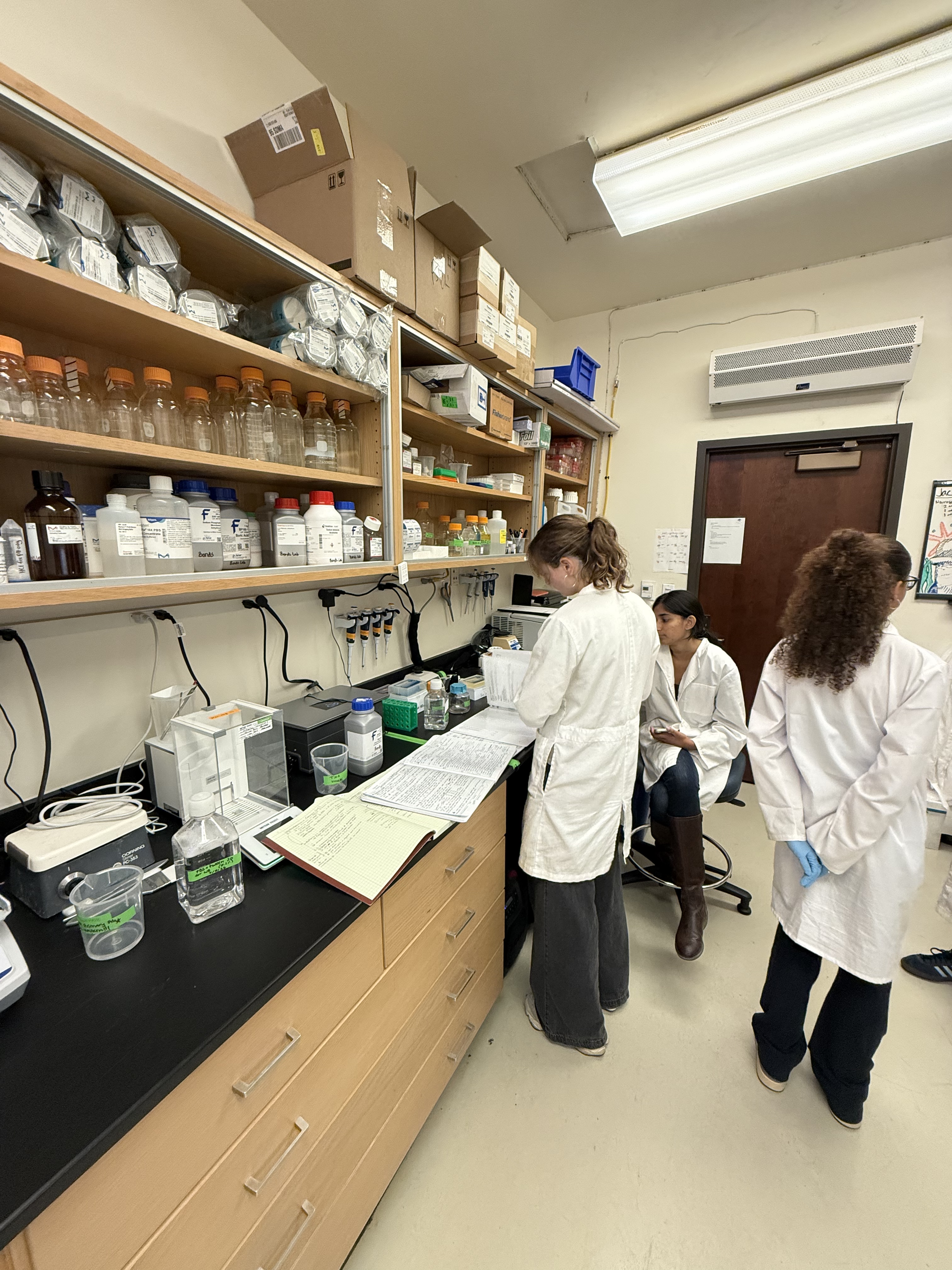
Rebecca Albrecht and her lab group pose in their goggles. Photo courtesy of @usdour/Instagram
Shayne Hall and her lab group read over lab instructions. Photo courtesy of Shayne Hall
 The USD Vista
Leave a comment