KATT HARDING / SPORTS EDITOR
The first time junior Charlie Lyons realized how quickly game day can go sideways, he was already wearing the mascot suit.
Every USD baseball game features the 6th Inning Stampede where a fan races Sandy the Bull across the field. One afternoon the designated performer backed out at the last minute. The clock was ticking and Lyons suddenly found himself zipped into the costume in preparation to sprint in front of the crowd. He adapted quickly, turning an unforeseen emergency into uninterrupted entertainment.
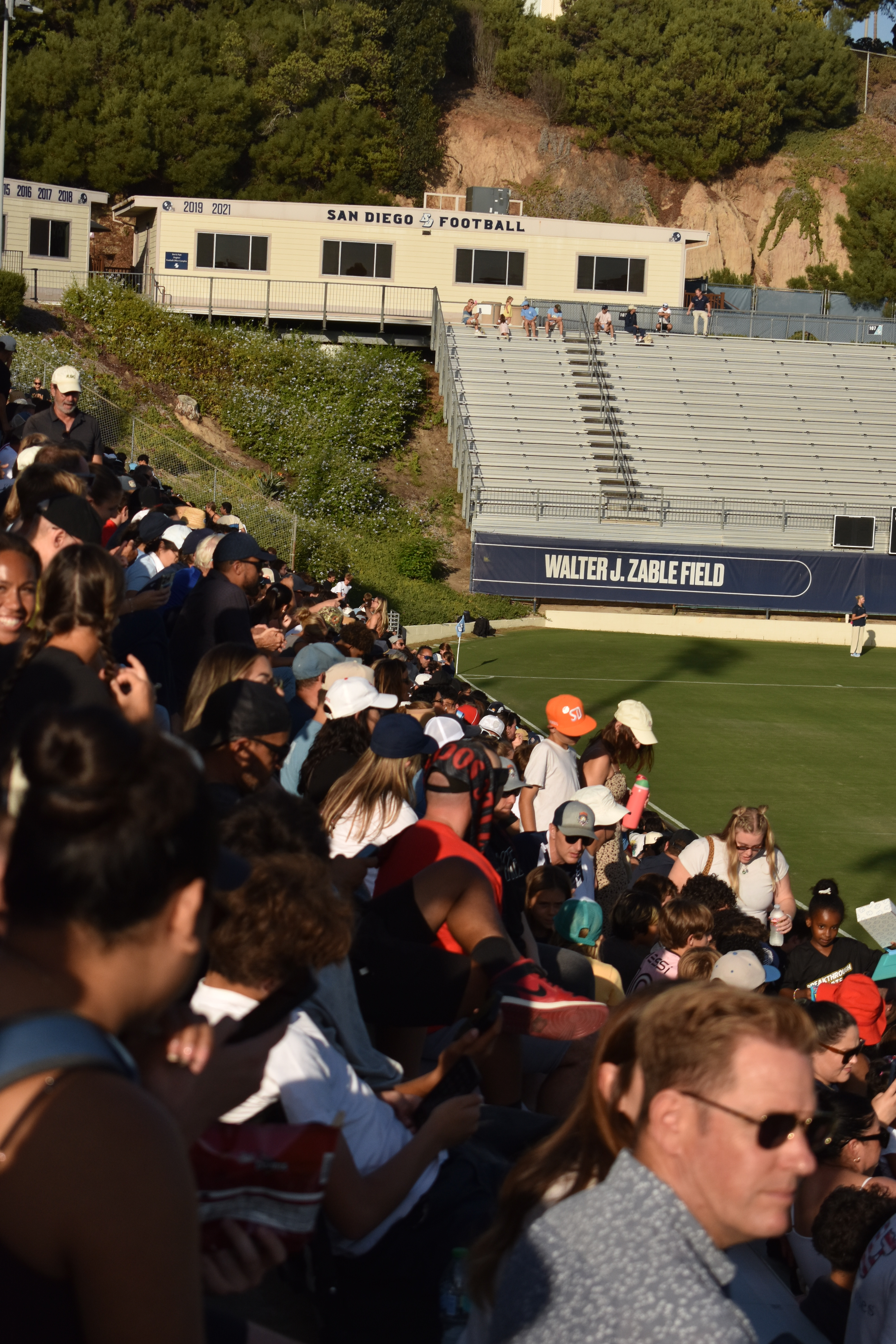
Fans awaiting the start of a game at Torero Stadium. Photo courtesy of Shea Moggio
“I was really nervous at first to run in front of everybody, but then once I got out there, it was actually really fun, and somebody sent me a picture of it on TV, so I had a blast,” Lyons recalled.
Torero Stadium operates on a hybrid model: full-time staff oversee maintenance, scheduling and safety, while student employees take care of game day operations, equipment setup, field preparation, fan-experience and post-game breakdown. Outdoor venues demand constant upkeep, especially when multiple teams share the field. On busy weeks, the stadium can flip from football practice to a soccer match within hours, forcing fast transitions that meet West Coast Conference (WCC) standards.
Those operational demands dictate the entire rhythm of game day.
Working as a sports marketing intern last semester, Lyons arrived hours before kickoff, wearing a polo and black jeans to coordinate game day activities alongside full-time staff. From managing timing to curating live fan interactions, every minute is structured. Executing that script often means stepping into unexpected roles on the fly.
“Honestly, a lot of this job is stressful,” Lyons said. “People don’t come to games, things fall through and we’re the ones who have to fix it. It’s not always glamorous.”
Across the stadium, Skylar Thornquest focused on the fan-experience side of operations during her time as a sophomore sports marketing and strategic communication intern. Her responsibilities included setting up directional A-frames for crowd flow, transporting materials for the kids’ club, managing the marketing table and distributing promotional giveaways.
Much of that work begins before the gates open, particularly when attempting to encourage student attendance. Tailgates, giveaways and food vendors become tools for building atmosphere. Over time, Thornquest realized her presence had become integral to the venue’s routine, even being recognized by regular attendees off the clock. Working behind the scenes changed how she now experiences athletic events.
“I still love sports, so I watch the games, but I’m kind of in the back of my head just thinking about all the employees that are working,” Thornquest smiled. “It’s kind of a learning experience now rather than just a simple activity for enjoyment.”
Coordination remains central to the student workforce, which includes staffers like junior Nyasia LaFaver. LaFaver works across pregame logistics, placing promotional signage and executing scripted game schedules while managing high-pressure environments like the press box.
“I think what would surprise USD students is how much attention to detail is put on behind the scenes — there’s something for each team member,” LaFaver wrote.
Behind all of those moving parts is an administration committed to creating a holistic student experience. Cara Brown, associate athletic director for strategic communications and brand advancement, noted that student workers learn far more than basic logistics.
“I always tell our student staff that Athletics provides a unique opportunity to develop skills that translate to almost any career — communication, organization, adaptability, problem-solving and collaboration,” Brown wrote. “It’s also the ultimate team environment. What happens on game day requires students, facilities, ticketing, marketing, communications, coaches, student-athletes and many others working together.”
Together, students and staff help uphold the Division I standard at USD. The stadium’s atmosphere isn’t accidental — it’s built through preparation, coordination and labor. USD game days rely on this behind-the-scenes crew to navigate low turnouts and last-minute scrambles. They handle what’s required to put on each event without showing up in the highlight reels.
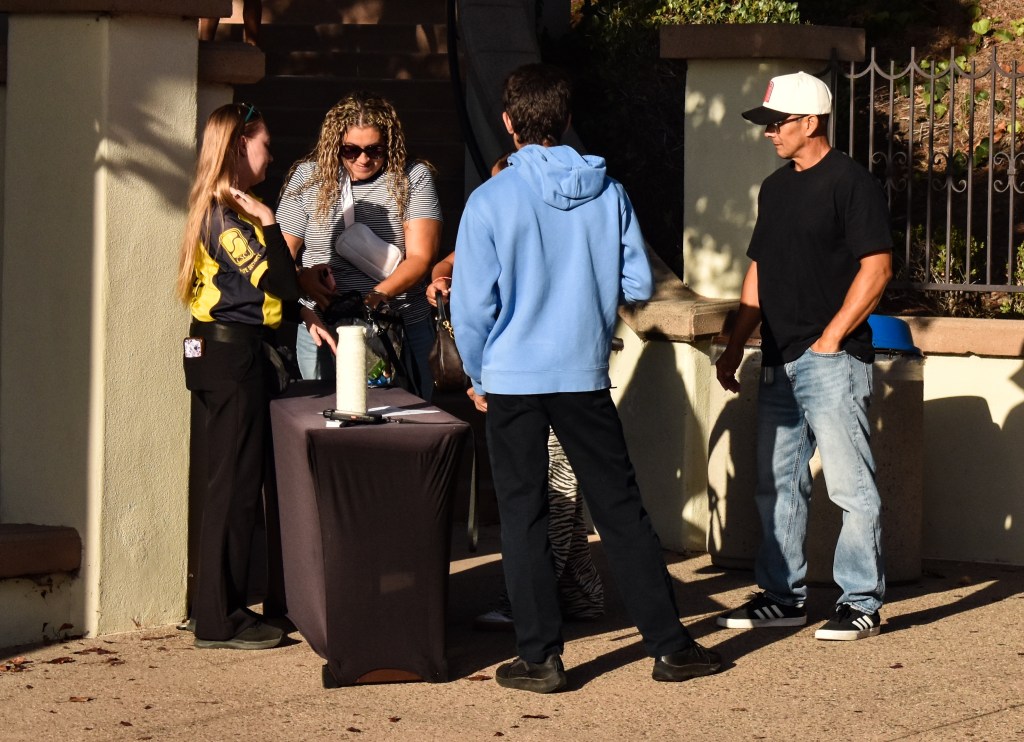
Staff huddling up for their pre-game routine. Photo courtesy of Shea Moggio
 The USD Vista
Leave a comment