CADEN HAYNOR / NEWS EDITOR
CONNOR DUFFEY / ASST. NEWS EDITOR
Department chairs who do not specialize in the disciplines they oversee, are leading students and faculty. This is a little-known practice that is shaping leadership across multiple university programs
At least three departments. across USD’s College of Arts and Sciences and the Knauss School of Business are currently chaired by professors from outside their fields: neuroscience, cognition and behavior (NCB), psychological sciences, art, architecture and art history and economics. USD College of Arts and Sciences Associate Dean of Faculty Jillian Tullis, PhD, explained why a chair may be a professor that teaches in a different department.
“The reason that they would be chairing that department varies,” Tullis said. “Sometimes it may be a reason that the department or dean might see that they need an outside voice to help lead the department. Sometimes it is because there isn’t anybody who may be eligible or qualified or interested to chair the department… There may be a department that has a leadership direction that they’re trying to go to and they need somebody from outside the discipline. And then sometimes the department’s so small they don’t have enough people that are tenured.”
USD professor Joseph Provost, PhD, instructs chemistry and biochemistry and is chair of the art, architecture and art history department. Provost has served as chair of three different departments at two different universities, totaling 16 years of experience in this type of position.
Provost described his interactions with students and the areas of their academic journey he seeks to assist them.
“Since I’m not an instructor [in the department], [students] only come to the chair if there’s a problem with getting into class,” Provost explained. “Maybe a problem or concern they have with financial aid or registration, timing of classes, maybe an issue with another student or faculty and that’s the same in all departments.”
USD junior Skylar Bruner, an architecture and visual arts double major, explained her perspective on having a department chair outside of her major.
“I think it’s interesting having the chemistry professor being our chair,” Bruner said. “I think cross-disciplinary approaches are really important, but also having someone within the department might have more understanding because [Provost] is not around a lot. He’s in the chemistry department more than he’s here, which is a little frustrating.”
Provost responded to this comment.
“I am in the [department] everyday and have met with any student who reaches out,” Provost said. “I’ve never heard from students looking for me but would enjoy visiting with them… It’s unfortunate they aren’t aware when I’m there, but the chairs job is mostly focused on staff and faculty. Students of course are the reasons chairs do our job. I would also add that, as an external chair, I still teach in chemistry and biochemistry and maintain my research lab with 13 students. It is impossible to be in the [department] as much as I wished.”
Tammy Dwyer, PhD, is a professor in chemistry and biochemistry and has served as the chair of the NCB and the psychological sciences departments since July 2024.
The NCB and psychological sciences departments were previously one department. In the summer of 2024, they split into two departments, leaving Dwyer as the chair of both departments until she retires. Earlier in her USD career, Dwyer chaired the chemistry and biochemistry department for 13 years.
Dwyer explained how she interacts with the students in NCB and psychological sciences departments the departments that she chairs and teaches for at USD.
“I have like 50 advisees, half of them in NCB and half in psychology, and I still have three in chemistry and biochemistry,” Dwyer described. “So I got to learn about the curriculum and come up to speed quickly about what classes were, like PSYC 359, because you got to know this stuff. So I was up for the challenge… At the end of the day, it’s always about the students, but serving 500 majors is just a lot, so [the department split] had to happen.”
USD senior and NCB major Ari Bradford described her thoughts on having a department chair out of the NCB discipline.
“That could be an issue in understanding what the [neuroscience] department needs versus the [biochemistry] department over in Shiley,” Bradford said. “That could affect us and our needs and what our labs need. Just trying to divide resources.”
Even though serving students is a large part of being a department chair, there are other responsibilities which the professor in charge must perform. As the academic and administrative leader, the department chair is responsible for faculty, curriculum, budgeting needs, assisting students and multiple other jobs to maintain the well-being of the department.
USD Associate Professor in Chemistry and Biochemistry Eleanor Gillette, PhD, gave a look into the job of a department chair.
“It’s not just ‘you get to put a fancy little plate on your door’ and be like, ‘I’m the department chair,’” Gillette said. “It’s behind-the-scenes stuff. You guys are getting ready to register for classes right now. They are the ones who make sure that the numbers in the computer system for the classes match, and that the times are right and everybody’s in the classroom. That’s one of the things that department chairs are coordinating. You know, it’s not the most fun and exciting job, but it’s super important.”
Tullis explained some of the advantages and disadvantages of a department chair being outside their discipline.
“I think that there are ways in which having expertise obviously has some advantages, because you already know, are intimately familiar with, the curriculum,” Tullis said. “That can be advantageous for not just the students, but for the faculty. An outside person may not have the same level of knowledge, but ideally that person would recognize that they are lacking in that area and they would refer to the faculty in that department to help inform them. On the flip side, I think there is a potential for someone with an outside perspective to come in and ask certain key questions.”
Provost explained how he has used his experience in the science department to aid his work in an art department.
“I think what helped having a science chair in that department is the resources and safety,” Provost said. “So there’s a lot of clear safety issues in chemistry, in biochemistry and physics that are identical to what happens in architecture and the visual arts… There are a lot of similarities and me bringing my experience on how to put things together, how to organize, how to manage, how to apply resources and make things open and transparent was something I was able to bring.”
Dwyer’s work as chair has involved working with the professors in both the NCB and psychological sciences disciplines, attempting to create two autonomous departments. Dwyer explained the importance of transparency for her during this process.
“There was still some building, and some rebuilding on the psychological sciences side, that had to be done,” Dwyer said. “So I think I’ve just had a lot of experience and I worked hard to be transparent and earn the trust of the people who didn’t know me. I don’t always have to be right, I just like to steer.”
Following Dwyer’s retirement in less than a year, the departments she leads plan on hiring separate chairs to lead each discipline.
Many of these departments led by external chairs are undergoing internal changes, which does sometimes require the assistance of an experienced chair.
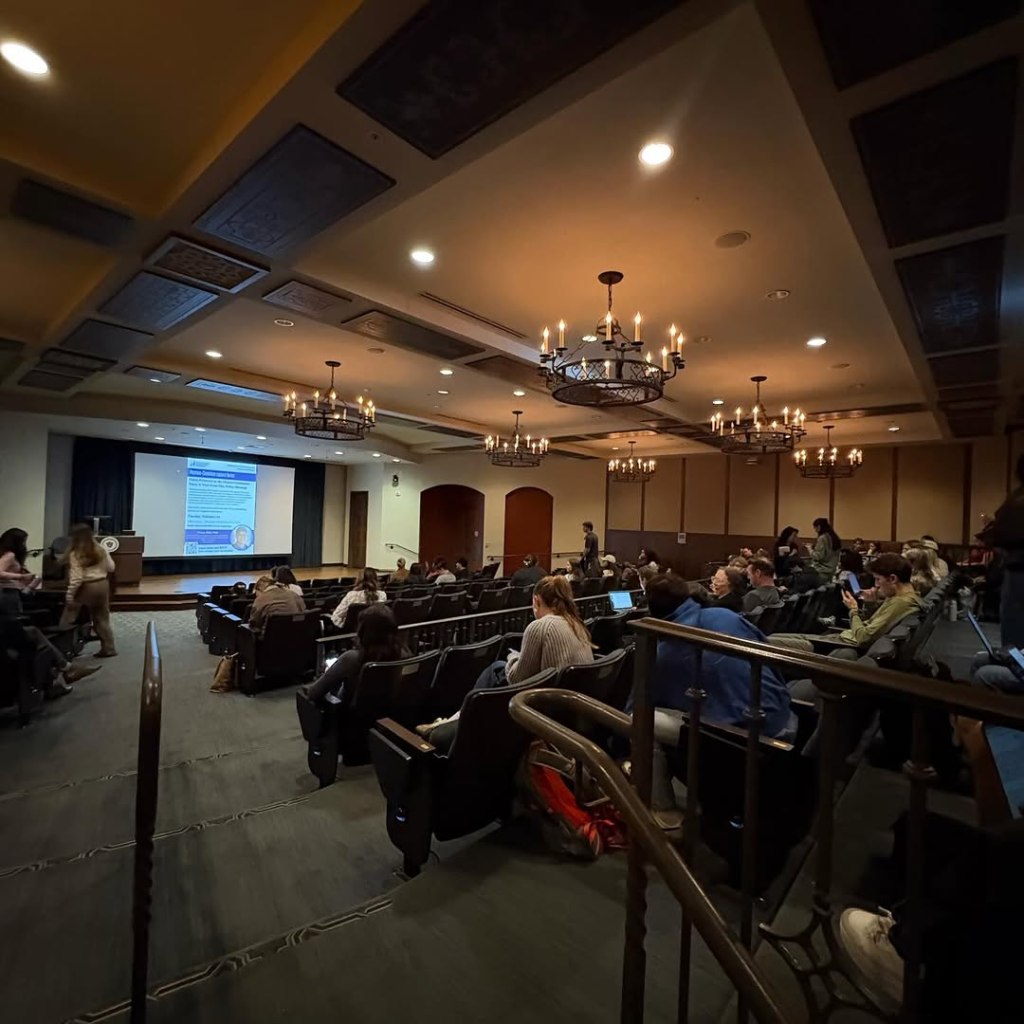
External chairs take on all chair responsibilities, including assisting students. Photo courtesy of @usdpolisci_ir/Instagram

 The USD Vista
Leave a comment