BETTINA MOGELVANG / OPINION WRITER
I stand in front of you and say “you have no right.” You stand in front of me retaliating, “I have every right.” We both feel wronged, disrespected and stand in opposition to one another. Being steadfast in what we believe we deserve often means failing to recognize what the other person does. There’s an open booth in the library: why am I more deserving than you, and you more than I? Here, rights are a trade-off — one person’s rights come at the expense of another’s.
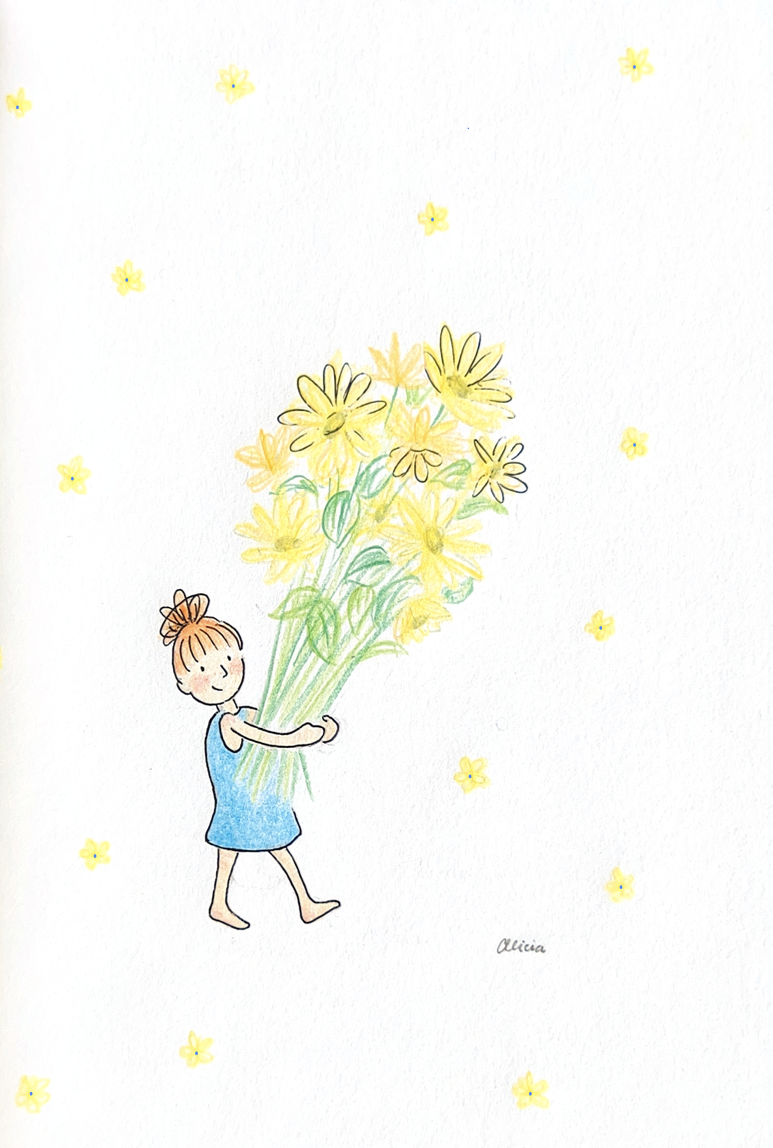
Embrace the obligation Art by Alicia Higuchi
This is why everyone should invest in a house plant.
This world, the every-man-for-himself world, pushes us further and further from each other. The person snatching the library booth from me, I come to resent. Even if temporarily, I deemed the fellow person unworthy of my respect. The opportunity for connection is severed. But when this becomes our default response to each other, as it has, we find ourselves in constant competition rather than bound to one another.
The law of Xenia relies on reciprocity. It is based on the idea that a person in need deserves my hospitality; and, should I need it, it will be guaranteed to me.
When “I have just as much of a right as you,” becomes the reciprocal of “I am obliged to you,” we turn declarative individuals into a self-sustaining network of respect: we are bound together.
Think about your friends and relationships. They can count on you and you can count on them, and suddenly a community that can rely on each other emerges. This dependability is why the people closest to you feel so important.
Now, imagine your relationship with your new houseplant. This is a living thing without the agency to water itself and place itself in sunlight. Without you, it will wither and die. Different from a reciprocal-obligation dynamic, this is a dependent one. You will not, from your plant, receive back exactly what it is you provide, as you do under the golden rule, good karma or the law of Xenia.
But it is not the guarantee of exact reciprocity that makes the orientation worth it. Rather, it is precisely the act of being depended on that provides value.
Giving part of you, your time and energy, for the vitality of another thing without physically seeing the return fosters generosity and selflessness. The plant’s dependence on you gives you a reason to stay nearby, giving you a favorable taste for connection and loyalty.
Moreover, the plant being dependent on you entails responsibility.
People say there is no such thing as a selfless act. In this case, I would entirely agree. Although it’s a dependent dynamic, it is by no means unprofitable. Caring for something comes with all kinds of heartwarming feelings, and breeds numerous virtues — meaning profit.
But my favorite lesson is granting grace with growth. As a senior, considering the past and future, and my satisfaction level of where I am, I quickly become critical, shameful and unfair to myself. When I walk into the Cropper Center for Creative Writing, I see the powerful, graceful, tall fiddle leaf fig, and I don’t shame my miniature version at home for not being that size. I awe at the potential, and I applaud the less-than centimeters of daily growth. I don’t expect my plant to achieve that size tomorrow. And you shouldn’t expect that of yourself either. The Cropper Room fiddle, in a space where I want to grow as a writer, reminds me not to compare my work to the authors I admire, but recognize my past growth and praise the opportunity for higher potential.
Gifting me all of this, I realized perhaps I am more dependent on my plant than I originally thought. I simply water and move my plant into the sunlight. This hardly feels like a burden. And then I realized, this plant is uprooted, and it is only dependent on me because of that fact. Our Earth works in interdependent cycles, housing symbiotic relationships. When we violate the Earth, we are not only derelict in our responsibility, we are preventing these circular obligations from taking place. This planet functions in its responsibilities, but the rights we assume got in the way.
Remember, we are dependent on nature, not the other way around.
We have no right to disrespect each ot her and nature, we only have obligations as coexisting people and plants. Experience nature in a way that immediately connects you to it.
Experience it as solely your responsibility to keep alive.
It may be a small act, but its implications on your disposition widen, imbuing each of us with a greater taste for responsibility and connection. It’s quite obvious to me that we need a reminder of our shared obligation to one another. As quickly as orienting ourselves around rights took hold of our attitudes toward one another, perhaps deeply feeling our obligations can largely connect us. Buying your houseplant might not immediately make us a respectful humanity, but like your new plant, growth is gradual.
Something to care for Art by Alicia Higuchi

 The USD Vista
Leave a comment