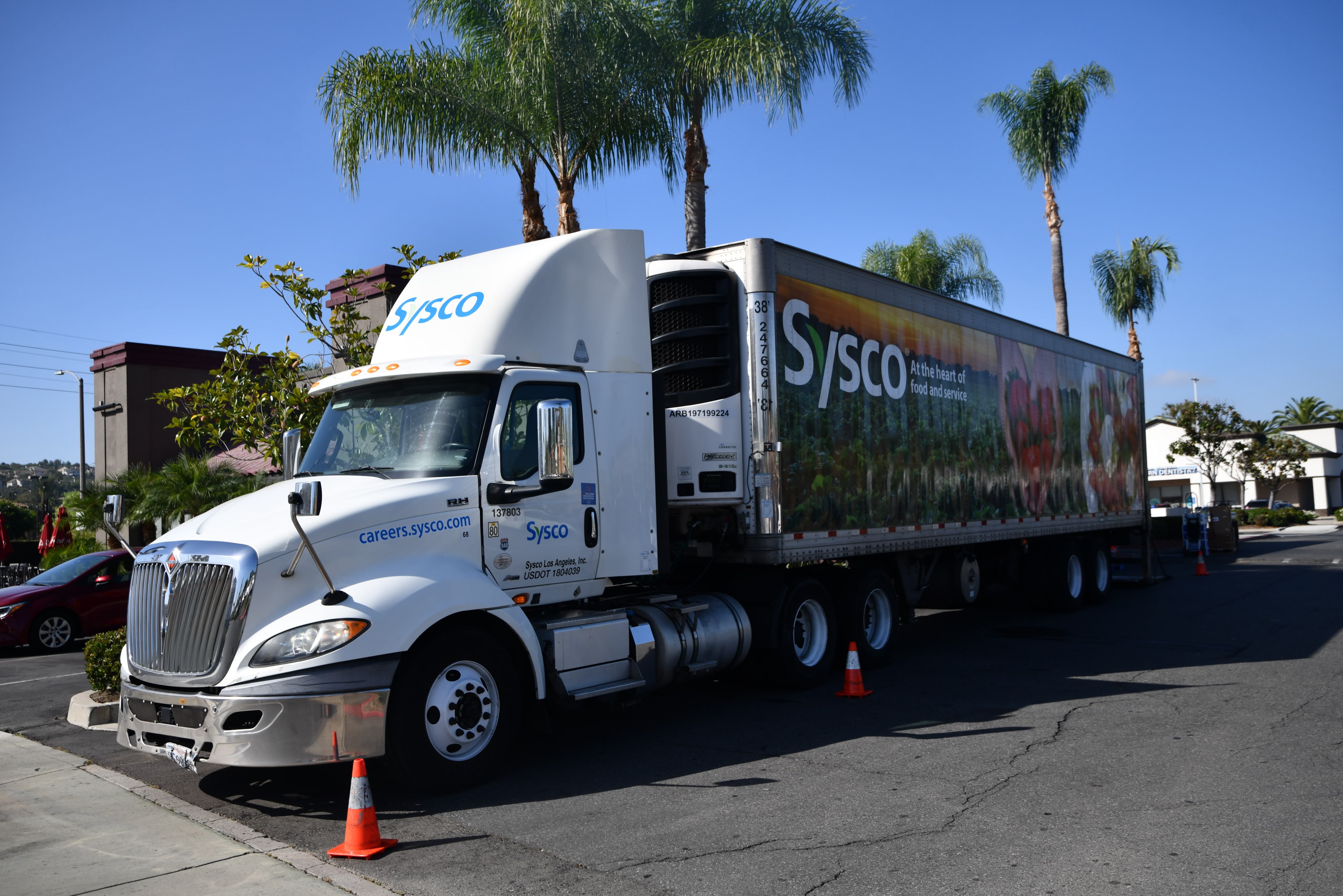
It’s a Monday night and you’re hungry. You wander out of class and into the Student Life Pavilion (SLP). Upon entering you’re greeted with a multitude of choices: Tapenade, Sea Salt Grill, Maiz, Nori Now, Mu Shu, Heirloom Cucina and more. You get your dish and sit down. But, before digging in, consider where this food came from.
The answer is not simple nor clear. Food comes from many different places and requires many different forms of labor before it is presented to students at the SLP. Crops are produced by farmers, processed by factories, transported and sold by companies and prepared by laborers, creating a disconnect between each stage of the food supply chain.
USD Professor, Colin Fisher, teaches classes in food and environmental history. Fisher described the disconnect from food that students experience on a college campus.
“It’s a bubble environment, and I think that many students have very little understanding of where their food comes from, as do many Americans,” Fisher explained. “Maybe we have less understanding on a campus because everybody is working really hard and doesn’t have time to think about this or ask the question.”
First-year and sophomore resident students are required to have a meal plan. USD sophomore and student worker at Crush Juice Bar Emily Dohrman has a meal plan but explained that even as an auxiliary service worker, she is not entirely sure where USD’s food is sourced from.
“I think that just because we’re on campus and a lot of students are on the meal plan, they’re just going to eat the food that is on campus regardless of where it’s sourced,” Dohrman said.
According to USD’s website under the dining resources “sustainability” tab, the university’s primary food vendor is Sysco, one of America’s largest food distributors. The vendor is an international corporation, outsourcing food to approximately 90 countries with more than 700,000 customers, including restaurants, universities, hospitals and hotels. The University of California San Diego also uses Sysco as one of its primary food vendors.
On USD’s website, it states that it is committed to sourcing some of its food locally.
“80% of our baked goods are made within 5 miles of USD… This supports the local economy and decreases our carbon footprint,” reads the sustainability tab on USD’s website.
The website does not clearly state which local bakeries it sources from.
However, according to Lorenzo Eribez, a unit leader at La Paloma, one of the local bakeries that USD sources its baked goods from is “Bread and Pie.” The bakery and cafe has operated in Hillcrest since 1994, serving breads and pastries made from scratch.
Dining locations on campus also serve coffee from Ryan Bros, an alumni-owned and locally operated business.
On USD’s campus, there are different initiatives in place that support student food choices and sustainable food systems. One initiative is the Center for Food Systems Transformation (CFST) which was launched in the fall of 2024.
USD Professor Aaron Gross who has a doctorate in religious studies is the director of CFST. Gross explained the reasoning behind CFST’s establishment. “I think there is a huge gulf between the values people have, whether here at USD or other places, and the values that actually guide our food system,” Gross explained. “So, the center was formed because it turns out that the policies we make around food as a government actually affect issues people care about.”
The CFST program employs different practices, in order to nudge students toward more plant-based, sustainable options.
“This amazing kind of research is what’s called choice architecture,” Gross explained. “You can make small changes in how food is served that end up having a fairly big impact on what people eat.”
USD sophomore and fellow of the CFST program Piper Booher explained how she helped implement this choice architecture on campus.
“I worked with the manager at Bert’s Bistro and La Paloma, to change the menus to make them plant default,” Booher said. “We made all of the salads plant default and so even the dressings on the salads are vegan, and students can still add on steak, chicken or tofu for a cheaper price.”
USD Professor, with a doctorate in sociology, Julia Cantzler collaborated with CFST in the spring of 2025 to establish the Student Food Choices Survey. The survey found that more than 80% of the student population were concerned about the harms of food production and roughly 75% were interested in adding more plant-based options to campus dining.
“There’s more thoughtfulness around purchasing and the sourcing of food on campus that is oriented around sustainability, then we actually know,” Cantzler explained.
“There is an important [percentage] of items that aren’t traceable and therefore aren’t reported,” reads the bottom of the report.
The university does not clearly state where all of its food comes from. However, there are a variety of different food systems that support sustainability in many ways.


Join the conversation