CADEN HAYNOR / NEWS EDITOR
USD Dining ranked No. 3 in California and No. 10 nationwide in Niche’s 2026 college rankings. Niche is a private U.S. data and rankings website based on student reviews and meal plan costs.
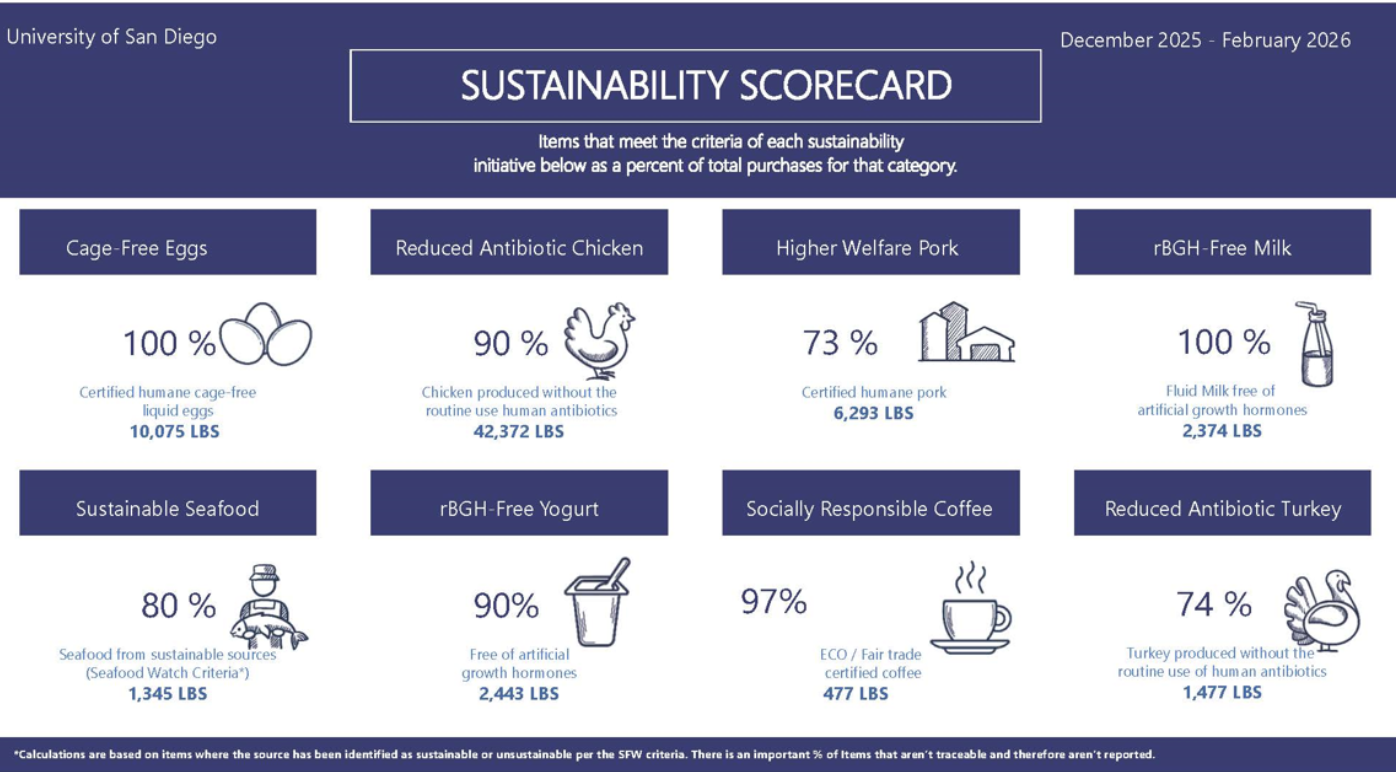
The sustainability scorecard is allocated by USD’s food supplier, Sysco. Photo courtesy of Charles Ramos
One part of these reviews and rankings comes from a focus on sustainability, which is rated by students in the surveys on Niche.
USD Dining Services Director Charles Ramos described USD Dining’s focus on the environment and local sourcing.
“Sustainability is an important part of our operations,” Ramos stated. “We utilize compostable packaging and the OZZI reusable container program across our units. We also work closely with our vendors to source local products whenever possible and continue to perform well on [the] sustainability scorecard.”
This scorecard was provided by Sysco, the food vendor for USD which measured from December 2025 to February 2026. The scorecard calculated the total purchases for each sustainability initiative. For that period, USD purchased all of their liquid free egg stock from cage free liquid eggs, 90% of their stock of reduced antibiotic chicken, 73% of their stock of higher welfare pork and 80% of their stock of sustainable seafood, among other items for on-campus dining.
The reusable containers mentioned by Ramos are available in the Pavilion cafeteria during dinner every day and brunch on weekends. Once used, these containers can be returned to a labeled machine to be washed and reused.
USD senior Megan Simpson described her thoughts on USD Dining’s sustainability initiatives on campus.
“I think there are definitely parts of USD Dining that are sustainable, like the OZZI boxes and giving discounts for tea or coffee if you bring your own cup,” Simpson said. “But I also think there could be some more widespread composting initiatives. The SLP could easily get rid of offering plastic cutlery, and reusable cups could be offered everywhere. I feel like there are always these conversations, but rarely any actual change, and I see other campuses and even local coffee shops implementing these practices, so it would be nice to see USD follow stricter sustainability practices.”
USD first-year Kylie Walton works at the Impact Lab, a collaborative, action-oriented initiative on campus which is working to add vegan options to campus. Walton explained her findings on the on-campus vegan options.
“In Impact Lab, we have identified that vegan and vegetarians complain about not enough meatless options on campus as well as students complaints about cost of food on campus,” Walton said. “We have talked to some of the managers at the restaurants on campus as well as the head of the Center for Food Systems and Transformation here. We surveyed some students and 42% said that cheaper meals would incentivize them to eat less meat, and 60% are interested in meatless meals. La Paloma has already incorporated more meatless options and it has had a lot of demand on campus.
USD senior Shea Salamack also shared some ways USD Dining could focus more on helping the environment.
“For sustainability, I see an effort with the mulch, and the biodegradable straws,” Salamack said. “I think that certain initiatives, like default oat milk for Earth month, run by Changemaker HUB, should be more frequent. I’m not completely aware of other efforts USD Dining makes to maintain food waste, but I think a lot of lunches on campus are extremely overpackaged. The plastic lids on those cardboard bowls at Oliva, for example, are overkill. It would be great to see lunch ‘for here’ options with silverware and a bigger push for ‘bring your own mug.’ I learned in my Leadership class freshman year that many students seek more Halal options on campus, and many find it difficult to accommodate severe allergies, which are a couple of other things to consider.”
USD Dining’s nutrition came into play with the Niche rating as well. Ramos described how the department strives to serve healthy food.
“Health and wellness are also key priorities,” Ramos stated. “We’ve made intentional decisions around our ingredients, such as offering many clean, low processed foods, including fresh salmon and Halal proteins. Additionally, we recently brought on a nutritionist who is helping us evaluate our menus and ingredients as we work with our vendors to ensure we are making the best possible choices for our students.”
USD first-year Devorah Wynn commented on the lack of Kosher options on campus.
“As far as I know USD does not have any Kosher options yet,” Wynn said. “I’d love to see more Jewish foods in the dining hall especially on holidays and event nights.”
Salamack shared her opinion on the health of the food on campus.
“I’ve consistently eaten USD dining for four years, and I think they overall do a really good job,” Salamack said “The SLP provides good variety at dinner, especially if you get creative with the salad station. The lunch options across campus, I believe, are really impressive and accommodate a wide variety of palates… Though, I will say, a lot of people say SLP food gives them stomach aches.”
The USD Dining feedback form, linked on the dining website, is a way for students to rate meals, comment on the quality of the food and suggest new meal ideas directly to Auxiliary Services.
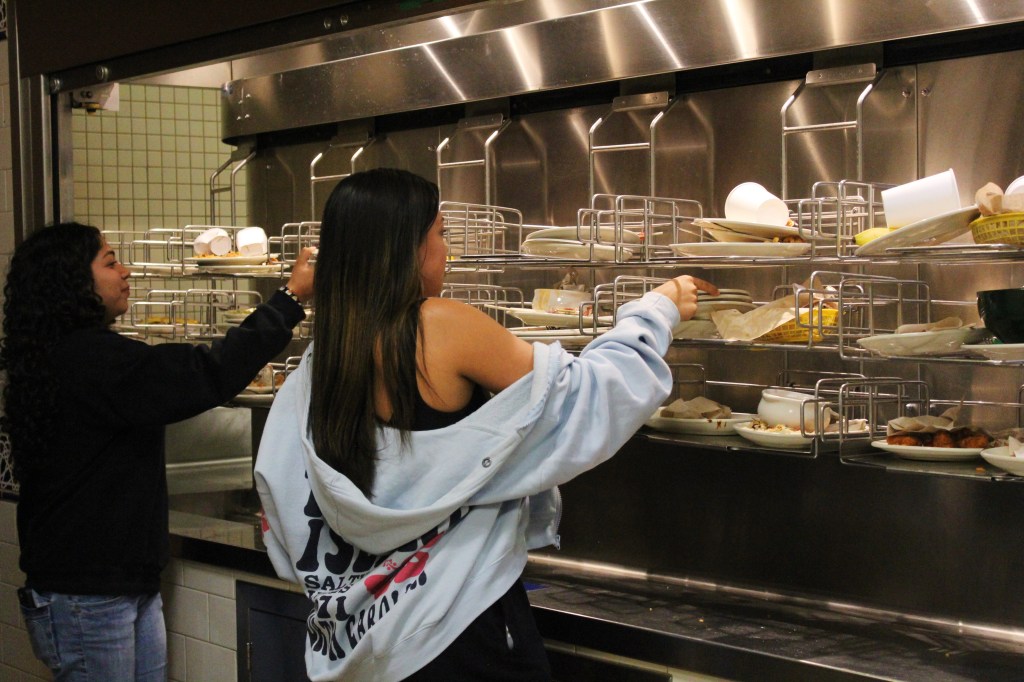
USD Dining received the ranking from Niche, which takes student surveys and meal plan prices into account. Hailey Howell/The USD Vista


 The USD Vista
Leave a comment