KENDALL EMTMAN / NEWS WRITER
This semester, USD introduced a new flat-rate materials program for acquiring textbooks. The program was designed to be a convenient, affordable resource that supplies students with course materials on their first day of classes, eliminating learning delays.
Director of the USD Torero Store Jim Thrailkill outlined the program’s benefits compared to the university’s prior model.
“This program directly addresses affordability and timely course material delivery,” Thrailkill said. “Under the old model, students often had to make hard choices about which books they could afford, or they suffered academic setbacks while waiting for orders to arrive.”
The program automatically charges students a $299 fee each semester, which they can choose to opt out of manually. This fee is based on the average price of both digital and print course materials across undergraduate courses at their lowest negotiated price.
San Diego State University (SDSU) and University of California San Diego (UCSD) also have programs in place similar to USD’s. UCSD charges $199 per quarter and SDSU has implemented a “per credit” system that charges $22 per course credit. Both universities have prices that are similar to, or in some cases higher than the price that USD charges.
Junior Hyen Gemeniano explained that she views the program as a positive addition for students, especially for those who have expensive textbooks for just one or two classes.
“I think it’s a good resource, especially for people who have expensive textbooks,” Gemeniano said. “One of my classes has a textbook that costs at least $150.”
$199 per quarter and SDSU has implemented a “per credit” system that charges $22 per course credit. Both universities have prices that are similar to, or in some cases higher than the price USD charges.
Junior Hyen Gemeniano explained her view of the program as a positive addition for students, especially for those who have expensive textbooks for just one or two classes.
“I think it’s a good resource, especially for people who have expensive textbooks,” Gemeniano remarked. “One of my classes has a textbook that costs at least $150.”
However, some students believe the $299 fee is too expensive, particularly if their classes don’t require many textbooks or if they can buy them secondhand from a third party.
USD junior Kiera Sheehan explained that she chose to opt out because of the high prices.
“I do think for some students it may be super helpful, but it should be an opt-in program,” Sheehan stated. “Students should not automatically be placed into the program.”
Thrailkill, however, said that the program was designed as an opt-out model to provide students with the freedom of choosing which path is right for them and their current needs.
“While Torero Unified Access is designed for maximum convenience, students retain full control over how they manage their materials,” Thrailkill stated. “They can choose full program access, select specific books via Inclusive Access, or opt out completely if they prefer to source materials elsewhere. The opt-out model allows the Torero Store to secure the lowest price on digital course materials which keeps the cost low for students.”
However, as a new addition to campus resources, the program has introduced some challenges as students and faculty adjust to its implementation. For Sheehan, those challenges have impacted her ability to keep up with certain course expectations.
“Overall, I think it’s become a really bad miscommunication between professors and the program,” Sheehan commented. “My professor said that she ordered the books to be at the store in April, and now they’re not there still, and we’re in the middle of September and supposed to be reading the book right now.”
Sheehan’s philosophy professor, Darby Vickers, expanded on her point, explaining that the influx of communication between professors and the Torero Store, even from last semester, is now contributing to setbacks in her classroom.
“When the semester started, I was told that someone had neglected to order physical copies of the books, thinking that electronic books were acceptable for my courses,” Vickers commented. “It seems that there is something of a communication breakdown happening with the bookstore and faculty. Worse, from what my students tell me, books will not be available until Wednesday this week.”
While there has been criticism from some students and faculty about the program’s initial introduction, others have chosen to see the program’s long-term potential. Gemeniano suggested that this program could serve as a resource for students whose professors require textbooks that are difficult to purchase through more traditional avenues.
“It’s a lot more accessible for some more hard-to-find textbooks,” Gemeniano stated.
Ultimately, since it’s the first semester this program has been implemented, the success of Torero Unified Access in future years will depend largely on student and faculty feedback and whether they feel the university’s goals of convenience and affordability are being met. From there, the university will have the opportunity to address the common problems that have come up this semester and determine which changes they feel are necessary to make, improving the program in the semesters that follow.
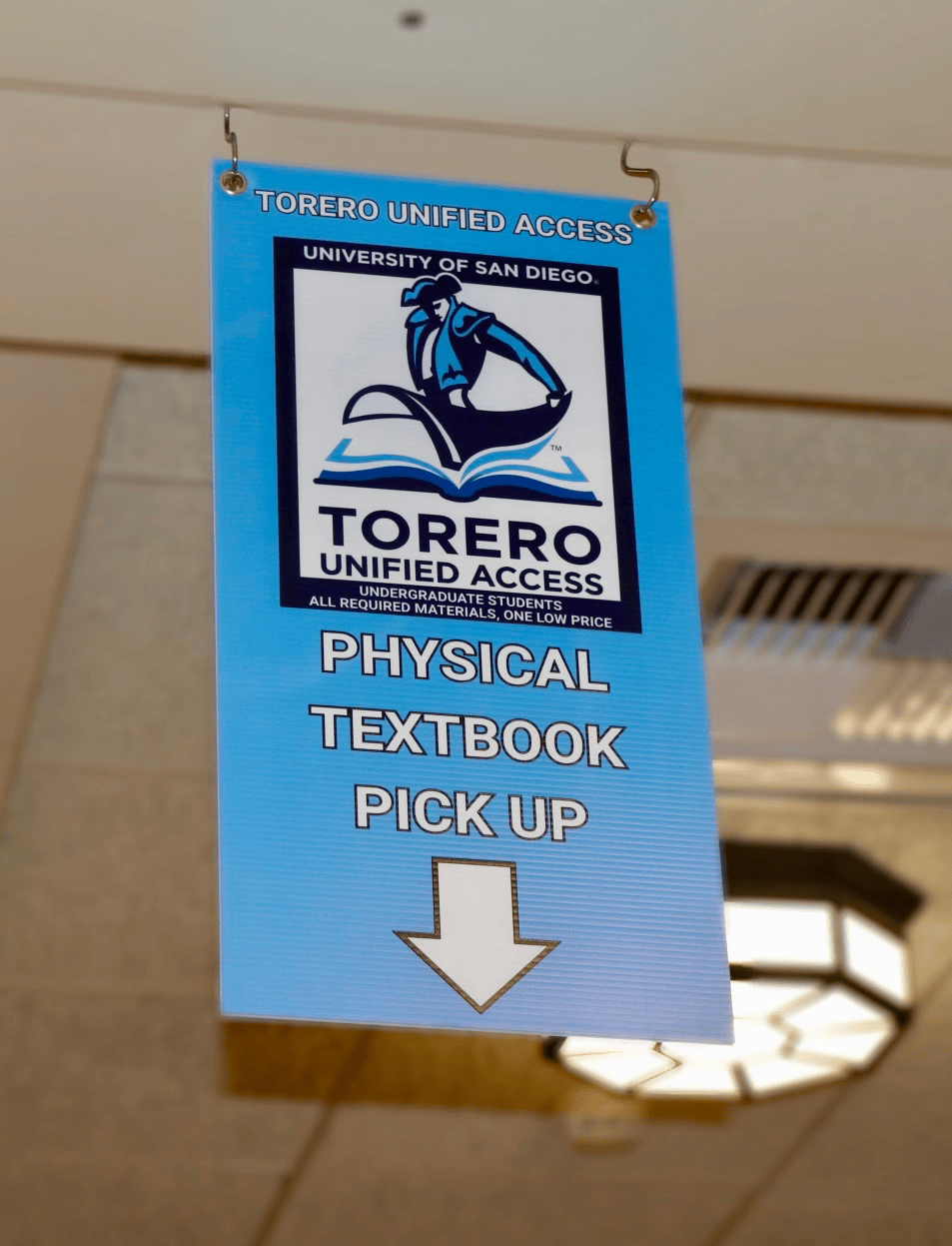
Textbook pickup is located in the USD Torero bookstore. Photo courtesy of @cityofsandiego/Instagram
 The USD Vista
Leave a comment